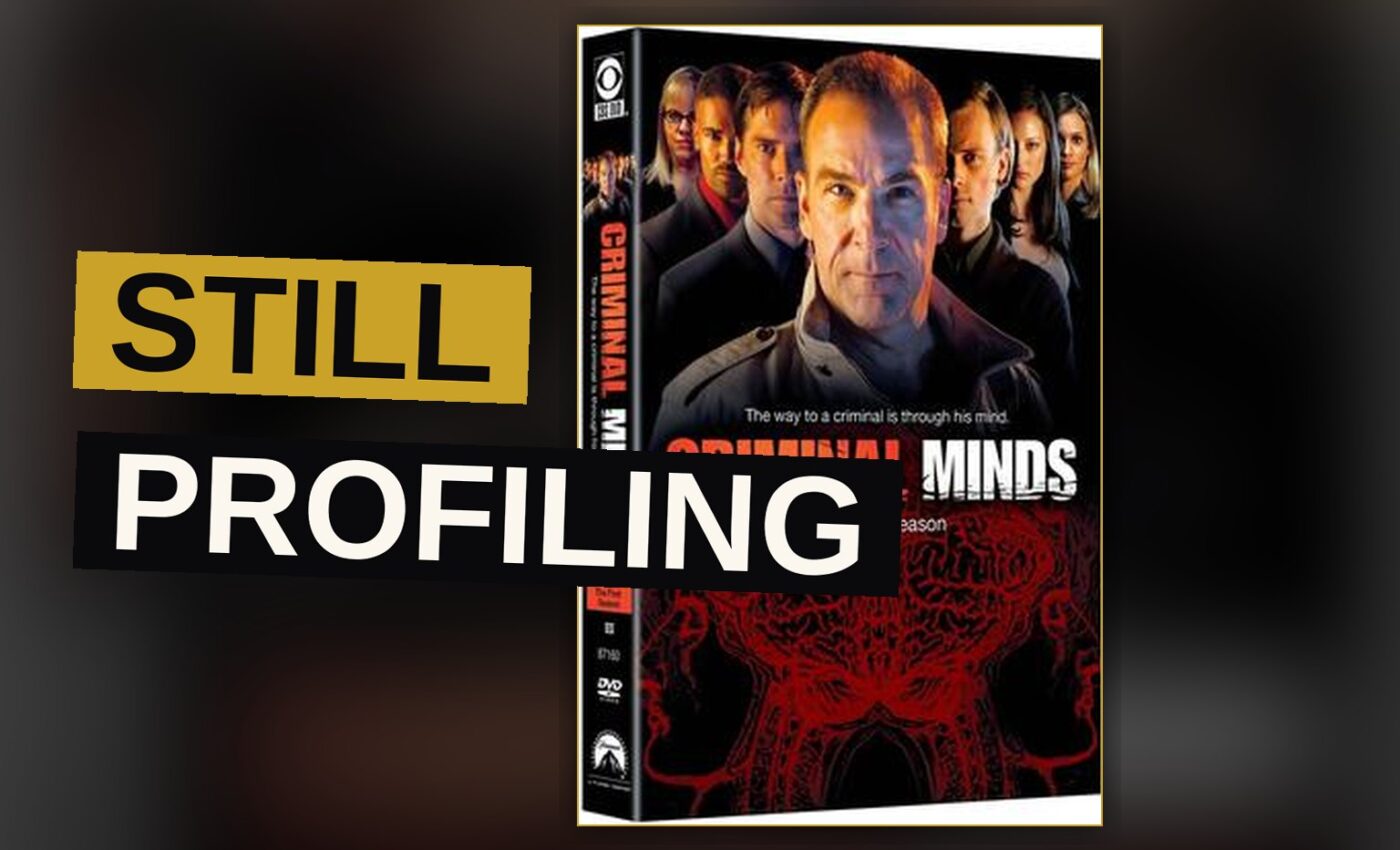
Criminal Minds premiered in 2005, and it has never really left the air. The show ran for fifteen seasons on CBS, spun off twice, and built a devoted audience that treats the Behavioral Analysis Unit like old friends. Created by Jeff Davis, the series follows a team of FBI profilers who chase serial killers by studying their patterns, their rituals, and the dark logic that drives them.
The show is a procedural, but it is a procedural with a particular flavor. Each episode opens with a crime, often brutal, and the team arrives to read the scene. They talk about the unsub — the unknown subject — as a puzzle to be solved. The writing leans heavily on psychological theory, and it takes itself seriously. That seriousness is part of the appeal, and part of the limitation.
Trailer, via Cheeto Breath.
Why the Team Still Works
The core cast is the reason the show works. Mandy Patinkin leads the original team as Jason Gideon, a veteran profiler with a haunted past. Thomas Gibson plays Aaron Hotchner, the stoic unit chief who delivers the show’s signature closing quotes. Shemar Moore is Derek Morgan, the muscle and the heart. Matthew Gray Gubler plays Spencer Reid, a genius with an eidetic memory and a social awkwardness that made him an instant fan favorite. Kirsten Vangsness rounds out the group as Penelope Garcia, the technical analyst who can find anyone online.
The chemistry is real. These actors play off each other with a comfort that took years to build. When Patinkin left the show in season two, the team absorbed the loss and kept going. Later additions — Joe Mantegna as David Rossi, Paget Brewster as Emily Prentiss, A.J. Cook as Jennifer Jareau — settled in and gave the show a second life. The show is at its best when the team is together, trading theories in a conference room or standing in a field looking at a crime scene.
The Formula That Never Changes
Every episode follows a strict structure. The team gets a case. They fly somewhere. They interview witnesses. They profile the unsub. There is usually a moment where Garcia finds a crucial piece of data. Then there is a confrontation, often violent, and the case closes. The final scene often shows the team back at the office, reflecting on what they have learned.
That formula is reliable, but it is also the show’s biggest weakness. After a few seasons, the beats become predictable. You know when the twist is coming. You know which character will be put in danger. The show rarely surprises you, and it rarely deviates from its own template. For viewers who want comfort television, that is a feature. For viewers who want something new, it is a flaw.
Violence and the Show’s Dark Tone
Criminal Minds is a dark show. The crimes are graphic, and the show does not shy away from the horror of what its killers do. The violence is often implied rather than shown, but the threat is always present. The show earns its TV-14 rating, and some episodes push harder than that.
The tone is consistent. The show is grim, but it is not hopeless. The team wins most of the time. They catch the killer. They save the victim. The show believes in the work its characters do, and it treats the job of profiling as a noble calling. That belief is what keeps the show from becoming misery porn.
Quotes and the Show’s Philosophy
One of the show’s signature moves is the closing quote. At the end of nearly every episode, Hotchner or another character reads a line from literature, philosophy, or history. The quotes are often from famous thinkers — Nietzsche, Shakespeare, Emerson — and they are meant to tie the episode’s theme together. Some viewers love this. Others find it pretentious.
The quotes are a gamble. When they work, they add weight to the episode. When they fail, they feel like homework. The show also leans heavily on the idea that serial killers are made, not born. The profile always includes a childhood trauma, a broken family, a moment of humiliation that turned someone into a monster. That explanation is reductive, but it is also comforting. It suggests that evil has a cause, and that cause can be understood.
Episodes That Stand Out
Over fifteen seasons, the show produced some genuinely memorable episodes. The season one finale, “The Fisher King,” is a strong example. It puts Garcia in a coma and forces the team to solve a puzzle to save her. The episode is tense, emotional, and it gives every character a moment to shine.
Another standout is “Revelations” from season two, which centers on Reid being kidnapped and tortured. The episode is brutal, but it gives Gubler a chance to show his range. Reid’s pain is real, and the episode stays with you.
The show also handled its cast changes with care. When Patinkin left, the show wrote Gideon out in a way that honored the character. When Brewster left and returned, the show gave her a compelling arc.
Legacy of a Long-Running Series
Criminal Minds is not a great show in the way that prestige dramas are great. It is not trying to be. It is a network procedural that ran for over 300 episodes and became a comfort watch for millions of people. It is a show you can put on in the background, or a show you can watch closely.
The show’s influence is visible in the many crime procedurals that followed. It helped popularize the idea of the profiler as a central character. It also helped normalize the idea that a TV show can be dark and still be popular. The show proved that audiences will follow a team of flawed, damaged people who do difficult work.
Streaming Era and the Revival
The show ended in 2020, but it did not stay dead. A revival, Criminal Minds: Evolution, premiered on Paramount+ in 2022. The revival brought back most of the original cast, including Joe Mantegna, Paget Brewster, A.J. Cook, and Kirsten Vangsness. It updated the format for streaming, with a longer serialized arc instead of a new case every week.
The revival has been well received by fans who wanted more of the same.
Final Score
Criminal Minds is a solid, reliable procedural with a strong cast and a clear identity. It is not subtle, and it is not groundbreaking. But it is effective at what it does. The show understands its audience, and it gives them what they want: a team of smart people catching terrible criminals, week after week.
The show is best enjoyed in moderation. Binge-watching it can expose the formula’s repetition. Watching an episode here and there, the way it was meant to be seen, it works beautifully.
The show’s strengths come down to a few clear elements:
- A cast with genuine chemistry that stayed together for years
- A consistent formula that delivers comfort through repetition
- A serious tone that respects its subject matter
- A willingness to move characters in and out of the team while keeping the core structure intact
Criminal Minds earns its place in the pantheon of long-running network procedurals.
Get the Notebook.
The day's best stories and every fresh verdict, in plain English, in your inbox by seven. One email a day, no more.