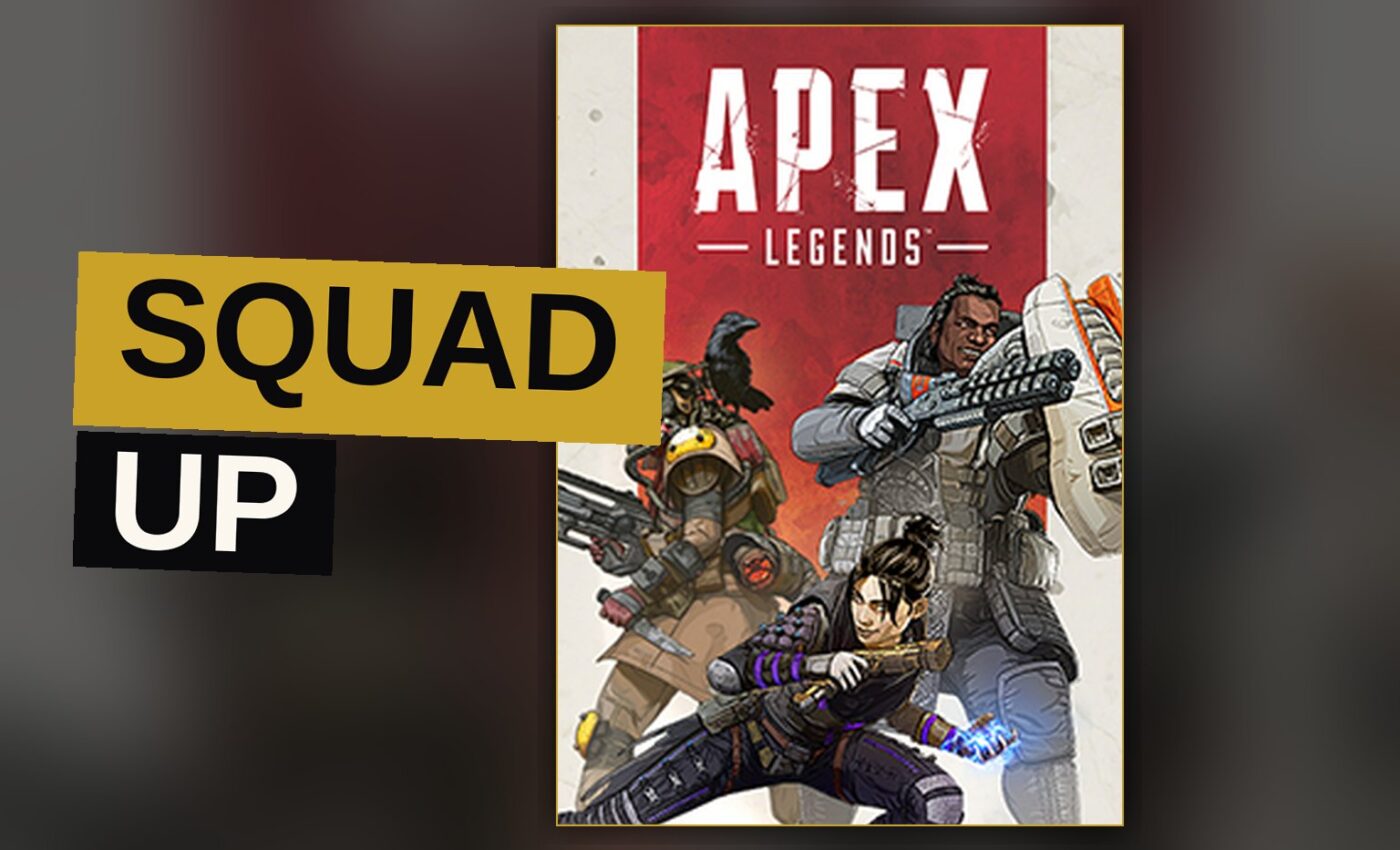
Apex Legends landed in February 2019 with almost no warning. Respawn Entertainment, the studio behind Titanfall, dropped a free-to-play battle royale into a market ruled by Fortnite and PlayerUnknown’s Battlegrounds. It had no paid early access, no months of hype. It simply appeared, and within days it was everywhere.
The game is a battle royale for 60 players, split into squads of three. You drop onto an island called Kings Canyon, scavenge weapons and armor, and fight to be the last team standing. What separates Apex Legends from its rivals is the Legend system. Each character has a distinct set of abilities, from a grappling hook to a shield dome to a drone that revives downed teammates. The roster is small at launch, eight characters, but each one changes how a squad moves and fights.
The shooter mechanics come straight from Titanfall. Movement is fast and fluid, with sliding down hills and climbing over obstacles. Gunfights are tight and readable. The game does not have the building mechanics of Fortnite, and it does not have the grounded realism of PUBG. It sits in its own lane, closer to a hero shooter like Overwatch than to either of its direct competitors.
Trailer, via Apex Legends.
Legends That Define the Fight
The eight launch Legends give the game its personality. Bloodhound is a tracker who can see enemy footprints through walls. Gibraltar is a bulky defender with a gun shield and a bombardment ultimate. Lifeline is the medic, able to call in care packages and revive teammates behind a shield. Wraith is a skirmisher who can phase out of sight and place portals for her squad.
Pathfinder is the standout. His grappling hook is not a gimmick; it is a movement tool that rewards skill. A good Pathfinder player can swing across the map, reposition in a fight, and escape a losing battle in seconds. The character is so strong that he became a staple of high-level play within weeks of launch.
Mirage is the trickster, able to send out decoys that confuse enemies. Caustic lays down gas traps that damage and slow anyone who walks through them. Bangalore is the soldier, with smoke grenades and a rolling artillery strike. Each Legend has a passive, a tactical, and an ultimate, and the cooldowns are short enough that abilities matter in every fight.
The balance is not perfect. Wraith and Pathfinder are clearly stronger than the rest, and Caustic is nearly useless in open fields. But the roster is varied enough that every character has a reason to exist, and Respawn’s early patches showed a willingness to tune.
Kings Canyon and the Ping System
Kings Canyon is the only map at launch, and it is excellent. It is a mix of open fields, dense urban areas, and a central arena called the Thunderdome. The map is compact, which keeps fights frequent. You rarely go more than a minute without hearing gunfire or seeing another squad. The high-tier loot spawns in specific locations, which creates natural points of conflict.
The ping system is the game’s most important innovation. It lets you mark enemies, loot, and locations with a single button press. Your squad sees the marker and hears a voice line. You can ping an enemy and your character says “Enemy here.” You can ping a piece of armor and your character says “Level three armor here.” The system replaces voice chat for most players.
It is a remarkable piece of design. In most battle royales, communication requires a headset and a willingness to talk to strangers. Apex Legends removes that barrier. A squad of three players who have never met can coordinate effectively with pings alone. The system was so well received that other games copied it within months.
The ping system also solves the problem of the “lone wolf.” In PUBG and Fortnite, a teammate who wanders off is a liability. In Apex Legends, you can ping your location and your squad can catch up. The game is built around teamwork, and the ping system makes teamwork possible without voice chat.
Fair Monetization, Thin First Pass
Apex Legends is free to play, and it makes money through cosmetic items. There is a store with skins, banner frames, and quips. There is a battle pass, which launched in March 2019. The pass costs real money and offers a hundred levels of rewards, mostly cosmetics.
The monetization is fair by the standards of the genre. You can earn loot boxes by leveling up, and you can craft specific items with materials you find in those boxes. You cannot buy a gameplay advantage. Every weapon, every Legend, every ability is available to every player from the moment they start.
The battle pass itself was a point of criticism. The first one felt thin, with too many filler items and not enough meaningful rewards. The later seasons improved, but the launch pass was a weak start. Still, the core game is free, and the paid content is purely cosmetic. That is a defensible model.
The game does not sell power, and that matters. A player who spends nothing is on equal footing with a player who spends hundreds. The skill gap is the only gap.
Sound Design and Movement Feel
The audio design is superb. Footsteps are clear and directional. Gunfire has weight. The game’s announcer, Mirage’s voice lines, and the Legend callouts all land cleanly as separate elements. You can hear a squad fighting two buildings over and know exactly where they are.
The feel of the game is the strongest part. Respawn built its reputation on Titanfall’s movement, and Apex Legends carries that DNA. Characters move at a brisk pace, slide down slopes, and vault over obstacles. The shooting is responsive, with a satisfying hit marker and a clear damage readout.
The game runs well on PC, PS4, Xbox One, and Switch. The Switch version arrived later and runs at a lower resolution, but it is playable. The PC version is the best way to play, with high frame rates and precise aiming. The console versions hold up, with aim assist that keeps close fights manageable.
The game’s servers were stable at launch, which is rare for a new online game. The matchmaking was fast, and the game rarely crashed. That reliability mattered. A battle royale lives or dies on its infrastructure, and Apex Legends launched in better shape than most.
Where It Sits Against Fortnite and PUBG
Apex Legends entered a crowded field. Fortnite was the dominant game in early 2019, with a building mechanic that set it apart. PUBG was the older, slower, more realistic option. Apex Legends took the middle ground, and it worked.
Fortnite’s building is a high skill ceiling that many players never reach. Apex Legends has no building. It has abilities and movement, and those are easier to learn. PUBG is punishing and slow, with long stretches of nothing. Apex Legends is fast and forgiving, with a respawn beacon that lets dead teammates return to the fight.
| Game | Movement | Teamplay | Monetization | Skill Ceiling |
|---|---|---|---|---|
| Apex Legends | Fast, sliding, climbing | Ping system, abilities | Free, cosmetic only | High, but approachable |
| Fortnite | Fast, building | Limited, voice chat | Free, cosmetic only | Very high, building required |
| PUBG | Slow, grounded | Minimal, voice chat | Paid game, cosmetic only | High, but slow |
The respawn beacon is a key difference. In Fortnite and PUBG, a dead teammate is gone for the rest of the match. In Apex Legends, you can grab their banner card, reach a respawn beacon, and bring them back. That mechanic reduces the sting of an early death and keeps squads together longer.
The game is also shorter than its rivals. A match lasts about 20 minutes, while PUBG matches can drag past 30. The pace is brisk, and the ring closes quickly. Apex Legends respects your time.
Launch Momentum and Lasting Impact
Apex Legends launched without a solo mode. That was a deliberate choice, and it was a defensible one. The game is built for squads, and the ping system makes teamwork the point. A solo mode arrived later only as a limited-time offering, but the launch period was strictly three-player squads.
The game’s launch was a cultural event. It hit 25 million players in its first week and 50 million in its first month. Twitch viewership was massive. The game was a genuine phenomenon, and it held that momentum through its first year.
A competitive scene formed in the game’s first year, and the Apex Legends Global Series formalized it in 2020. The game’s fast pace and high skill ceiling made it a good spectator sport, though the competitive scene never reached the scale of Fortnite or League of Legends.
Apex Legends is not flawless. The launch roster is small, the first battle pass is weak, and the balance favors a few Legends. But the core game is excellent. The movement is the best in the genre, the ping system is a genuine innovation, and the free-to-play model is fair.
The game has aged well. Respawn continued to add Legends, maps, and modes over the years. Kings Canyon gave way to World’s Edge, then to later maps such as Storm Point and Broken Moon. The game’s identity has remained consistent, even as the content has expanded.
Apex Legends is the best battle royale of its generation. It took the genre’s formula and improved it at every point. It is fast, fair, and endlessly replayable. It rewards skill, encourages teamwork, and never asks for a dime to compete.
The game earns its place at the top of the genre. It is a masterclass in design, and it remains the standard against which other battle royales are measured.