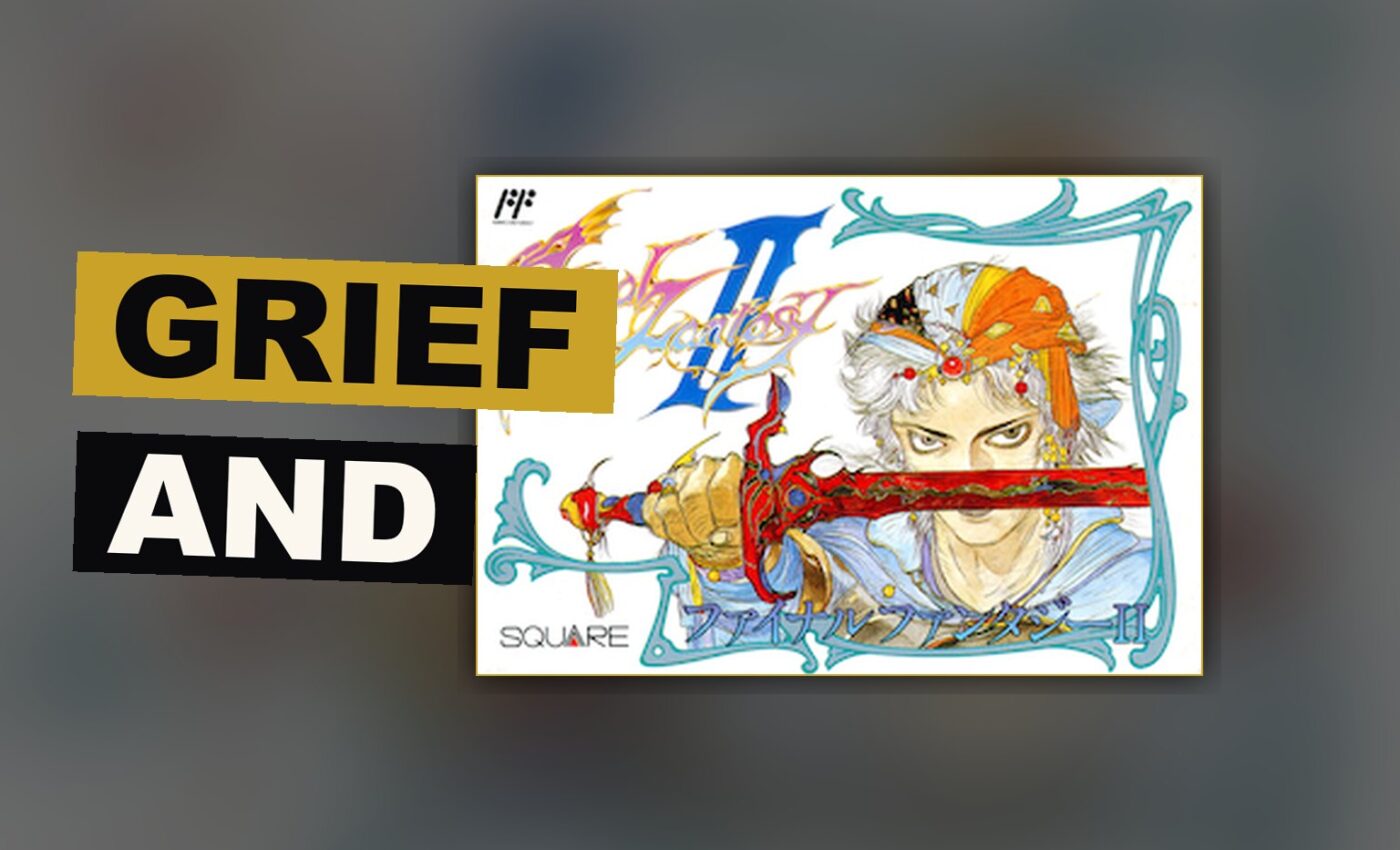
Final Fantasy II, the second game in Square’s long-running series, is out in a 2021 Pixel Remaster from Square Enix Creative Business Unit IV. The remake ships with completely new graphics and audio. It is available on PlayStation 4, Nintendo Switch, Xbox Series X|S, PC, iOS and Android. The published Metacritic score is 7.7/10.
Firion and the Fall of Fynn
The story opens with Firion, Maria, Guy and Leon cut down by Palamecian Black Knight soldiers and left for dead. Princess Hilda pulls three of them from the wreckage and sets up a rebel base in Altair after the Empire takes her kingdom of Fynn. She turns them away at first — too young, too green for a war.
They go looking for Leon anyway. In Fynn they find Prince Scott of Kas’ion dying, and he tells them Borghen, once a nobleman of Kas’ion, betrayed the rebellion and took a general’s rank in the Imperial army. That news gets them into Hilda’s ranks. Their first real assignment: head north for mythril, the metal that makes weapons worth carrying.
What follows is a tour of occupied towns and Imperial projects. They free the villagers of Salamand from the mines, kill Borghen and take the mythril. They race to Bafsk to stop construction of the Dreadnought, a massive airship, and arrive just as it lifts off. They recover the Sunfire, a weapon built to destroy it, then watch the Dreadnought capture an airship carrying Hilda. When it lands for supplies, they get her out and throw the Sunfire into the engine. In the escape, Maria sees a dark knight she thinks is her brother.
Secondary characters include Minwu, the mage who serves Hilda’s family; Gordon, heir to Kashuan’s throne; Josef of Salamand; Leila the pirate; and Ricard Highwind, the last dragoon. The Emperor of Palamecia is the villain, a mage who summons monsters out of Hell to take the world.
A Usage-Based System That Refuses to Explain Itself
Combat is where Final Fantasy II earns its reputation. Stats do not arrive on a level-up schedule. They grow according to use. Swing a sword and strength follows. Take hits and durability follows. Cast a spell and the spell improves.
Akitoshi Kawazu designed the system. He has since said the team went too far separating this game from the first Final Fantasy. That admission is on the record.
The rest of the structure is familiar. The player roams an overworld dotted with towns and dungeons. A menu handles equipment and up to two items per character, often disposable. Magic gets assigned from the item menu, and spells like Cure work outside battle. Shops sell weapons, armor, items and spells. Townspeople hand out information that moves the plot.
Two changes stand out against the original. Characters and monsters no longer sit in separate battle windows, and current and total hit points show below the fight. Parties can also run with fewer than four characters, which the first game did not allow.
Word Memory, Chocobos and Cid
The Word Memory system lets the player talk to a townsperson, “ask” about a keyword, “memorize” it, then repeat it to someone else to open new information or new actions. A handful of special items work the same way — show them to the right person or use them on the right object.
It is a conversation mechanic doing the work most RPGs hand to a quest log.
Two pieces of Final Fantasy history start here. The chocobo debuts, carrying the party across the map at speed without random encounters. Cid also appears for the first time, and a character by that name has shown up in every main-series entry since.
Random encounters still fire on the overworld and in dungeons, and they are how attributes improve. Kill enough and the numbers move.
- Platforms: PlayStation 4, Nintendo Switch, Xbox Series X|S, PC, iOS, Android
- Developer: Square Enix Creative Business Unit IV
- Publisher: Square Enix
- Genre: role-playing, adventure
- Modes: single player
- Perspective: isometric and side view
What the Pixel Remaster Adds and What It Cannot Fix
The Pixel Remaster rebuilds the graphics and audio. The pitch is a remodeled 2D take on the second game in the series, with completely new graphics and audio.
The original Final Fantasy II launched in 1988 on the Family Computer, developed and published by Square. It stayed in Japan at first, then traveled through WonderSwan Color, PlayStation, Game Boy Advance, PlayStation Portable and mobile phones before this version. The staff list: Hironobu Sakaguchi directed, Akitoshi Kawazu designed, Nasir Gebelli programmed, Yoshitaka Amano drew, Kenji Terada wrote, Nobuo Uematsu composed. The team drew narrative inspiration from The Empire Strikes Back.
The Emperor of Palamecia and the Thin Villain Problem
The Emperor is a mage who wants the world and calls up monsters from Hell to get it. He conquers or destroys neighbors, including the kingdom of Kashuan and the dragoon homeland of Deist, and the rebellion forms at Fynn Castle in response. The game’s inciting incident is the Imperial attack that destroys Fynn Castle and the surrounding town.
Firion, Maria, Guy and Leon carry the plot. Leon is Maria’s brother and a temporary ally of the Empire.
The Case for 7.7/10
The Pixel Remaster is the version to play. The graphics and audio are completely new, and the retro look holds up.
The usage-based growth system is the defining design choice of the early series. It asks players to trust a system that will not tell them what it is doing. Kawazu’s own verdict — that the team went too far — is on the record.
The Word Memory system is the part worth defending. It turns every townsperson into a potential key.
The Dreadnought sequence is the part worth studying. You rush to Bafsk to stop it, and it leaves before you get there. Then you fetch the Sunfire, then you watch Hilda get taken, then you rescue her, then you blow the engine.
The mythril hunt runs the same way. Go north, free the miners, kill Borghen, collect the metal.
Set against the first Final Fantasy, this one changes more. The team wanted distance from its predecessor, and the seams show.
Get the Notebook.
The day's best stories and every fresh verdict, in plain English, in your inbox by seven. One email a day, no more.