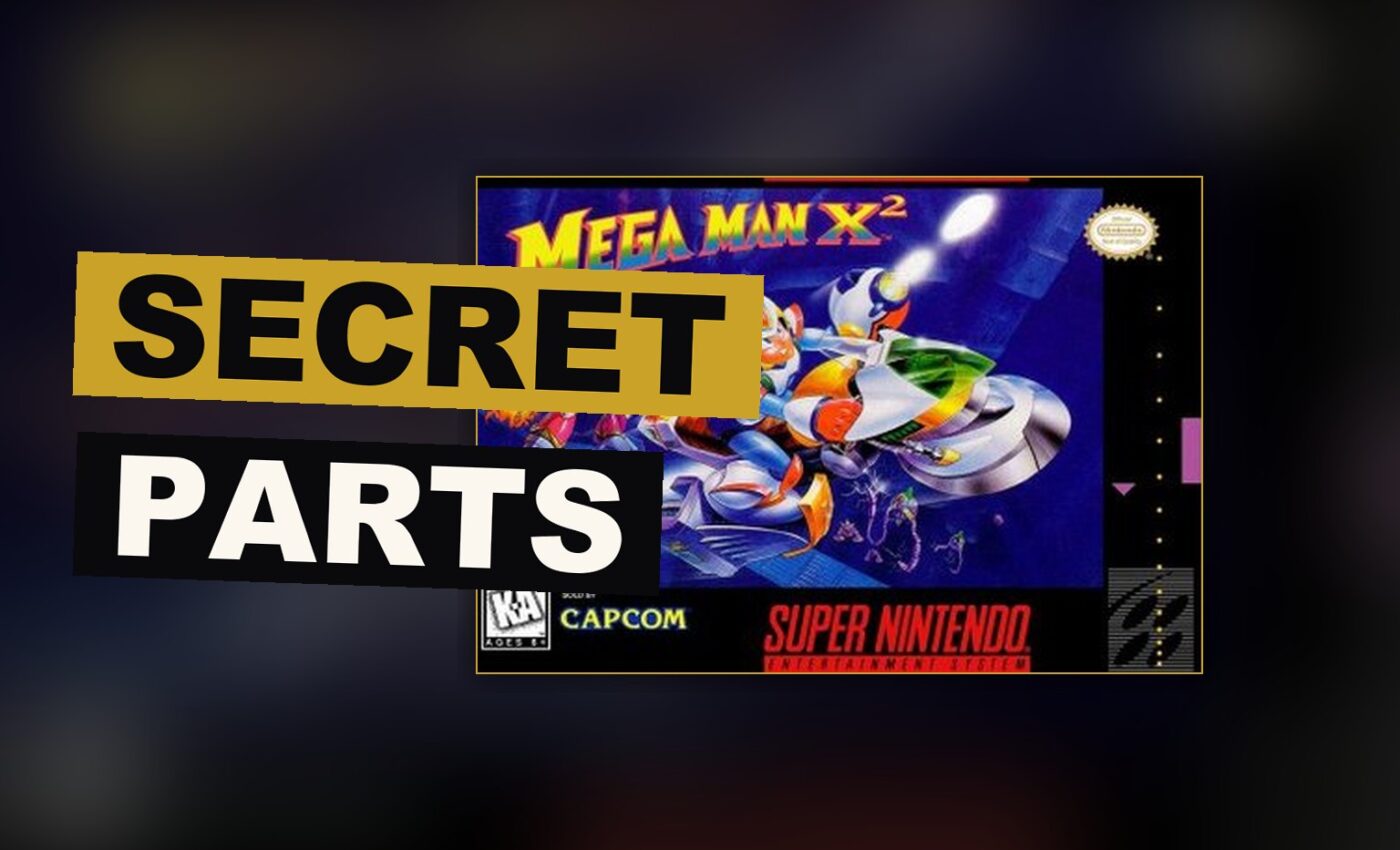
Mega Man X2 arrived on the Super Nintendo in 1994, one year after Mega Man X, and it did not try to reinvent the formula. Capcom built the sequel on the same running, jumping, wall-scaling and dashing that made the first game work, then added a chip to the cartridge that let the hardware do things it otherwise could not.
The Cx4 Chip in the Cartridge
The Cx4 graphics chip is the headline technical change. Capcom installed it in the cartridge, and it allowed for semi-transparencies and 3D effects. The game looks like its predecessor, but the chip pushes it further. That matters, because a sequel that ships one year later on the same console usually looks identical. Mega Man X2 does not.
The chip is not a gimmick bolted onto a menu screen. It shapes how the game presents itself. Whether it justifies the cost of the cartridge is a separate question, but Capcom did not simply reissue Mega Man X with new bosses.
X-Hunters and Zero’s Body Parts
The story picks up six months after Sigma’s rebellion. X has become head of the Maverick Hunters, but the Maverick rebellion has not stopped. A trio of Mavericks — Serges, Agile and Violen — form the X-Hunters and seize control of the North Pole.
Serges has collected the body parts of Zero, X’s partner, who died fighting Sigma’s right-hand robot Vile. The X-Hunters contact the Maverick Hunters and taunt them with Zero’s body, drifting among the eight Maverick locations and trying to lure X out with a promise: defeat them, and get a piece of Zero back.
That structure is the game’s best idea. Each of the eight stages contains an optional entrance for a battle with one of the X-Hunters, if the player selects that stage when one of them is present. Beat an X-Hunter, earn a piece of Zero. What the player does with those pieces affects the storyline late in the game.
Eight Stages, Eight Bosses, Eight Weapons
Mega Man X2 is an action-platform game in the same fashion as the first Mega Man X and the original Mega Man series. The player clears eight side-scrolling stages in any order. X runs, jumps, scales walls, dashes and fires the chargeable X-Buster.
The dash is permanent from the start this time. In Mega Man X it was an armor upgrade found in a capsule. That change is small and correct. It gets the player moving immediately.
Every stage ends with a boss, and every boss is weak to another boss’s weapon. The order matters:
- Pick a stage and beat its boss.
- Take that boss’s special weapon.
- Use it against the boss weak to it.
- Repeat until the eight are done.
The player can also pilot vehicles — an attack mech in Wheel Gator’s stage, an attack hovercycle in Overdrive Ostrich’s stage. Hidden Heart Tanks extend the life bar, Sub-Tanks store life energy, and armor upgrade capsules return.
What the X-Hunter Structure Actually Changes
The X-Hunter battles are the part worth watching. They are optional, they are missable, and they carry a real consequence into the late game. That is more than most sequels attempt. It gives the eight-stage loop a second layer without breaking it.
The rest is familiar. Bottomless pits, deadly spikes, rising lava. Robotic enemies by the dozen. The formula holds up because the formula was good.
A Sequel That Knows What It Is
Mega Man X2 is a confident sequel, not a bold one. The Cx4 chip gives it a visual edge over the first game. The X-Hunters give it a reason to care about stage order beyond weapon weaknesses. The permanent dash fixes a small annoyance.
It is not a reinvention, and Capcom did not pretend otherwise. What it does, it does well: tight platforming, a clean risk-reward loop, and a story that treats Zero’s death as something with weight rather than a footnote.
Get the Notebook.
The day's best stories and every fresh verdict, in plain English, in your inbox by seven. One email a day, no more.