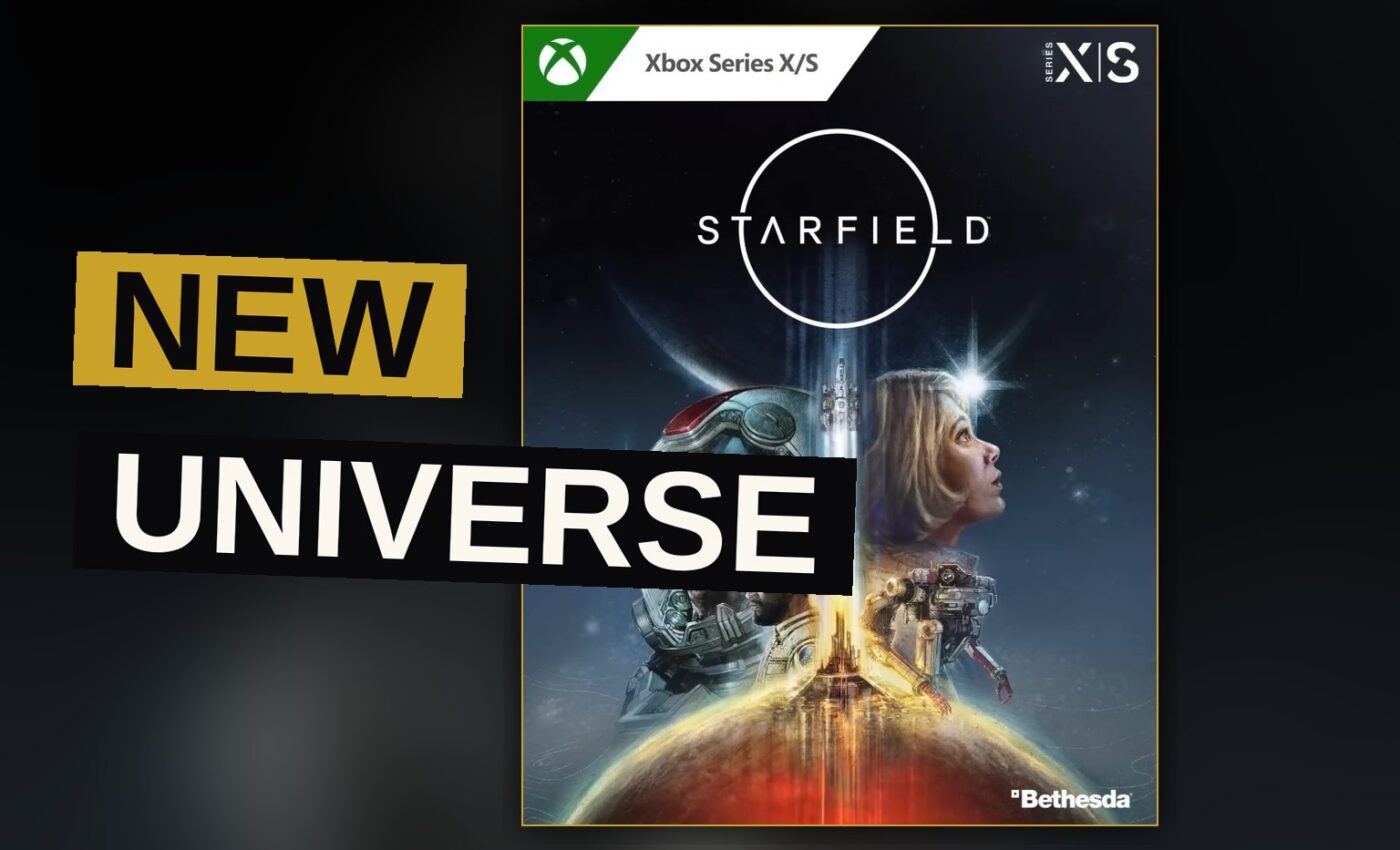
Starfield lands on Xbox Series X/S and PC as Bethesda Game Studios’ first new universe in 25 years, and it earns a strong 8.3 out of 10.
Trailer, via XBOX.
Exploring the Settled Systems
The game opens in the Settled Systems, a sprawling map of planets, moons and space stations built around a capital city full of glass towers and government offices. Players join Constellation, a group of explorers searching for artifacts tied to the game’s central mystery. The scale is the first thing that hits: thousands of planets to land on, most of them empty rock, some packed with settlements, pirates and animal life.
That scale is also the game’s biggest gamble.
Building and Flying Ships
Ship construction is Starfield’s standout system. Players can buy and put vessels back together piece by piece, changing out engines, weapons and cargo holds to make something practical or something strange. Space combat rewards that tinkering, with shield management and targeting systems that reward patience over quick reactions alone.
Ground combat is solid but familiar, drawing on the shooting Bethesda refined in Fallout 4. Weapons feel heavy in the hand, and fights in low gravity add a real twist to positioning and cover. Companions join the player in battle and comment on choices made along the way, though their reactions rarely surprise after the first few hours.
The ship builder deserves deeper attention than a quick pass. Each part carries weight and purpose, from a cockpit that changes sight lines to landing gear that alters how a vessel sits on a planet’s surface. Players who spend time here will find a system with real depth, one that turns a simple trip between worlds into a personal project. The game gives clear numbers for mass, power and fuel, so every choice has a visible result. It is easy to lose an hour moving a single piece and then moving it back. That level of care carries the whole experience.
The Trouble With Loading Screens
The game’s biggest source of friction is travel. Moving between planets, ships and interiors often means passing through a loading screen, breaking the sense of a single connected universe. Bethesda has leaned on menus and quick travel in past games, but Starfield’s map is so large that the seams show more often here than in earlier titles like Skyrim or Fallout 4.
Cities across the Settled Systems each carry their own character, from corporate polish to neon-lit vice in a place called Neon. Walking their streets delivers on the promise of a lived-in galaxy, even when the empty space between them feels thin by comparison. That tension never fully goes away.
The loading screens are not always a burden. Some transitions feel near instant, especially on fast hardware, and the game hides others behind door animations or docking sequences. But the constant stop-and-start does wear down the feeling of a single, open galaxy. A player cannot simply fly from one world to another without a menu in between. That break in flow is the price of the game’s size, and it is a price some players will find too high.
Constellation and the Search for Artifacts
The main story follows Constellation’s hunt for artifacts that may explain the origins of the universe itself. It’s a slower, more thoughtful hook than the opening stakes in Fallout or Skyrim, and it takes real time to build momentum. Side characters carry more weight than the central mystery does across the early hours of play.
Storylines built around groups like the Crimson Fleet and the United Colonies military offer sharper writing and clearer stakes than the main plot. These threads reward players willing to step away from the critical path and follow smaller stories instead.
The Constellation members themselves deserve mention. Each one brings a distinct voice and a personal reason for joining the search, from a soldier running from her past to a scholar chasing a lifelong question. Their conversations on ship and in the field give the long stretches of travel a human anchor. The main mystery stays distant for much of the game, but the people around it keep the player engaged. That trade is a fair one, even if it means the central plot lags behind its own supporting cast.
Settlements and Resource Chains
Settlement building lets players claim land on planets, gather resources and connect supply lines between bases. It’s a deep system, closer to a management game placed inside an open-world adventure, and it will appeal most to players who enjoyed base construction in Fallout 4. Players new to the series may find the menus dense at first, though the game does walk them through the early steps.
Resource gathering ties directly into ship and settlement upgrades, giving exploration a clear purpose beyond simply looking around.
The system rewards planning. A player who sets up an outpost on a mineral-rich moon can feed materials to a second base on a neighboring world, creating a steady flow of goods. That flow then powers ship parts and settlement structures, closing a loop that makes every landing feel useful. The menus take time to learn, and the game’s own guidance is thin in places, but players who push through will find a sturdy framework for long-term play. It is not the centerpiece of Starfield, but it gives the wider galaxy a sense of purpose.
Running on Xbox Series X/S and PC
On Xbox Series X/S, Starfield runs at 30 frames per second, a choice that drew criticism ahead of launch. PC players get more flexibility, with support for higher frame rates depending on hardware. Load times are generally short, which helps balance out how often the game asks players to sit through one.
Small bugs turn up now and then.
Nothing seen broke the game entirely, but small glitches, from floating objects to characters walking into walls, show up often enough to notice. None of it spoils the larger experience, but it chips away at the polish Bethesda clearly aimed for.
Performance holds steady in most places. Dense city streets keep their pace, and space combat stays smooth even with several ships on screen. The 30-frame cap on console will bother some players, especially those used to faster action games, but the slower rhythm of Starfield suits it well enough. Those with strong PC hardware can push past that limit and see the game at its best. The choice to favor stability over speed is a defensible one.
By The Numbers
- Platforms: Xbox Series X/S, PC
- Developer: Bethesda Game Studios
- Release year: 2023
- Score: 8.3 out of 10
Starfield doesn’t rebuild Bethesda’s formula so much as stretch it across a bigger canvas than ever before. The seams between planets and loading screens keep it from feeling seamless, but the depth of its ship building, settlement systems and side stories gives players plenty to hold onto. It’s an ambitious, uneven, frequently absorbing game that earns its place among Bethesda’s best work. Score: 8.3 out of 10.
Get the Notebook.
The day's best stories and every fresh verdict, in plain English, in your inbox by seven. One email a day, no more.