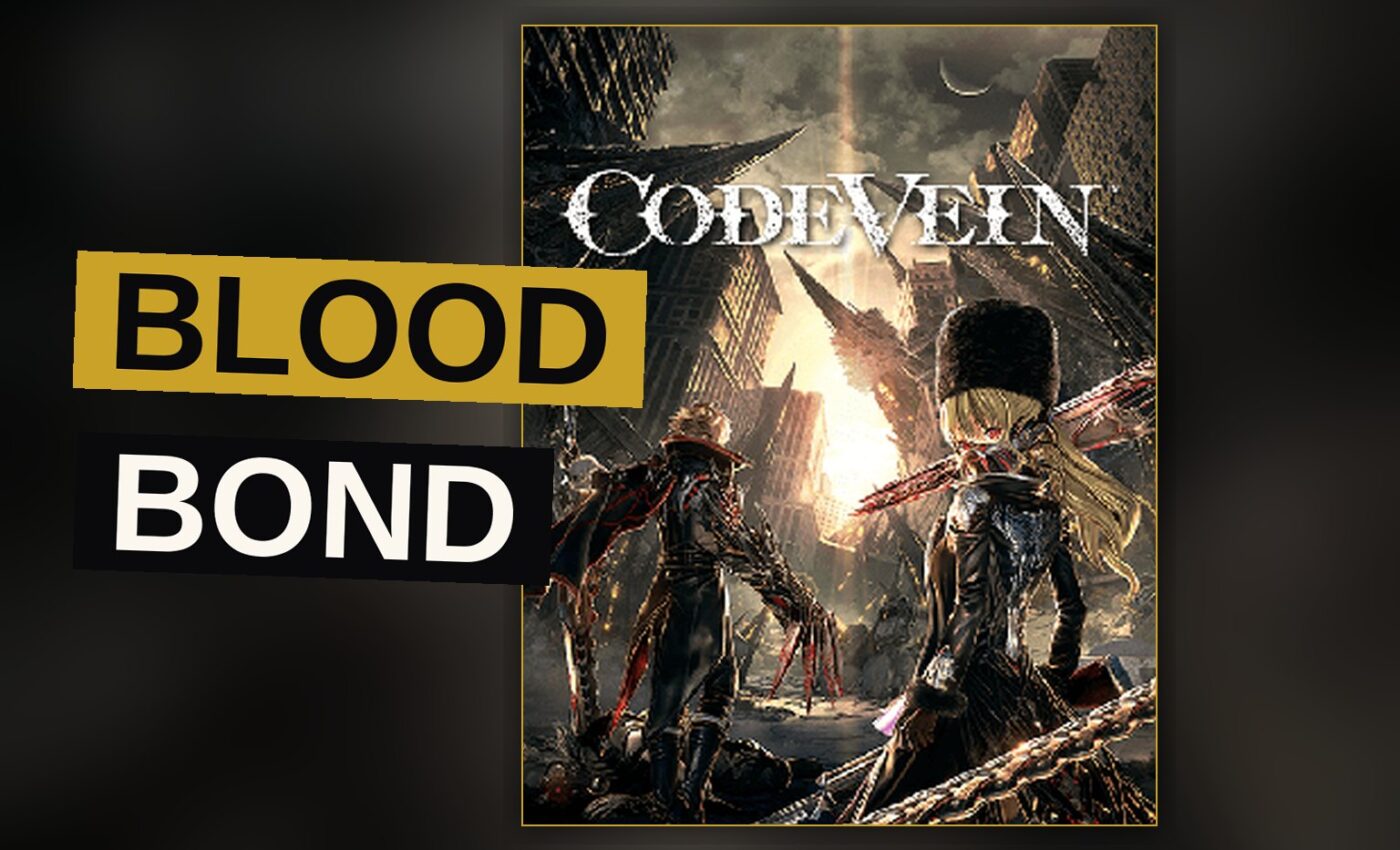
Code Vein opens with the world already over. Skyscrapers that once stood for prosperity are graves now, run through by the Thorns of Judgment. A hidden society of Revenants called Vein is what is left, and everyone in it traded their memories for power and a thirst for blood. That is the bargain at the center of Bandai Namco’s action role-playing game, and it is a better hook than most games in this genre bother to build.
Trailer, via Bandai Namco Entertainment.
The Great Collapse and the Horrors
Code Vein was developed by Bandai Namco Studios and Shift, and published by Bandai Namco Entertainment. It came out worldwide on September 27, 2019, for PlayStation 4, Windows and Xbox One. It has sold over three million copies. It also drew mixed reviews from critics, which is the honest starting point for any conversation about it.
The setting is a post-apocalyptic near future. A calamity called the “Great Collapse” brought gigantic monsters called Horrors up from underground, and they tore the world apart. Humanity’s answer was the Revenants: undead humans with vampiric abilities and strength. A Revenant only dies for good if you destroy the heart. They need human blood, and if they go too long without it they frenzy and mutate into the Lost, cannibals with no reason left in them.
That is a clean piece of worldbuilding. The blood is not decoration. It is the clock the whole story runs on.
Cruz Silva and Operation Queenslayer
The backstory is where Code Vein does its best work. To stabilize the Revenant population, a woman named Cruz Silva volunteered to become the “Queen of the Revenants.” The experiment broke her. She frenzied under the strain and went on a murderous rampage.
Her father, Gregorio Silva, led the mission to put her down. It was called Operation Queenslayer. The Revenant army killed Cruz. The Lost stayed. Then an impenetrable red mist called the Gaol of the Mists sealed everyone inside the ruined city.
The Bloodsprings, plants that produce Blood Beads as a substitute for human blood, started to dry up. Silva set up a provisional government after Operation Queenslayer. The levy that government put on Blood Beads made the shortage worse, and more Revenants turned into the Lost.
Read that chain again. The government’s own rationing policy feeds the monster problem.
Io, Louis and the Blood Code
The protagonist wakes in the Gaol of the Mists with no memory. Io, a mysterious woman, is compelled to help them. Louis Amamiya, a fellow Revenant and researcher, wants a steady supply of Blood Beads for the city’s inhabitants.
The group makes contact with the vestige of a Lost without frenzying, and takes its memories and its Blood Code. A Blood Code is an individual trait that gives each Revenant unique powers. Louis works out that the protagonist can use the Blood Code of anyone who shares their blood.
Yakumo Shinonome joins next. He is Louis’s friend and a former soldier. Then comes Mia Karnstein, a wandering Revenant whose near-frenzy brother Nicola is seemingly killed by a mysterious hunter. She joins to help the group and to find out what really happened to him.
The Relics and the Successors
The protagonist recovers fragments of their own past. They were part of Operation Queenslayer, alongside Silva and the hunter Jack Rutherford. The protagonist permanently killed the Queen during that mission, then got exposed to her blood and came close to frenzying. Jack tried to euthanize them. He failed.
The experiment that turned Cruz into the Queen also made her immortal. Silva cut her body into pieces called Relics and placed each one in a voluntary Revenant. Those Revenants became Successors, sealed in crypts, fighting the Relics’ corruption. The group finds Louis’s sister Karen, a Successor. The protagonist learns they became a Successor by defeating Cruz, and plans to soothe other Successors to prevent the Queen’s resurrection.
The plot runs in this order:
- The Revenant blood bargain, which drives every character decision.
- Operation Queenslayer and the protagonist’s buried role in it.
- The Relics and the Successors, which carry the backstory into the present.
- Mia and Nicola, a side thread that runs alongside the main story.
Dark Souls in the Bones
Code Vein is an open world action role-playing game played from a third-person perspective. Its gameplay was inspired by the Dark Souls series, which Bandai Namco also publishes. Its animation takes after God Eater 3, and developers from that game worked on Code Vein.
The comparison is the whole argument about this game, and it is worth being precise about it. Code Vein takes the structure and the punishment. What it adds is the Blood Code system, which lets you rebuild your character around abilities pulled from the people you fight. That is a real idea, not a coat of paint.
What Code Vein Builds
Power costs memory. Give in to the bloodlust and you become one of the Lost, wandering and hunting and stopping at nothing to feed. The game states that bargain plainly and then makes the player live inside it.
The Successor structure does similar work. Sealing yourself in a crypt to contain a piece of a dead queen gives the bosses a reason to exist inside the story rather than beside it.
The cast is thinner. Io is compelled to help, and the source says little more. Yakumo arrives as Louis’s friend and a former soldier. Mia’s search for answers about Nicola is the one personal thread with a pulse, and it runs alongside the main story rather than through it.
The Verdict on Code Vein
Code Vein earns its 7.3 out of 10. It is a game with one excellent idea, a strong backstory, and a world that is bigger than it is compelling. Three million copies sold is a fact the source reports. Mixed reviews is another. Neither one tells you what to make of the game on its own.
The Blood Code system is the reason to play it. A sequel, Code Vein II, released in 2026, according to the source, seven years after the original. The thing to watch is whether it keeps the memory-for-power bargain at the center or treats it as set dressing.
Everything else here is noise. The Gaol of the Mists, the Thorns of Judgment, the skyscrapers as graves — good images, and images are cheap. What Code Vein actually has is a cost. You want power, you pay in memory, and the game makes you feel the bill. That is the part worth keeping.
7.3 of 10.
Get the Notebook.
The day's best stories and every fresh verdict, in plain English, in your inbox by seven. One email a day, no more.