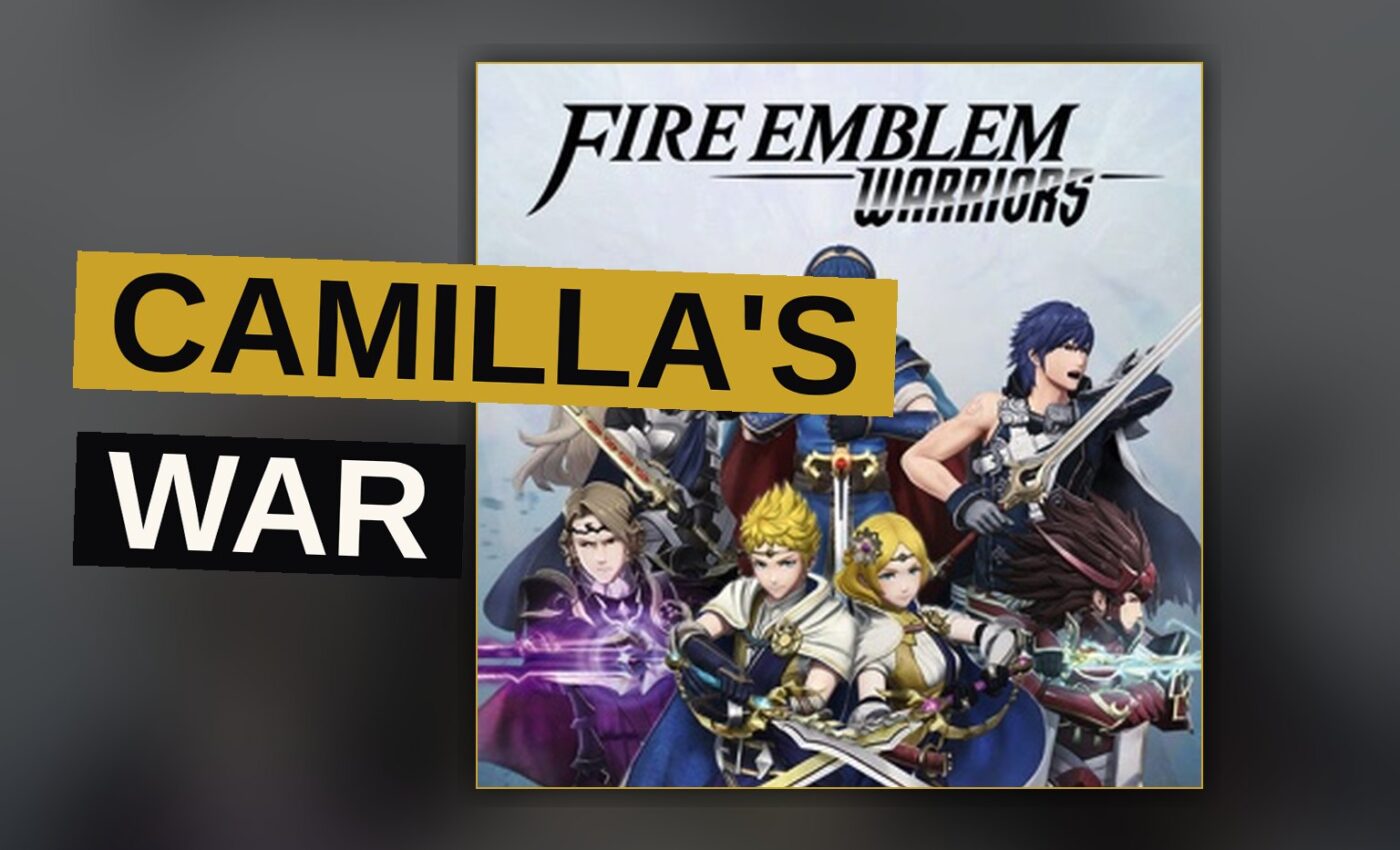
Fire Emblem Warriors is a strange beast. It takes the tactical, turn-based strategy of Fire Emblem and drops it into a fast, hack-and-slash action format. That sounds like a disaster waiting to happen. Instead, it mostly works, though it never quite reaches the heights of either its parent series or the Warriors games that inspired it.
The game was released for the New 3DS in 2017 and later ported to the Switch. It follows the story of Princess Camilla, a character from the Fire Emblem Fates timeline, as she leads a rebellion against her kingdom. Players control a small squad of soldiers, charging into waves of enemies while leveling up, upgrading weapons, and unlocking new abilities.
Camilla’s Rebellion
The plot is thin by Fire Emblem standards. Camilla is betrayed by her father, the king, and driven to lead a rebellion. Her motivations are simple: revenge and the desire to rule. The story moves quickly, and the characters rarely get room to breathe.
What the game does well is the presentation. Camilla is voiced by a well-known actress, and her scenes carry genuine menace. The game leans into her dark, manipulative personality, and her interactions with other characters sell the conflict. It is a solid enough setup, even if it does not linger on the emotional stakes the way a Fire Emblem game usually does.
The Fighting System
The core of Fire Emblem Warriors is its combat. Players move through groups of enemies, hacking away with swords, spears, and magic. The action is fluid, and the controls are easy to pick up. Enemies fall in satisfying numbers, and the game rewards aggression.
Each character has a unique moveset. Sword users can dash in and strike from below. Axe users can break shields. Magic users summon spells from a distance. The variety keeps fights from feeling repetitive, though some classes feel weaker than others.
The biggest difference from a standard Warriors game is the risk-reward system. In most Warriors titles, a player can charge recklessly into a crowd and survive almost anything. In Fire Emblem Warriors, taking too much damage sends a unit back to the nearest allied base. Lose too many units, and the mission fails.
That change shifts the whole tone. Players are forced to think about positioning and resource management. A reckless charge can cost the mission, and that tension gives the combat a strategic layer missing from most action games.
Leveling Up and Equipment
Between missions, players visit a hub world to upgrade weapons, purchase items, and assign skills. Characters gain experience and level up, unlocking new attacks and stat boosts. This progression loop is familiar to fans of the Warriors series, and it works well here.
Weapons are the heart of the customization system. Each type of weapon has its own strengths and weaknesses. Swords deal steady damage but lack range. Axes hit hard but slow down the user. Spears keep enemies at bay but require careful timing. Players spend resources to upgrade their favorites, making each build feel distinct.
The skill tree adds depth. Skills include defensive buffs, offensive combos, and utility effects like healing or evasion. Choosing which skills to unlock becomes a key part of planning, since some abilities synergize better than others. It is a robust system, though it can feel overwhelming at first.
The Cast
The roster draws from the Fire Emblem Fates timeline, with Camilla leading the main cast. Other characters join as the story progresses, including her allies and rivals. Each character has a distinct visual design and a brief backstory, though the game does not delve deeply into their histories.
The voice acting is strong across the board. Camilla’s performance stands out, but other characters deliver solid lines as well. The writing is serviceable, leaning on the established lore of the Fates timeline without adding much new. Fans will recognize the references, but newcomers may find the dialogue thin.
“Camilla’s betrayal drives her to lead a rebellion against her kingdom.”
That line captures the essence of the story. It is a simple setup, and the game does not complicate it beyond that. The focus stays on the action, and the narrative exists mainly to give the fighting context.
The New 3DS Port
The original release was for the New 3DS, a console that struggled to keep up with the hardware of its time. The game runs at a low frame rate, and the graphics are limited. The Switch version improved things, but the foundation remains the same.
The game is built around large battles, and the New 3DS hardware shows its age quickly. The screen resolution is low, and the draw distance is short. Enemies and scenery blur together during chaotic fights, making it hard to track individual units. The Switch version helps, but the core issues remain.
The game also suffers from a clunky interface outside of battle. Menus are slow to load, and navigating the hub world can be frustrating. These problems are not endemic to the Switch version, which has been patched over time, but they are present in both releases.
Multiplayer
The multiplayer mode allows players to team up or compete in arena-style matches. It is a fun addition, though it lacks the depth of the single-player campaign. The online infrastructure is modest, and the mode feels more like a bonus feature than a centerpiece.
Multiplayer works best with friends who know the systems. Players can coordinate attacks and support each other, and the chaos of a full arena is entertaining. It is a nice addition, but it does not extend the game’s lifespan significantly.
Final Verdict
Fire Emblem Warriors is a competent but uneven hybrid. It succeeds at blending two genres, but it does not fully commit to either. The action is fun, and the strategy elements add replay value, but the story and presentation suffer from the compromise.
The game is at its best when it focuses on the fighting. The missions are varied, and the enemy designs keep the action fresh. When it drifts into story mode, the pacing slows and the writing struggles to keep up.
The game earns its keep through its combat, but it loses ground on presentation and depth. For fans of both Fire Emblem and Warriors, it offers a decent compromise. For everyone else, it is a solid but unremarkable entry in either franchise.
Here is a quick breakdown of what stands out:
- Combat: fluid, rewarding, with a solid risk-reward system
- Story: thin, with a simple setup
- Graphics: limited, especially on New 3DS
- Customization: deep, with a robust skill tree
- Presentation: average, with strong voice acting
The game is worth a look for anyone curious about the genre blend. It is not a masterpiece, but it is a decent example of a series willing to experiment. Just do not expect it to fully satisfy fans of either parent franchise.
The final word is simple: Fire Emblem Warriors is a solid game with a split identity. It is a worthy experiment, even if it does not fully succeed.