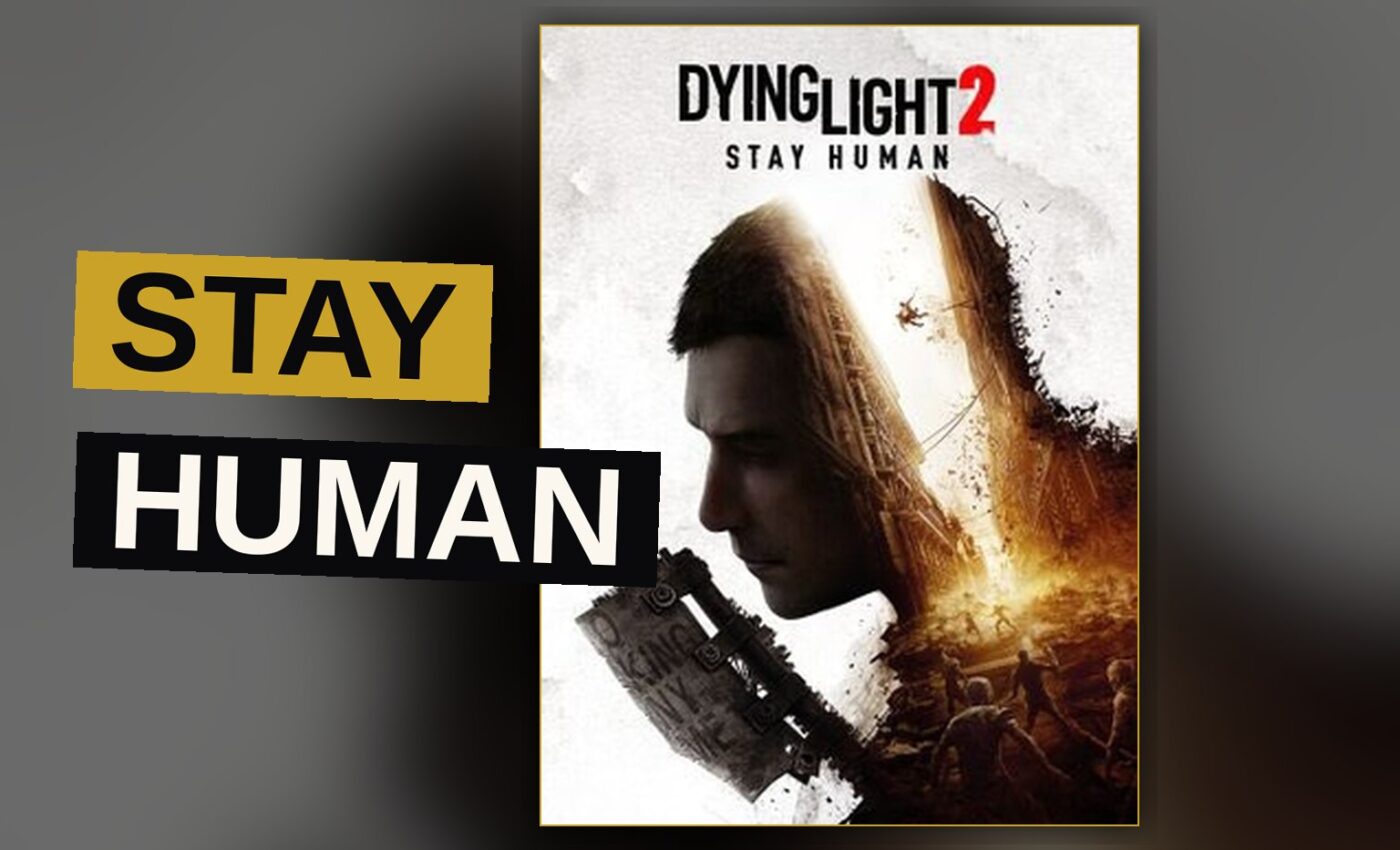
Dying Light 2: Stay Human wants to be the rare open-world game that lets you choose how to survive. That ambition is the whole pitch, and it mostly delivers on it. The problem is that the choices rarely feel like they matter as much as they should.
The game drops you in a ruined city called Virovac, where gangs, cultists, and infected roam the streets. You play as Aiden Caldwell, a survivor who can parkour across rooftops, jump through windows, and swing off ziplines. The hook is that almost every mission, every side quest, and every conversation lets you pick a side. You can help the settlers or the gangsters. You can kill a rival or talk your way out. The game tracks your decisions and builds a personal ending based on how you play.
That system is the star of Dying Light 2: Stay Human. It is also the thing that stumbles the most.
Trailer, via IGDBcom.
Choosing Sides in Virovac
The city itself is the best part of Dying Light 2: Stay Human. It is a dense, vertical place full of tall buildings, narrow alleys, and secret shortcuts. Climbing up a fire escape and swinging across a zipline to land on a rooftop is smooth and satisfying. The movement system carries over from the first Dying Light, and it still feels fluid.
The quests that fill Virovac are where the game shows cracks. Most missions boil down to fetch-and-deliver errands or combat arenas. You are asked to find an item, deliver it, or fight a group of infected. The variety is there on paper, but the execution often repeats itself. A few missions stand out, but many blend together after a dozen hours.
The dialogue scenes try to make the choices feel weighty. Aiden talks to characters, listens to their problems, and picks a response. Sometimes those conversations are sharp. Other times they feel like a checkbox in a spreadsheet. The game knows what you chose, but it does not always know why you chose it.
The settlers and the gangs each want something from you. The settlers want protection and resources. The gangs want power and territory. Your choices ripple through the world, changing who controls which district. That ripple effect is the promise of Dying Light 2: Stay Human, and it works in moments. It falls apart when the consequences feel arbitrary or small.
Combat and the Infected
Fighting is the other pillar of Dying Light 2: Stay Human. You have a melee weapon in hand at all times, and you can craft new ones from parts you find. The combat is fast and brutal, but it can also feel shallow. Enemies swarm, you dodge, you hit, and the cycle repeats. The infected have a few tricks, but most fights resolve the same way.
There is a skill tree that lets you improve your abilities. You can learn new moves, gain speed, or increase your health. The upgrade system gives you some freedom, but it does not change how fights play out. You will still be dodging and hitting, just better at it.
The infected are the constant threat in Dying Light 2: Stay Human. They lurk in dark corners, wait behind doors, and chase you through the streets. The fear factor is real, even when the combat loses its edge. The game understands that dread better than it understands depth.
The Ending and What It Means
The ending of Dying Light 2: Stay Human is built from your choices. It is a branching finale that changes depending on who you helped and who you hurt. That structure is ambitious, and it lands in some versions of the story. In others, the payoff feels thin. The game tells you what you did, but it does not always show you why it mattered.
The final stretch asks big questions about survival and humanity. It does not always answer them. The narrative momentum stalls in the last act, and the payoff is smaller than the setup suggests it could be.
Performance Across Platforms
Dying Light 2: Stay Human runs on Series X|S, PS4, PS5, and PC. The performance varies across those platforms. On Series X|S, the frame rate holds steady during most combat. On PS4, the game struggles more with load times and texture quality. On PS5, the loading screens are shorter, and the visuals look sharper. On PC, the game scales well with hardware upgrades.
The game supports cross-save and cross-play features, which means you can start on one platform and pick up where you left off on another. That is a practical convenience, but it does not change how the game plays.
Here is a rough breakdown of how the game performs on each platform:
| Platform | Frame Rate | Load Time | Texture Quality |
|---|---|---|---|
| Series X | S | Stable | Good |
| PS4 | Unsteady | Long | Low |
| PS5 | Stable | Short | High |
| PC | Stable | Short | High |
The numbers are approximate, and they will vary depending on your hardware and settings. The game is playable on all four platforms, but the experience is not identical.
Sound and the World Around It
The sound design in Dying Light 2: Stay Human is strong. The infected moans, the distant alarms, and the crunch of metal all add to the atmosphere. The music swells during key moments, and it pulls you into the tension. The audio is one of the reasons the world feels alive, even when the systems underneath it struggle.
The voice acting is solid. Aiden speaks with conviction, and the supporting cast delivers their lines with weight. The performances carry the emotional beats, even when the writing does not fully support them.
Where It Falls Short
Dying Light 2: Stay Human is a game with a clear vision, and that vision is not always realized. The choice system is the biggest letdown. Many of your decisions feel like they are tracked for the sake of tracking. The game records your actions, but it does not always respond to them in meaningful ways.
The pacing suffers too. The middle stretch drags, with similar missions and similar fights. The game asks you to spend long hours in Virovac, and not all of that time is engaging. Some areas are memorable. Others are forgettable.
The combat, while competent, does not evolve much. You will spend dozens of hours fighting infected, and the core loop does not change significantly. The skill tree offers options, but it does not remake the way fights play out.
Final Score
Dying Light 2: Stay Human is a game with a strong identity and a weak execution. The movement system is excellent, the world is dense, and the choice system is ambitious. Those strengths are undercut by a combat loop that does not grow, a quest structure that repeats, and an ending that undersells its promise.
The game is worth playing for its best moments. Its worst moments are frequent enough to leave a mark. It is a game that comes close to greatness but does not quite reach it.