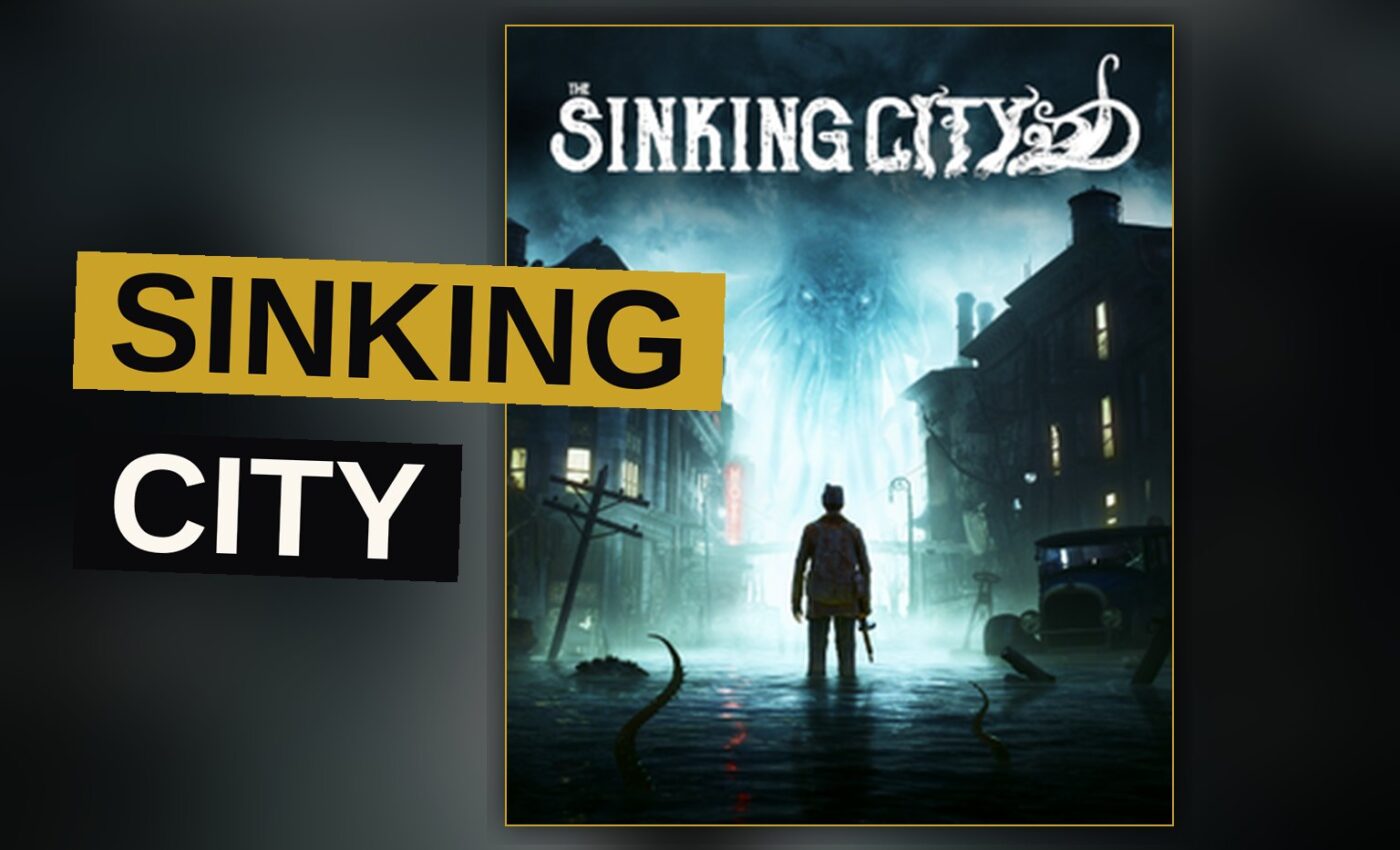
The Sinking City asks players to solve crimes in a flooded city while also managing their own mental health. That sounds like a bold idea. In practice, it mostly works, but it rarely reaches the heights of ambition it sets for itself.
Trailer, via Nacon.
The Case Files
The Sinking City drops players into Oakmont, a coastal town drowning under rising waters. The city floods because of climate change, and the game leans into that premise throughout its campaign. Players take on the role of Charles Reed, a private investigator who has recently moved to the area after a traumatic event in his past. He suffers from unreliable memory and other psychological issues, and those problems become a central mechanic.
Cases are presented as individual investigations, each with its own suspects, evidence, and witnesses. Solving them involves gathering clues, interrogating characters, and making deductions based on the information available. The city itself is a character in its own right, with flooded streets, submerged buildings, and weather effects that add to the sense of urgency.
Detective Work
Reed’s deductive abilities are the core of the experience. He can make observations about people and objects, then cross-reference those notes to draw conclusions. This system works best when it rewards careful observation. A player who pays attention to details in conversations or around crime scenes will find the puzzle pieces fit together naturally.
But the system also shows its seams. Some clues are obvious, and the game nudges players toward them with repeated hints. Other clues feel arbitrary, requiring players to guess which piece of information matters most. The balance between guided and open deduction is uneven, and it frustrates more than it fascinates.
Interrogations are a highlight. Conversations with suspects offer multiple lines of questioning, and player choices shape how quickly a suspect cracks. A skilled detective can get a confession in minutes; a clumsy one can waste hours chasing dead ends. These moments are some of the strongest in the game.
The Mind Game
Reed’s psychological condition is not just flavor text. It affects gameplay directly through a fatigue meter that drains as he pushes himself too hard. Ignore it and he suffers consequences. Manage it poorly and the city becomes harder to navigate, with hallucinations and disorientation setting in.
This is a clever idea in theory. In practice, the fatigue system often feels like a rule rather than a tool. The game tracks stress levels but rarely communicates clearly why a player is losing control. The result is a mechanic that exists more as a constraint than a meaningful one.
The city’s flooding also ties into the psychological theme. Water is everywhere, and the constant threat of drowning adds to the tension. It is a visual and thematic success, even if the underlying systems are not always as tight as they could be.
Performance and Technical Rough Edges
The Sinking City runs on current-generation hardware across Series X|S, PS4, PC, and PS5. Performance varies depending on the platform. On PC, the game offers the widest range of settings and the clearest image quality. On consoles, frame rates can dip during busy scenes, especially when the water effects are at their most intense.
Load times are generally quick, though larger cities take longer to render fully. The game handles multiple concurrent cases without much trouble, allowing players to switch between investigations freely. This flexibility is a strength, as it lets players work on easier cases while saving harder ones for later.
The controls are standard for the genre. Movement, combat, and investigation tools all respond well, with few moments of hesitation. Combat is present but not emphasized, kept as a secondary skill rather than a main focus.
The Flooded World
Oakmont is the star of The Sinking City. The flooded streets, sunken buildings, and rising tides create a distinct visual identity. The game uses its setting to set tone and drive plot forward. Characters talk about the water, the damage it causes, and the fear it inspires. The world feels lived-in, and that effort shows.
Some side areas feel less developed. Side quests and optional locations can feel thin compared to the main case files. This is a minor complaint, but it stands out after spending time in the more polished central districts.
The water effects are the technical high point. They are detailed and convincing, with ripples, reflections, and submerged objects rendered with care. The game’s lighting also deserves praise, with rain, fog, and sunlight all contributing to the mood.
A Mixed Campaign
The campaign follows Reed’s investigation into a series of crimes tied to the city’s flooding. It moves at a steady pace, introducing new cases and new suspects along the way. The story builds toward a finale that ties the environmental disaster to personal stakes for the protagonist.
The pacing is where the game stumbles. Some cases drag, with repetition setting in before a payoff arrives. The game’s ambitions are large, but the execution does not always match the scope. A tighter edit would have helped.
The ending brings everything together, tying the flood, Reed’s past, and the criminal conspiracy at the center of the story. It is a satisfying conclusion, even if the journey there is occasionally rough.
Final Verdict
The Sinking City is a game with a strong concept and a weaker delivery. Its detective work is engaging, its world is memorable, and its ambition is clear. But the fatigue system, the uneven difficulty, and the occasional clunky case file hold it back from greatness.
It is a game worth playing for players who enjoy slow-burn mysteries and atmospheric settings. It is not a game that will appeal to everyone, but for those who stick with it, the payoff is real.
Key Facts
- Title: The Sinking City
- Developer: Frogwares
- Platforms: Series X|S, PS4, PC, PS5
- Release Date: 2019
- Genre: Detective thriller
- Score: 7 of 10
The Sinking City rewards patience and observation, but it punishes careless play.
Get the Notebook.
The day's best stories and every fresh verdict, in plain English, in your inbox by seven. One email a day, no more.