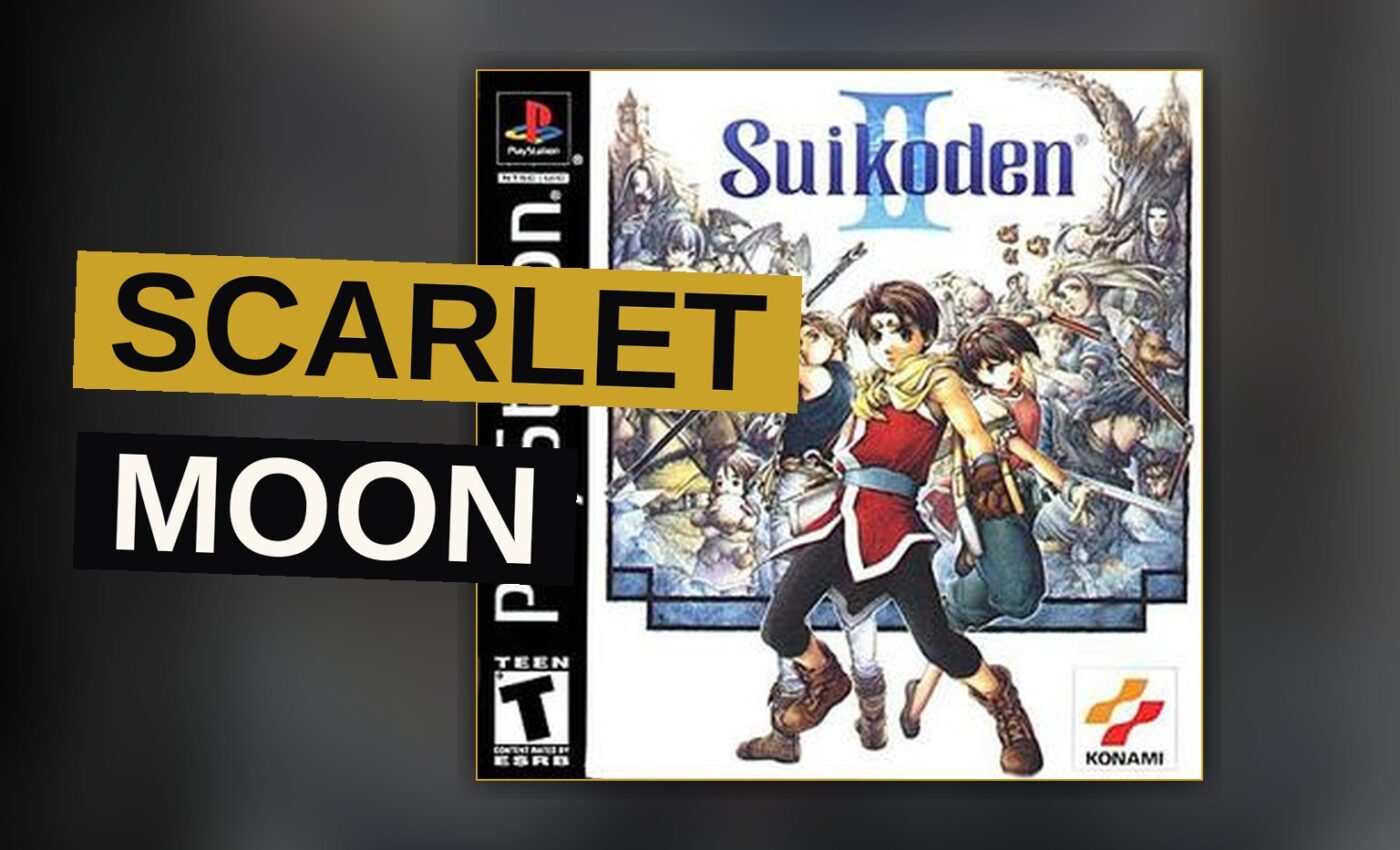
Konami released Suikoden II on the original PlayStation in Japan on December 17, 1998, with North American shelves following on September 29, 1999, and Europe waiting until July 28, 2000. The game arrived quietly. Sales were lackluster, and the critical reception was tepid. That is the record. It is also the wrong frame for what Konami actually built — a role-playing game with over 100 recruitable characters, three separate combat systems, and a save import that carries your old party forward. Suikoden II is the best RPG on the PlayStation that most people skipped.
Riou Genkaku and the Unicorn Youth Brigade
You play a silent protagonist. The canon name is Riou Genkaku, adopted son of Genkaku, the hero who saved the City-States of Jowston in an earlier war against Highland. Riou serves in the Highland army’s Unicorn Youth Brigade alongside his best friend, Jowy Atreides, and his adopted older sister, Nanami.
The story opens three years after the first Suikoden. Riou and Jowy witness a false flag massacre staged by Prince Luca Blight, heir to the Highland throne. They flee their own army. In the chaos the two friends are separated, and each ends up holding one half of the Rune of the Beginning — a True Rune that governs conflict and war. The Rune’s curse is explicit: its two bearers must fight until only one is left standing.
Luca Blight and the War for Jowston
Luca Blight is the antagonist for most of the game, and he earns it. The source describes him as a brutal and bloodthirsty madman who developed a hatred for Jowston as a child after watching Jowstonian soldiers rape his mother during an earlier war. That is the character’s origin, and the game does not soften it.
The main conflict is the war between the Kingdom of Highland and the City-States of Jowston, led by Mayor Anabelle. Riou ends up leading a growing resistance against Luca’s campaign of conquest while Jowy sinks deeper into Highland’s political machinery. The friends’ paths split, and the Rune’s dark fate hangs over both of them.
Other antagonists fill out the cast: Neclord, a senile vampire wielding another of the 27 True Runes; Gordeau, leader of a brutal knight order; Leon, a strategist working for his own ends; and the Beast Rune, which instinctively seeks Luca so the two can combine their power. Nanami wants none of it. She wants the three friends to run away and live quietly together. The game makes you feel the weight of that wish.
Three Combat Systems, One Grid
Suikoden II runs three combat formats. Standard turn-based party battles handle most encounters. One-on-one duels strip the fight down to a single opponent. Grid-based tactical battles put units on a field and let you command an army. Few RPGs of the era attempted that range, and fewer landed all three.
The leveling system is unusual. There is a fixed number of experience points needed per level, and battle experience is determined by the gap between your party’s levels and the enemies’. Low-level characters catch up fast, which cuts the grinding that drags down most games in the genre.
Runes work as they did in the first Suikoden. A character with four level 1 spell slots and a Fire Rune can cast Flaming Arrows four times. Some runes break the rules — unlimited use, or a single cast per battle. Suikoden II adds a three-slot rune system, so a character can equip three different runes at once, plus a party inventory system and a dash button for moving around the screen faster.
108 Stars of Destiny
Recruitment is the spine of the game. Over 100 characters can join your cause, and over 40 of them are usable in combat. Each recruit usually requires a short sidequest. Many join the party; others contribute to a home base that expands as your roster grows. The principal cast is the 108 Stars of Destiny, the same structure every Suikoden game uses.
Save data from the original Suikoden can be imported, carrying over certain characters and story details. That continuity is not a gimmick. It rewards players who stayed with the series and makes the world feel like one place rather than a reset.
In towns you gather information, sharpen weapons, and buy equipment and runes. Wilderness areas hold random encounters. The loop is familiar. The scale is not.
What the Tepid Reception Missed
The initial reception was wrong, and the sales numbers prove only that Konami shipped this game into a bad window with almost no push behind it. The criticism aimed at the game — and the lack of widespread appeal — had less to do with quality than with timing and marketing.
Suikoden II’s real achievement is that its three combat systems never feel like three games stapled together. The duels raise the stakes on a single decision. The tactical battles make the war feel like a war. The party combat carries the 100-plus recruits you spent hours finding. The leveling curve respects your time, and the rune system gives you real choices instead of a fixed spell list.
The Rune of the Beginning is the best idea in the game. It takes two friends and turns their bond into a countdown. Every scene with Jowy carries that threat underneath it. Nanami’s wish for the three of them to run away is the emotional center, and the game never lets you forget that the Rune will not allow it.
Luca Blight works because the game gives him a specific, ugly motive rather than generic evil. The false flag massacre at the start is not backstory you read in a menu. You witness it, and it drives Riou and Jowy out of their own army.
The Case for 8.5
Suikoden II is not flawless. The opening hours are slow, and the recruitment loop will test anyone who wants a tight, linear campaign. Some of the 108 Stars of Destiny matter far more than others, and the game asks you to care about a large cast with uneven screen time.
But the whole is remarkable. Konami built a war story with a curse at its center, wrapped it in three combat systems that each do a different job, and filled it with a cast large enough to make the resistance feel real. The save import from the first Suikoden turns a sequel into a continuation.
The original reception got this one wrong. The game’s reputation has since corrected the record, and that correction is deserved. Suikoden II is the high point of the series and one of the strongest RPGs on the PlayStation.
Hard Numbers
- Developer and publisher: Konami
- Platform reviewed: PlayStation
- Japan release: December 17, 1998
- North America release: September 29, 1999
- Europe release: July 28, 2000
- Recruitable characters: Over 100, with over 40 usable in combat
- Combat systems: Turn-based party battles, one-on-one duels, grid-based tactical battles
- Score: 8.5/10
What the 1999 reviews could not see is how well the Rune of the Beginning holds up as a design choice rather than a plot device. It gives every recruitment, every duel, every tactical battle a reason to exist beyond filling a map. The curse is not decoration. It is the machine that drives the whole game, and it still runs clean.
Get the Notebook.
The day's best stories and every fresh verdict, in plain English, in your inbox by seven. One email a day, no more.