
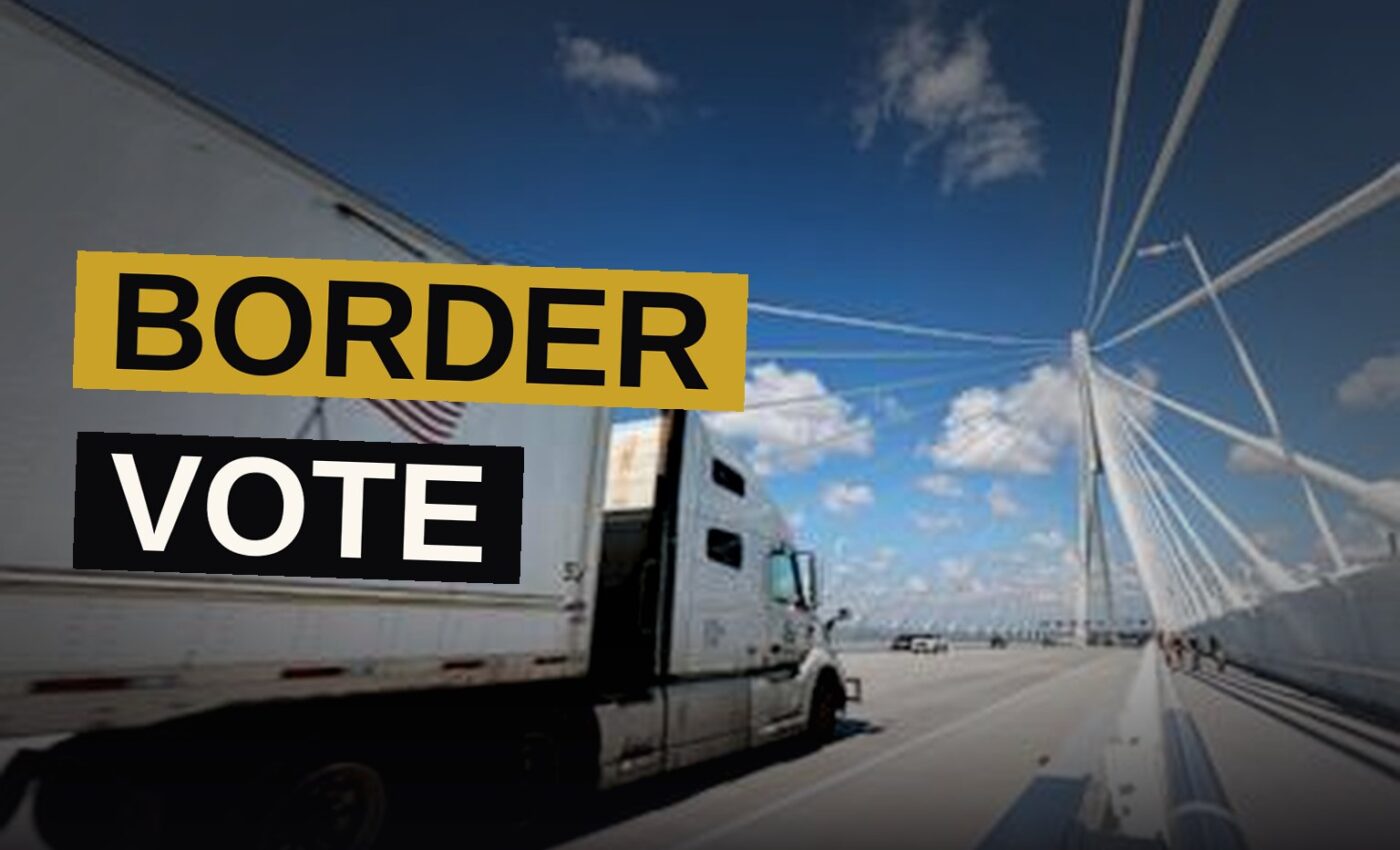
Once again, the US-Canada trade war is intensifying, and the states that stand to suffer most from it are the very states that could determine which party controls Congress come November’s midterm elections. According to analysts who spoke with ABC News, tariffs on goods moving across the northern border threaten particular damage to businesses and consumers in places like Michigan, Ohio and Maine.
Barters Island Bees feels the swings
Barters Island Bees is run by Garret Denniston, a Maine-based honey seller offering flavors such as “Gentle Ginger” and “Blueberry Lemon.”. His business expanded year after year until the trade dispute erupted. Then sales dropped last year when a decline in Canadian tourists hit farmers’ market and fair traffic hard, according to Denniston.
This year’s revenue has surged 75% over the same period from 2025, driven in part by a rise in Canadian customers as tensions seemed to ease.
“We thank Canadian tourists every time we see them,” Denniston told ABC News.
His fear centers on a renewed trade conflict that could once more reduce visitor numbers. “I’m just astounded. It’s only reasonable to expect it will go back in the other direction.”
Denniston was asked whether the trade war might help shape a highly competitive U.S. Senate contest in Maine. His response was “Oh, absolutely. It definitely can.”.
Tariffs hit a small slice of trade — but a big slice of border states
A set of fresh levies on $20 billion in Canadian goods is expected to push up prices for imports ranging from orchids to hockey sticks, many sold predominantly in states along the border, some analysts said. Matching retaliatory tariffs that took effect on Tuesday may hurt sales for nearby U.S. businesses that export products to Canada, they added. A decline in cross-border tourism could also harm companies located within a short trip from Canada.
So far, the effects remain modest. Tariffs released in recent weeks cover just 6% of goods coming into the United States from Canada and 5% of goods moving from Canada into the United States.
The consequences will probably hit hardest in a handful of states that sit close to the Canadian border, because they do far more business with their northern neighbor than most other states do. The RBC analysis of U.S. Census Bureau data, released late last month, found that Canada buys more goods than any other country from 26 U.S. states, and sends more goods into the United States than any other country into 22 states.
“If you go far up north, it’s an arbitrary line in the dirt between what’s in Canada and what’s in the U.S.,” Tyler Schipper, a professor of economics at the University of St. Thomas, Minnesota, told ABC News.
“Someone in Oklahoma doesn’t feel this as much as someone in Dearborn, Michigan,” Jason Miller, a professor of supply chain management at Michigan State University, told ABC News, pointing to a major city in the U.S. auto industry. “It’s purely a geography story.”
Miller argued that despite supply chains spanning a vast, global economy, trade is still simpler and cheaper over shorter distances. He also noted that transportation costs and difficulty increase with distance, so moving goods long distances is harder and more costly than moving them short ones.
Michigan’s auto sector braces for worse
States that do the most trade with Canada stand to lose the most from a border shutdown. RBC’s findings show Maine and Michigan each sit among the top 10 states in combined annual import-export business with Canada, with Ohio ranking as the 15th-highest state on the measure. Montana, North Dakota and Minnesota also rank among the top states on the measure.
| State | Trade ranking with Canada | Senate race |
|---|---|---|
| Maine | Top 10 | Highly competitive |
| Michigan | Top 10 | Key race |
| Ohio | 15th | Key race |
The auto industry in Michigan has already been hit by President Donald Trump’s tariffs, according to Glenn Stevens Jr., an executive director of MichAuto, a statewide industry trade group. He told ABC News that car companies could suffer further consequences if the president raises those levies again.
Last spring, Trump placed 25% tariffs on imported cars and auto parts, which put pressure on a highly integrated auto supply chain between the U.S., Mexico and Canada. The measure left goods compliant with the United States-Mexico-Canada Agreement, or USMCA, a free trade agreement, exempt. Despite that exemption, the Anderson Economic Group says the measure still resulted in $12.5 billion in duties paid on auto-related imports last year.
In the last month, Trump warned of raising tariffs from 25% to 50% on vehicles and vehicle components built in Canada, set to begin in January. The threat made no reference to any exception for goods meeting USMCA requirements.
Stevens said the potential measure “would absolutely be untenable for the industry to operate under. It would decimate supply chains and virtually grind business to a halt.”, according to his own account.
Stevens pointed to the growing attention on trade policy as the midterms draw near, and he warned that a higher tariff could push prices up for shoppers while putting jobs at risk in the state. “There’s no question in an increasingly intense, rhetoric-filled political season, tariffs and trade are very much a primary issue.”
Trade is now a campaign issue in Maine and Michigan
The trade war is already showing up on the trail.
In Michigan, Democratic Senate candidate Abdul El-Sayed said Republican Rep. Mike Rogers would be a “rubber stamp” for Trump in the Senate. Rogers has largely defended the president’s trade strategy, arguing that economic pressure on Canada is necessary to protect American jobs.
“Trump is escalating a trade war with Canada for his own vanity,” El-Sayed wrote in a social media post.
When asked about the new round of tariffs on Canada, Rogers’ campaign did not offer a direct response. Instead, it pointed back to Rogers’ prior statements on strengthening U.S. manufacturing.
A statement from the White House insisted that the tariffs were meant to protect Americans. It argued that numerous American workers, farmers and businesses had carried the weight of unfair trade relations with Canada, which has demanded complete access to the American market without giving anything back, and that Trump would never stop fighting to put Americans and America First.
Republican Sen. Susan Collins is running in a tight Senate race in Maine, where the state sits among the top 10 for trade with Canada.
The exposure among the key states breaks down as follows:
- Maine — top 10 in trade with Canada, highly competitive Senate race
- Michigan — top 10 in trade with Canada, key Senate race
- Ohio — 15th in trade with Canada, key Senate race
Denniston’s is a business built on cross-border customers, and he knows how quickly they can vanish. The risk is plain to see.
Only a fraction of items fall under the new duties, yet the firms affected by them are clustered in districts where votes are cast. To Denniston, the sequence repeats itself: thaw, boom, followed by concern.
Source: abcnews.com
Get the Notebook.
The day's best stories and every fresh verdict, in plain English, in your inbox by seven. One email a day, no more.