
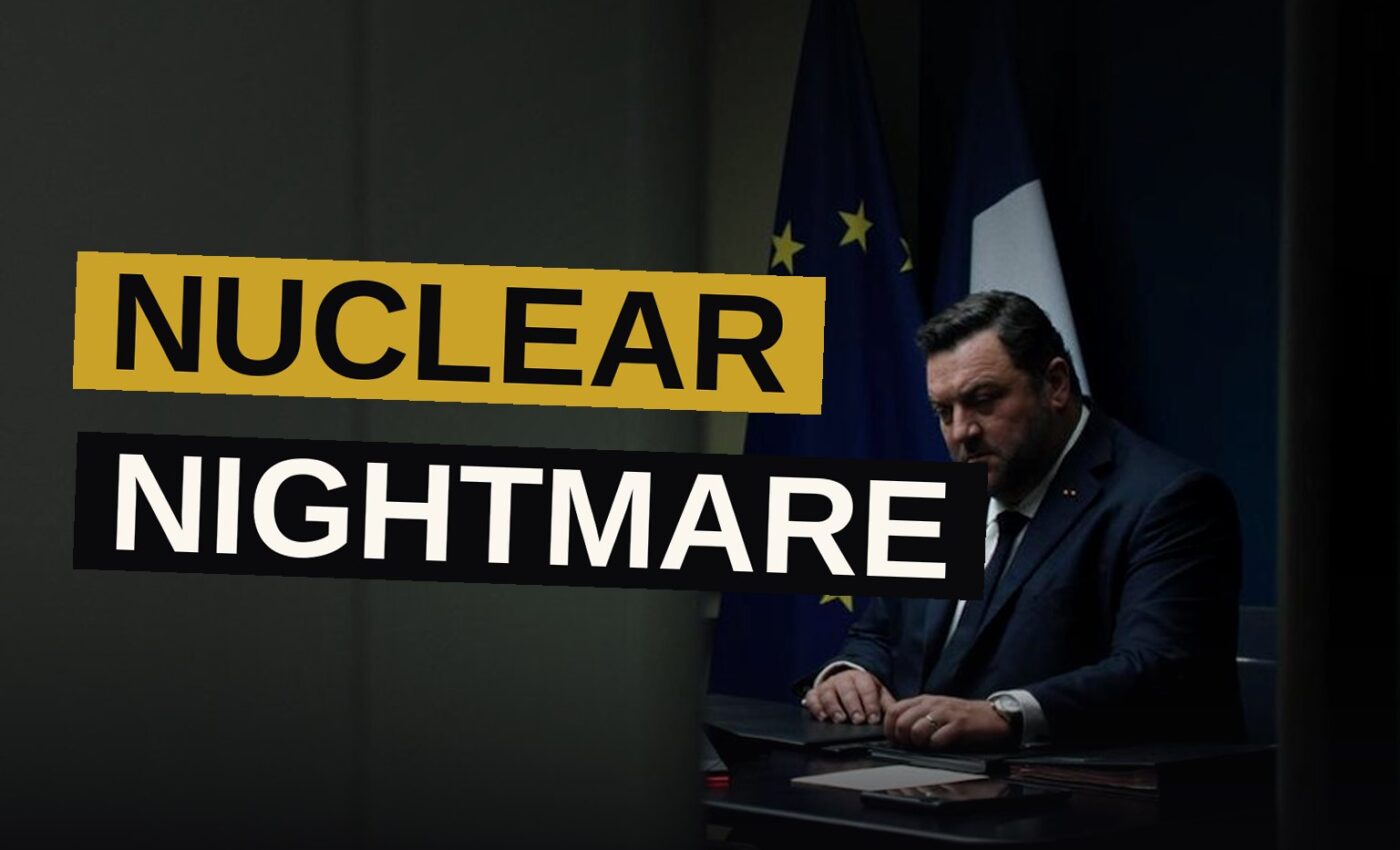
The new film from Alexandre Smia is a debut feature called “Jupiter.”, starring Denis Menochet as a French president forced to consider launching nuclear weapons. It runs 87 minutes. A review from Variety notes its tight suspense while arguing the scale feels too limited for the big screen.
A nuclear crisis breaks out between Russia and Ukraine, and President Paul Archambault brings together his ministers and advisers to weigh the dangers of escalation against the risks of appeasement. The film presents a gathering of conflicting opinions, with Archambault taking counsel from both sides. The screenplay is the work of two writers: Smia and Thomas Finkielkraut.
Inside the War Room
Kovalenko, the beleaguered president of Ukraine, is on friendly terms with Archambault. His country requires military support because it is under attack from Russia. Chernov, the Russian premier, has been called a volatile despot.
The crisis escalates in stages:
- Chernov survives an assassination attempt and uses the pretext to ramp up the war. Archambault must decide how far his pledge to protect Ukrainian sovereignty extends.
- His NATO allies refuse to commit to military intervention because Ukraine is not a NATO member. Whatever France opts to do, it will be acting unilaterally.
- Chernov detonates an atomic bomb over the Black Sea as a show of force.
- Archambault and his advisers move to the bunker-like war room that gives the film its name. The nuclear Doomsday clock ticks about twenty seconds closer to midnight.
A Thin Backstory
At the film’s start, Archambault receives devastating news involving his daughter. It gets mentioned a couple of times later, but this personal tragedy is all the backstory we ever get. Even Archambault’s own political affiliations are kept unspecified.
Throughout the film, Archambault stays in tight close-up, and it is the work of DP Nicolas Loir’s relentlessly focused, somber cinematography rarely allows him to escape. That focus forces Menochet’ that carries the weight of conveying the inner conflict and existential anguish all of the team must be feeling. The camera’s solemn gravity does most of the heavy lifting in getting that across.
The reviewer contends that the secondary characters — namely Reda Kateb as the hawkish Minister of Defence, Ella Rumpf as a diplomatic adviser and Céline Sallette as French Prime Minister Clara Boyer — function primarily as vessels for delivering particular arguments rather than as fully realized individuals.
Prestige-TV Style, Limited Depth
The review describes “Jupiter” as having a prestige-TV-show feel, and the setting stays confined to the same few featureless interior locations throughout. The talky action moves through chapters marked by ominous headings such as “Ultimatum” and “Sacrifice.”.
The score from Olivier Marguerit is laid on thick during the interstitial scenes where Archambault rides in the back of a car or walks with purpose through a passageway. The tale moves swiftly, trimmed cleanly by Pierre Deschamps, though it runs straight rather than deep, per the review.
Smia’s film takes a more solemn, less kinetic approach than Kathryn Bigelow’s are similarly themed “A House Of Dynamite.”, yet they share an underlying, oddly optimistic belief that the individuals entrusted with contemplating a nuclear disaster will act with dedication, intelligence, and honesty.
The film attempts a brutal realism, yet it undercuts itself by assuming that those who hold the power to launch a nuclear strike will act with calm resolve. The reviewer notes that the world today makes that assumption seem less likely than the picture wants it to be.
“Let in as many as you can.”
The moment arrives after an aide reports that warheads are armed and in the air, and colleagues are asking to be allowed to take shelter in the bunker. Archambault gives the order. The review notes, however, show us nothing of the actual process — who gets let in and who is denied.
Escalation Without Emotion
As the stakes rise, the choices shrink. A handful of failed attempts later, international relations stop resembling a game of chess and instead become a game of chicken.
The remaining approach involves deciding whether to blink first, all while uncertain whether that move will be seen as the wisdom of the humble or the weakness of the defeated.
This review hails “Jupiter” as a tight debut feature, yet notes that its iron grip on its grim tone can feel overly restrictive. That very control paradoxically reveals a hesitance when it comes to plumbing the chaos and messiness of human behavior in the face of potential annihilation.
The movie ends with a sudden blackout, leaving viewers on a cliffhanger that feels like the end of an episode rather than a true resolution. The reviewer’s sole takeaway from this hellish situation is that no choice can ever be determined to be definitively the right one.
The Review’s Core Complaints
A piece published under the title “‘Jupiter’ Review: A Claustrophobic Study of a Nuclear-Escalation Nightmare That Feels Too Small for the Big Screen,” commends the film’s tight construction while raising doubts about its emotional substance.
The review notes that the constricted screenplay doesn’t give Archambault much self to speak of. It’s possible he only appears selfless because there’s little characterization to contradict it. There scarcely seems room for two writers on this script.
The film’s approach is procedural rather than emotional, in the reviewer’s view. Smia elects to turn away from potentially emotive dilemmas in the name of a paced-up procedural approach that makes “Jupiter” all pulse and no heart.
Core Questions, No Easy Answers
The movie raises a genuine question about when a country possessing nuclear arms should step in, putting its own people’s lives at risk, to protect an ally from the threat of a strong neighboring power.
It’s a question with no easy answer. The film doesn’t pretend otherwise. The open-ended conclusion suggests that no decision can ever be definitively judged to be the right one.
Some viewers might find the uncertainty frustrating. The review acknowledges it’s difficult not to feel somewhat unsatisfied after spending 87 minutes watching a man make a decision.
“Jupiter” is a debut feature that shows promise. It’s impressively taut, cleanly edited and anchored by Menochet’s performance. The supporting cast is fine, even if the reviewer finds them given little to work with.
The confined setting and constant attention on Archambault generate real unease throughout the picture. The music heightens the suspense in a way that works well. The cutting keeps the pace quick and the narrative flowing smoothly.
The review contends that the film’s grip feels too tight, with a refusal to let the disorder of human conduct during a crisis be examined. That restraint, along with thin character development and an ending that leaves viewers wanting more, keeps the film from fully engaging the audience emotionally.
For a film about the end of the world, it feels oddly contained. The review’s headline captures this tension: it’s a claustrophobic study that feels too small for the big screen. The film’s idealistic faith in public servants may strike some as naive. Either way, it is a debut that the review calls impressively taut, anchored by a strong lead performance and a firm directorial hand.
Source: variety.com
Get the Notebook.
The day's best stories and every fresh verdict, in plain English, in your inbox by seven. One email a day, no more.