
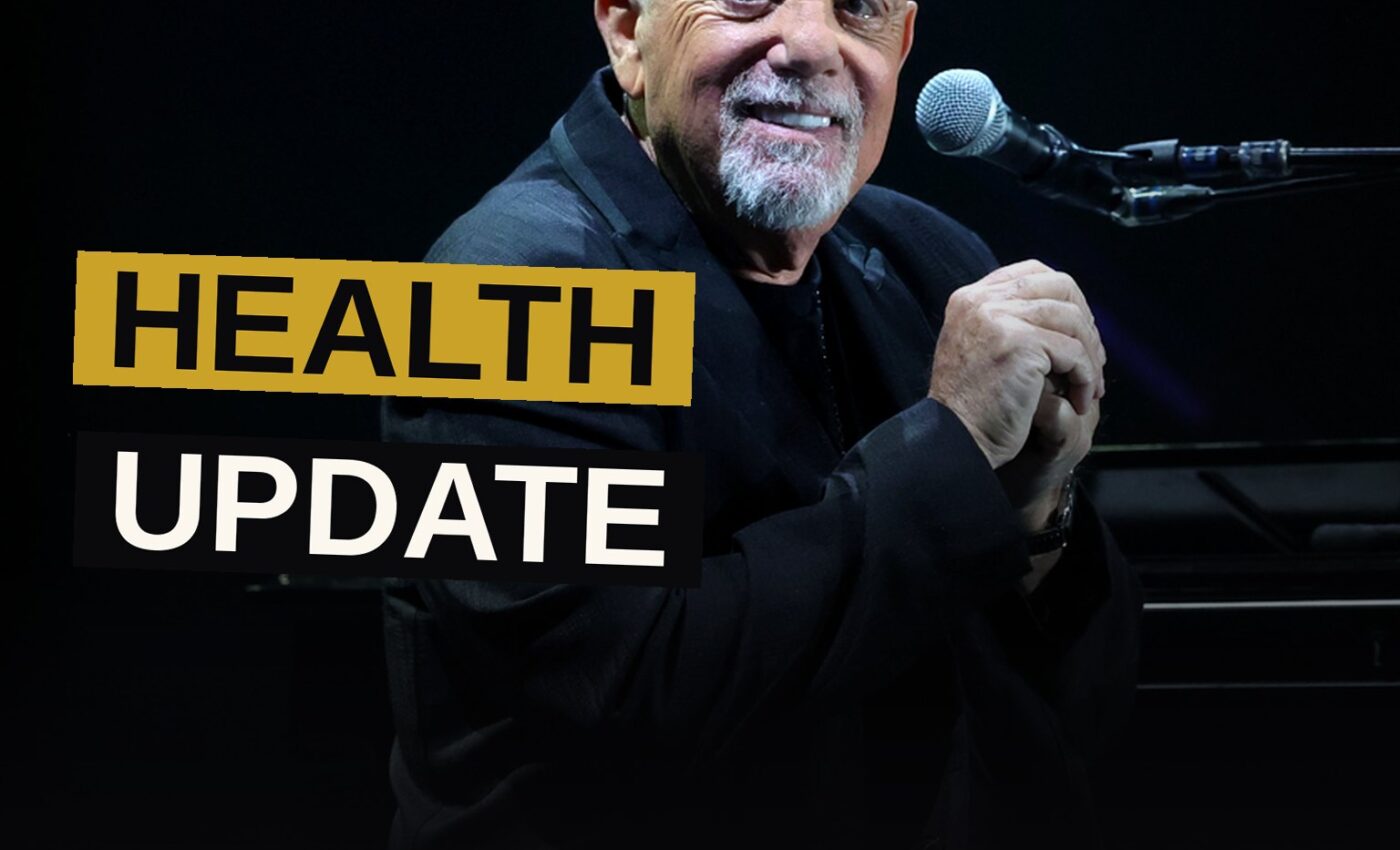
Billy Joel says he is doing better after brain surgery helped relieve some of the symptoms of normal pressure hydrocephalus, a disorder he was diagnosed with in 2025.
On SiriusXM’s Billy Joel channel Wednesday, the singer talked about the surgery he agreed to after noticing “my balance was not good, I had this sensation of rocking on a boat.”
The 77-year-old musician revealed in May 2025 that he had been diagnosed with normal pressure hydrocephalus, in which cerebrospinal fluid builds up inside the skull and presses on the brain. He canceled several concerts and said he had been told not to perform until he recovered.
Though he returned in January of this year to perform two songs with a tribute band, he said on Sirius that in general his doctors have asked him not to undergo too much stress.
The May 2025 Diagnosis
Joel first went public with his condition in May 2025, when he revealed the diagnosis and immediately postponed a string of concert dates. Normal pressure hydrocephalus occurs when cerebrospinal fluid accumulates in the brain’s ventricles, creating pressure that can impair walking, thinking and bladder control. In Joel’s case, the fluid buildup inside the skull was pressing on the brain, producing symptoms that disrupted his day-to-day life and, ultimately, his performing career.
The disorder is most common in older adults, and its symptoms often mimic those of aging or dementia. That overlap can make the condition difficult to identify, and Joel himself acknowledged the confusion. “It’s hard to tell what’s your age and what’s a condition,” he said. But Joel said on Sirius that the signs were hard to miss: his balance faltered, and he felt a persistent rocking sensation even when standing still.
“My balance was not good, I had this sensation of rocking on a boat,” he told listeners on the channel.
The Neurologist’s Recommendation
Joel’s neurologist told him the condition could continue to get worse without intervention. The doctor’s recommendation was a shunt — a thin tube surgically implanted to drain excess fluid from the brain into another part of the body, where it can be absorbed. The device was designed to address the core problem directly: relieving the pressure created by the cerebrospinal fluid building up inside his skull.
Joel said he was initially resistant to the idea. The procedure required drilling a hole through his skull, a prospect he found difficult to accept at first. For a musician whose livelihood depends on memory and mental sharpness, the stakes felt especially high.
“I don’t want to lose my marbles,” he said. “It’s hard to tell what’s your age and what’s a condition.”
Research Changed His Mind
After pushing back against the surgery, Joel said he did his own research. He looked into how the shunt worked, what the risks were and what the likely benefits would be. What he found convinced him the procedure was worth doing.
The surgery, he learned, could help with balance and memory — two areas where he had noticed real decline. The rocking sensation and unsteadiness he had described were exactly the kinds of symptoms the shunt was meant to relieve. He also realized that his job might be making things worse.
“I realized that because of my job, which is playing rock and roll music very loud, that it was giving me something like a concussion every time I did a show,” he said.
That realization — that decades of loud performances may have been compounding the problem — helped tip the balance. The man who had initially resisted having a hole drilled through his skull decided to move forward.
The Shunt Implant
Joel went through with the procedure, and the results came quickly. On Sirius, he described the improvement in plain terms: memory got better, balance improved, and his overall ability to function returned.
“So they implanted a shunt in my brain and it actually improved things,” he said. “My memory got better, my balance got a little better, my ability to function was better.”
The surgery addressed the fluid buildup directly, relieving the pressure that had been affecting his daily life. The balance problems and the sensation of rocking on a boat — the very symptoms that had first alerted him that something was wrong — were among the things the procedure was meant to improve, and by his own account, it worked.
The January Return
Joel returned to the stage in January of this year, performing two songs with a tribute band. It was a limited appearance, not a full concert, but it marked a meaningful step in his recovery. For a performer who had been told not to perform at all until he recovered, even a two-song set represented real progress.
He has not announced a full tour schedule. His doctors, he said, have asked him to avoid too much stress while he continues to heal. That caution reflects the ongoing nature of his recovery: the shunt improved his memory, balance and ability to function, but his medical team is still urging restraint.
The January show was his first public performance since the diagnosis disrupted his plans in 2025.
The Canceled Concerts
Joel’s diagnosis in May 2025 led him to cancel several concerts. At the time, he said he had been told not to perform until he recovered, and he stepped back from the road to focus on his health.
The cancellations were announced publicly, and fans were left waiting for updates on his condition. Between the May 2025 announcement and this week, the January appearance with the tribute band was the most visible sign of his progress. Wednesday’s SiriusXM appearance was his most detailed public discussion of the surgery and its effects.
What Fans Should Know
Joel ended his SiriusXM appearance with a direct message to his audience. He wanted to reassure people who had been concerned about him since the diagnosis.
“I’m ok. I want people to know, don’t worry about me. I’m still here,” he said.
Here is a summary of the key developments in Joel’s recovery:
- Joel was diagnosed with normal pressure hydrocephalus in May 2025.
- His neurologist recommended a shunt implant because the condition could worsen.
- Joel initially resisted the surgery, which required drilling a hole through his brain.
- After researching the procedure, he agreed to have the shunt implanted.
- The surgery improved his memory, balance and ability to function.
- He canceled several concerts after the diagnosis and was told not to perform until recovered.
- He returned in January to perform two songs with a tribute band.
- His doctors have asked him to avoid too much stress while he recovers.
- He told fans on Wednesday: “Don’t worry about me. I’m still here.”
Joel’s recovery is ongoing, but his message is clear: he is still here, and he is doing better.
Source: variety.com
Get the Notebook.
The day's best stories and every fresh verdict, in plain English, in your inbox by seven. One email a day, no more.