
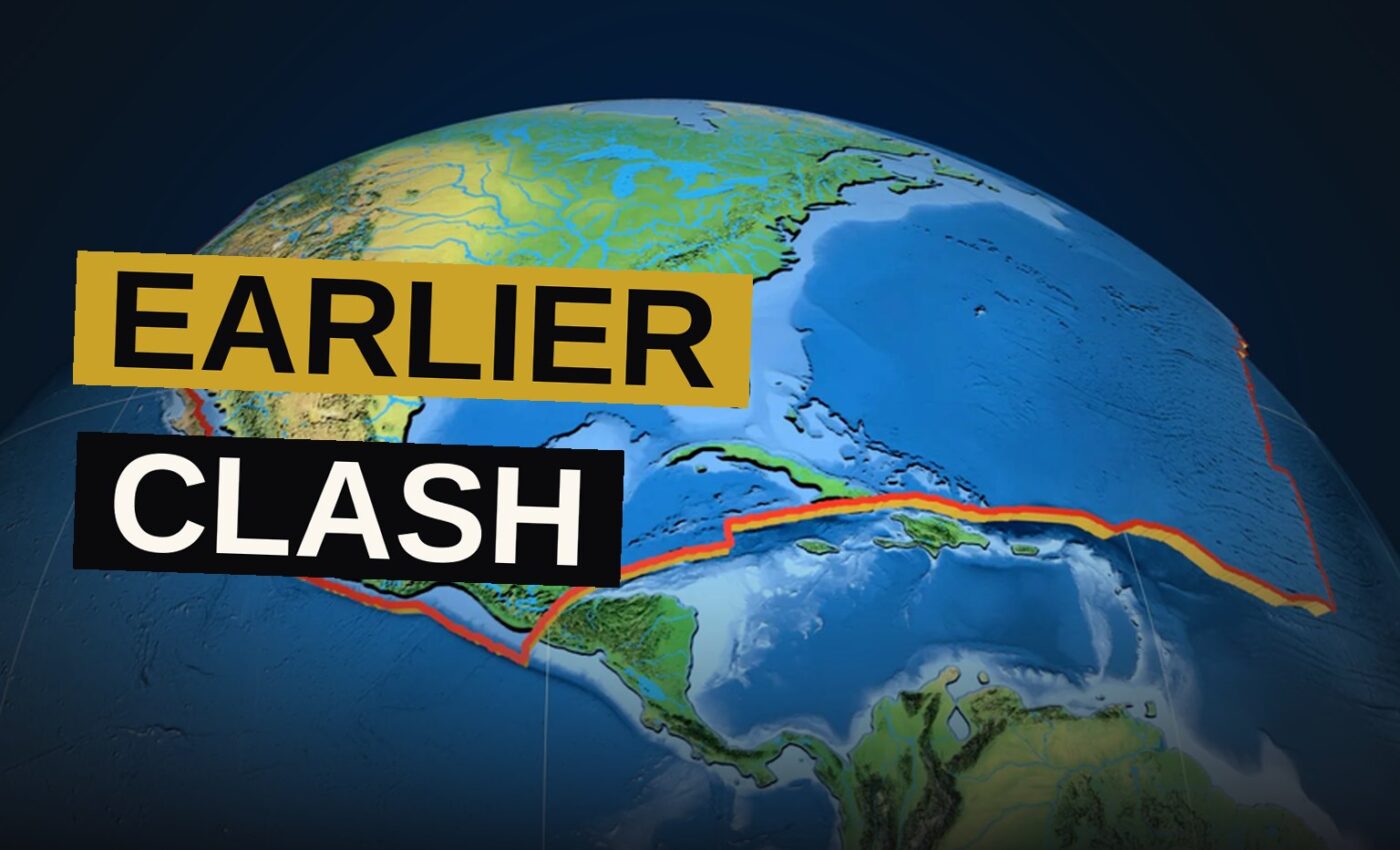
Researchers have pushed back the date on a significant tectonic collision that shaped the Americas, revealing that Central and South America came together millions of years sooner than earlier estimates had suggested.
In Earth and Planetary Physics, scientists studied volcanic rocks from Colombia’s Northern Andes to learn more about a major tectonic event. The magnetic traces within those rocks reveal that the peak of that collision occurred prior to around 10 million years ago.
The Combia Volcanic Province
The research centered on volcanic formations dating back approximately 6 to 12 million years ago, from the Combia Volcanic Province in central Colombia. These rocks developed during a significant interval when the South American Plate was engaging with the landmass of Central America.
J. Li serves as the corresponding author of the study, while Victor Piedrahita holds the position of first author. The research was produced through collaboration among an international team of geoscientists.
Magnetic Clues in the Rocks
Magnetic fabric analysis was the method chosen by the researchers for reconstructing the tectonic activity at the time. This technique examines the arrangement of magnetic minerals within rocks. That arrangement can show whether it stems from the rock’s own volcanic formation or from later changes due to tectonic forces.
“Volcanic rocks can preserve a remarkably detailed record of geological processes,” says Dr. Victor A. Piedrahita. “Their magnetic fabrics help us determine whether deformation occurred before, during, or after the rocks were emplaced.”
What the Data Showed
The researchers discovered that numerous volcanic rocks from the region still carry original magnetic patterns produced by magma movement or volcanic debris flows. This finding indicates that these rocks underwent little to no significant tectonic distortion during the late Miocene period.
Signs of deformation were preserved at some locations, though their strength and geographic reach remained modest overall.
A Shift in the Timeline
The combined evidence suggests that the most significant crustal shortening and collision-related deformation in the Northern Andes had largely ceased before the late Miocene. When these volcanic rocks were forming, the period of greatest tectonic compression was already behind it.
The revised sequence of events, in chronological order, is:
- Oligocene-middle Miocene: the most significant collisional events between Central and South America occurred.
- Before the late Miocene: the strongest crustal shortening and collision-related deformation in the Northern Andes had mostly ended.
- Late Miocene (roughly 12-6 million years ago): the Combia volcanic rocks formed, by which time tectonic deformation had become weaker and more localized.
“Our data indicate that the most significant collisional events between Central and South America occurred earlier than we previously thought, mainly during the Oligocene-middle Miocene,” explain Piedrahita and Li. “By the time these volcanic rocks formed, tectonic deformation had become weaker and more localized.”
Why the Andes Matter
These results can aid researchers in refining models of the Andes’ formation. They also provide a clearer picture of how plate interactions shaped the geological history of the Americas.
The research shows that magnetic methods can be employed to rebuild a picture of tectonic movement in areas where volcanoes are found.
How the Research Was Funded
Funding for the work came through support from the National Natural Science Foundation of China (NSFC), which granted funds to J. Li and Victor Piedrahita.
The Journal Reference
The full study appears in Earth and Planetary Physics, 2026, volume 10, issue 1, page 44. The DOI is 10.26464/epp2026011.
Key Numbers
- Rocks studied: late Miocene, approximately 12-6 million years old
- Collision peak now dated to Oligocene-middle Miocene
- Study published in Earth and Planetary Physics, 2026
- DOI: 10.26464/epp2026011
Why It Matters
One of the great tectonic events that shaped the region was the joining together of Central and South America. Fresh findings now point to its most intense stage having arrived sooner than researchers had estimated.
How researchers model the Andes and the broader geological history of the Americas depends on it. The rocks in Colombia have provided a clearer record of when the actual force of the collision struck.
Source: sciencedaily.com
Get the Notebook.
The day's best stories and every fresh verdict, in plain English, in your inbox by seven. One email a day, no more.