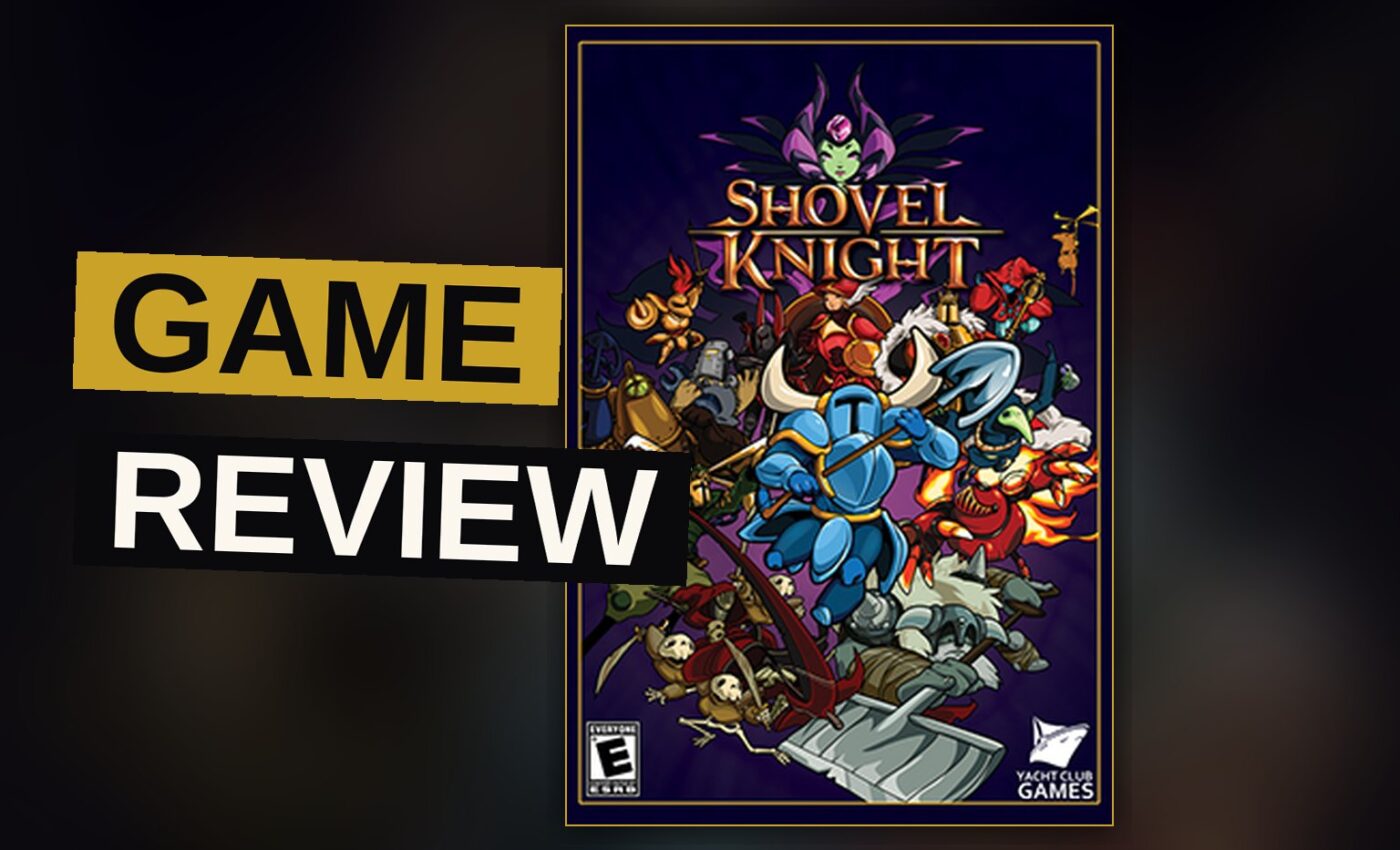
Shovel Knight is a game that understands exactly what it wants to be. It is a love letter to the 8-bit era, built with modern precision and a clear sense of purpose. The 2014 release from Yacht Club Games lands on PS3, PS4, Linux, and 3DS with the same confident stride. It does not beg for your attention. It earns it.
This is a platformer in the classic mold. You play as the titular knight, armed with a shovel, on a quest to defeat the Enchantress and save your partner Shield Knight. The setup is simple. The execution is anything but.
Digging Into the Shovel
The core mechanic is the shovel itself. It is a weapon, a digging tool, and a pogo stick. You can bounce off enemies and hazards with a downward thrust, a move lifted straight from the DuckTales playbook. It feels natural from the first jump. The timing is forgiving, but mastery rewards you with a flow that few games in the genre achieve.
Each of the game’s eight main stages is ruled by a member of the Order of No Quarter. These bosses are memorable and distinct. King Knight, Plague Knight, and Specter Knight each bring a different flavor to their fights. The level design matches their personalities. One stage is a haunted graveyard, another a flying ship, another a treacherous mountain path. The variety keeps the game fresh from start to finish.
The controls are tight. Shovel Knight moves with a snappy responsiveness that modern platformers often miss. There is no floaty jumping here. Every input registers with clarity, and the game never blames the controller for your mistakes. When you die, and you will die, it is your fault. That is a compliment.
Stages and Their Order
The game’s structure follows a classic pattern. You choose from a map, tackle stages in any order, and face a boss at the end of each one. The Order of No Quarter waits for you, and each encounter is a test of what you have learned. The Tower of Fate is the final climb, not one of the eight Order stages.
| Stage | Boss | Theme |
|---|---|---|
| Pridemoor Keep | King Knight | Castle ramparts and banners |
| Lost City | Mole Knight | Ruins and traps |
| Iron Whale | Treasure Knight | Underwater pressure |
| Clockwork Tower | Tinker Knight | Gears and moving platforms |
| Flying Machine | Propeller Knight | Airship deck |
| Explodatorium | Plague Knight | Lava and explosives |
| Lich Yard | Specter Knight | Graveyard and ghosts |
| Stranded Ship | Polar Knight | Ice and rigging |
| Tower of Fate | Enchantress | Final ascent |
Each stage has a distinct visual language. The Iron Whale trades open air for tight corridors and rising water. The Explodatorium is a maze of detonating barrels and collapsing floors. These are not just backdrops. They change how you move, and they keep you on your toes.
Music That Carries the Mood
Jake Kaufman’s soundtrack is a standout element. It is not just background noise. It is an active participant in the game. The tracks shift with the action, and the boss themes are particularly strong. “Strike the Earth!” and “The Defender” are immediate earworms. They drive the action forward and stick with you long after you put the controller down.
The sound design is also sharp. The clang of the shovel, the thud of a landing, the jingle of collected treasure. These small details add to the immersion. The game sounds like it looks, and that cohesion is rare.
Pixel Art and Its Charm
The visuals are pixel art at its finest. Characters are expressive despite their limited frames. The backgrounds are detailed and alive. The game does not just look like an 8-bit title. It feels like one, with a color palette and animation style that respect the source material while pushing it forward.
The writing is light but effective. The story is told through brief conversations and environmental details. The townsfolk in the village between stages offer advice, jokes, and occasional lore. None of it overstays its welcome. The tone is playful, with a hint of melancholy that gives the adventure weight.
Difficulty and Its Teeth
Shovel Knight is not an easy game. It respects your time by demanding your attention. Checkpoints are generous, but the game does not hold your hand. Enemies are placed with intent. Hazards are telegraphed, yet they still catch you off guard. The difficulty curve is steady, and the final stretch of the game raises the stakes considerably.
The main campaign can be completed in about six to eight hours. That length is perfect for the genre. It does not drag, and it does not rush. Each level feels like a complete chapter, and the pacing keeps you moving forward. The final boss fight is a test of everything you have learned, and it delivers.
There is also a New Game Plus mode for those who want more. It remixes enemy placements and increases the challenge. It is a solid addition, though it is not the main draw. The first playthrough is where the magic lives.
Small Gripes, Minor Flaws
No game is perfect. Shovel Knight has a few moments where the difficulty spikes feel arbitrary. The Tower of Fate, in particular, can be punishing. The platforming sections in some stages require a precision that feels out of step with the rest of the game. These are minor complaints, and they do not diminish the overall experience.
The game’s story is thin. It is serviceable, and it does not get in the way, but it is not the reason you will keep playing. The gameplay is the star. The narrative is just a frame for the action.
Why It Holds Up
Shovel Knight was released in 2014, and it has aged gracefully. The genre has seen many imitators since, but few have matched its quality. The game’s focus on tight controls, smart level design, and a memorable soundtrack is timeless. It does not rely on gimmicks or trends. It just does the basics exceptionally well.
The game also benefits from a clear sense of identity. It knows what it is, and it does not try to be anything else. That confidence is refreshing. It is a game that respects the player, the genre, and its own history.
Shovel Knight is a triumph of design. The controls are flawless, the levels are inventive, and the music is unforgettable. It is a short game, but it is a dense one. Every moment counts. Whether you are a veteran of the genre or a newcomer, Shovel Knight has something to offer. It is a game that rewards patience, skill, and curiosity.
It is not a revolution. It is a refinement. And that is exactly what it needs to be.
Get the Notebook.
The day's best stories and every fresh verdict, in plain English, in your inbox by seven. One email a day, no more.