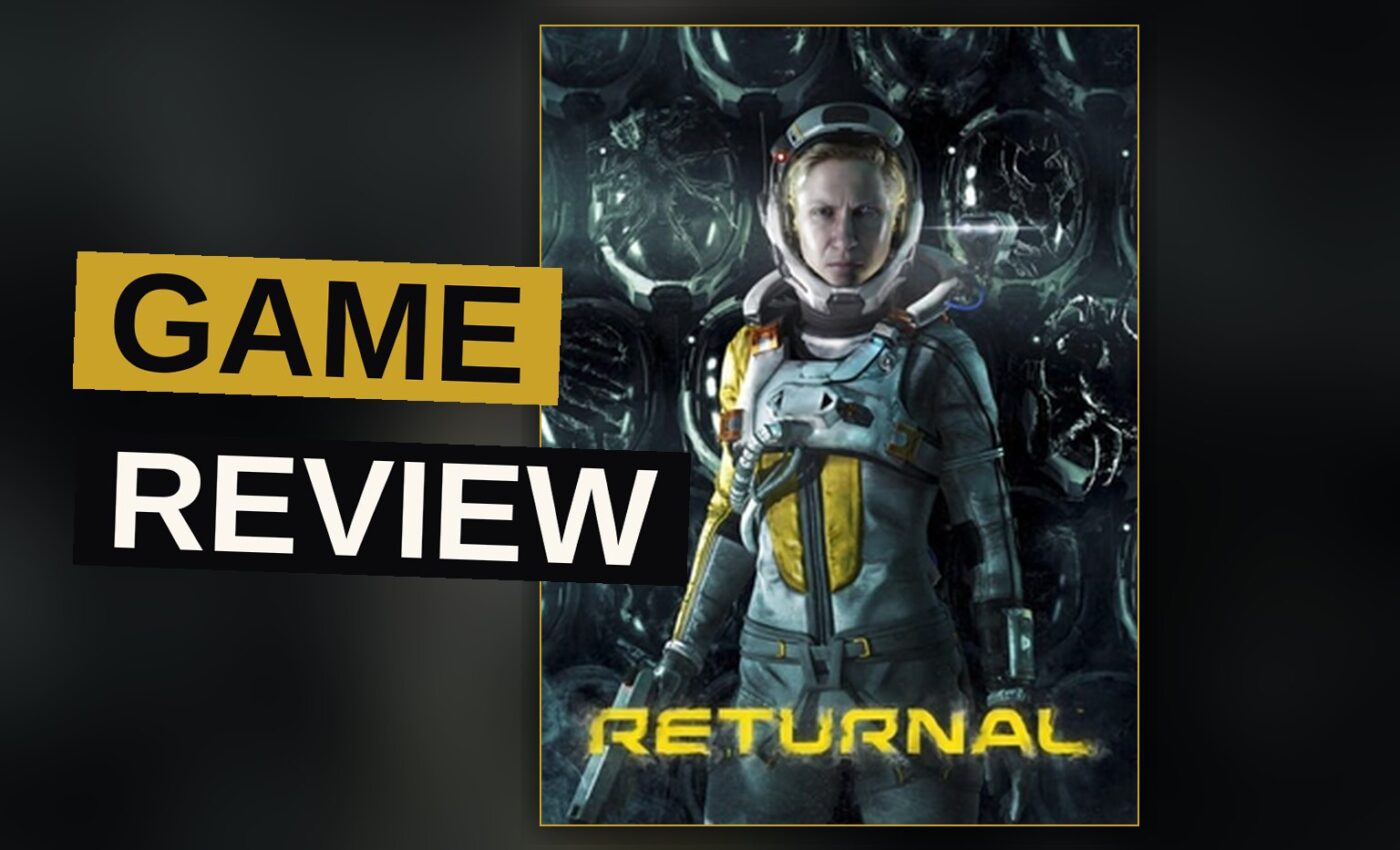
Returnal is a game about dying, and about what it means to keep going anyway. It is also the best game Housemarque has ever made, and one of the most demanding action games on PS5. It asks everything of you, and it gives back a loop you will not want to break.
The premise is simple. Selene, a space scout, crash-lands on the alien planet Atropos. She finds a strange signal, follows it, and dies. Then she wakes up on the same crashed ship, at the same moment, and does it all again. The loop is the game. Every death resets the world, reshuffles the layout of its zones, and strips you of your weapons and upgrades. What remains is your knowledge, your reflexes, and a growing sense that Atropos is not just a hostile world but a personal one.
How the Loop Works
The core of Returnal is a third-person shooter built around a single run. You move through a series of biomes, each with its own enemies, traps, and a boss at the end. The combat is fast, brutal, and precise. Selene has a dash, a melee attack, and a gun that changes with each pick-up. The weapons are the real stars. Each one has a distinct feel, from the rapid-fire Carbine to the slow, powerful Spitmaw Blaster. What makes them special is the alt-fire mode, a secondary ability that can clear a room or turn the tide of a boss fight.
The enemies are designed to punish hesitation. They swarm, they flank, and they fire projectiles that fill the screen. The game’s signature trick is the bullet-hell pattern, borrowed from shoot-em-ups. You are always dodging, always moving, always looking for the one gap in the wall of fire.
Here is what a typical run looks like:
- Wake up at the crash site.
- Clear the first biome, collecting health upgrades and new weapons.
- Face a boss, often with a new mechanic.
- Die, or reach the next area.
- Start over, with a new map and a new chance.
That structure would be enough, but Returnal adds a layer of risk and reward. You collect obolites, the game’s currency, from fallen enemies. You spend them on health, upgrades, and consumables. But you can also use them to open locked chests or buy a one-time revive. The choice is always there: invest in the current run, or save for a better chance next time. It is a system that rewards aggression and punishes greed in equal measure.
Atropos and Its Horrors
Atropos is not a pleasant place. It is a planet of ruined structures, alien flora, and constant rain. The first biome, the Overgrown Ruins, is a tangle of vines and broken columns. The second, the Crimson Wastes, is a desert of red sand and dead trees. Each area has its own visual identity, and the art direction is superb. The lighting is moody, the textures are sharp, and the particle effects are spectacular. On PS5, the game runs at a smooth 60 frames per second, and the haptic feedback on the DualSense controller adds a physical layer to every shot and impact.
The sound design is just as strong. The gunfire is punchy, the enemy shrieks are unsettling, and the ambient score by Bobby Krlic is a mix of eerie drones and pounding percussion. The audio is not just atmosphere; it is information. You can hear an enemy before you see it, and you can tell which direction it is coming from.
The story is told in fragments. Selene finds audio logs, video recordings, and strange artifacts that hint at a larger mystery. The narrative is deliberately vague, and it does not resolve neatly. Some players will find that frustrating. Others will find it fitting. The game is about a cycle, and the story reflects that. It loops back on itself, offering glimpses of meaning without a final answer.
The Difficulty Wall
Returnal is hard. The game expects you to learn its systems, and it does not hold your hand. There is no difficulty setting, no easy mode, and no checkpoints within a run. If you die, you lose everything you collected in that run. The only permanent progress comes from a few key items and the knowledge you carry in your head.
That design has a cost. The first few hours can feel punishing, especially if you are not used to this kind of game. The learning curve is steep, and the game does not explain much. You will die to the first boss many times. You will lose a run to a single mistake.
But the frustration is part of the point. The game is about perseverance. Each death teaches you something, whether it is the timing of an enemy attack or the layout of a room. Selene is trapped, and so are you. The only way out is to get better.
One of the smartest choices is the way Returnal handles the run structure. The biomes are not randomly generated in the same way as a roguelike like Hades. Instead, they are assembled from a set of handcrafted rooms, shuffled and connected in different orders. That means the world feels designed, not chaotic. You can learn the patterns, and you can plan your route. It is a middle ground between pure randomness and a fixed level, and it works.
Bosses and Payoff
The boss fights are the highlights. Each one is a test of everything you have learned. The first boss, Phrike, teaches you to read bullet patterns. The second, Ixion, adds a second phase and a faster pace. The third, Nemesis, is a vertical fight that changes the rules of movement.
The payoff comes in the mid-game. After the third boss, the structure shifts. The game opens up, and you gain access to new tools that change how you approach the loop. The second half of the game is different from the first, and that variety keeps the experience fresh.
The story also picks up in the second half. Selene’s past comes into focus, and the mystery of Atropos deepens. The game’s ending is open to interpretation, and it rewards players who have paid attention to the details.
Final Score
Returnal is not for everyone. It is unforgiving, and it demands a real investment of time and patience. If you want a game you can pick up and play for ten minutes, this is not it. If you want a game that respects your intelligence and tests your skill, this is it.
The game is a technical showcase for PS5. The loading times are near-instant, thanks to the SSD. The adaptive triggers and haptics are used well. The visuals are stunning. It is a game that could not have been made on the previous generation, and it makes a strong case for the new hardware.
It is also a game with a clear vision. Housemarque has been making arcade shooters for years, and Returnal is the culmination of that work. It takes the studio’s strengths — tight shooting, clever enemy design, and a love of the arcade loop — and builds a full, ambitious game around them.
Returnal is a hard game, and it is a great game. It is the kind of game that stays with you long after you put the controller down.
Get the Notebook.
The day's best stories and every fresh verdict, in plain English, in your inbox by seven. One email a day, no more.