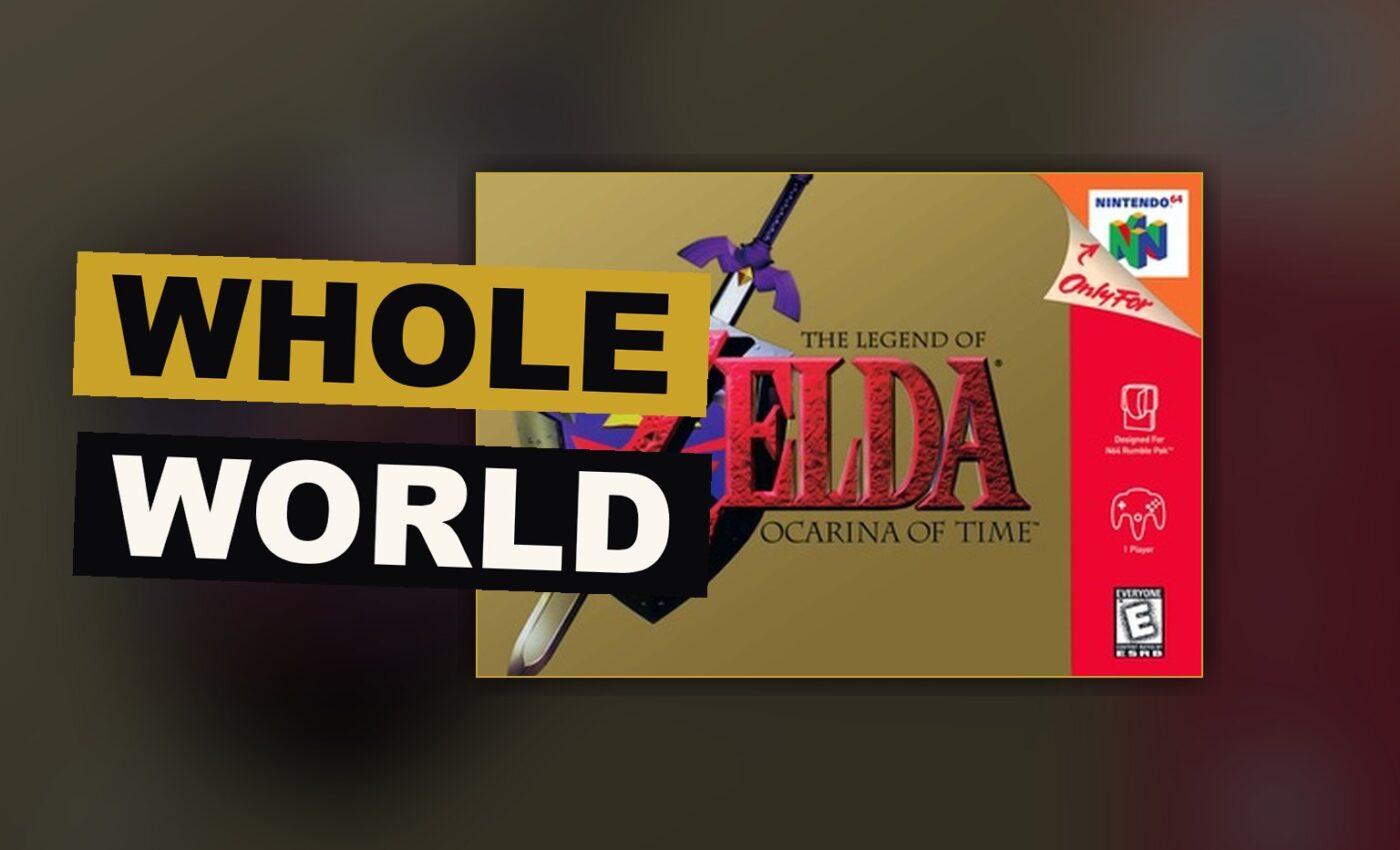
The Legend of Zelda: Ocarina of Time arrives on Nintendo 64 as the most complete adventure the console has offered. It takes the series into a fully rendered world and does not fail once — nothing about it feels unfinished. Few games this year, or any year before it, feel this whole.
A World That Feels Alive
The open field at the center of the game is the first thing players notice. It opens out in every direction, quiet and wide, broken only by distant hills that draw you toward them. Riding across it on a horse feels different from anything else on the system. The horse answers to timing, not just button presses, and the feeling of covering ground quickly is real.
Time passes as you play, and the world changes with it. Shops close at night. Enemies appear that were not there during the day. Towns feel lived in rather than staged. That single detail does more to sell this world as a real place than any long scene could.
The game splits its hero into two ages, child and adult, and builds its whole design around that split. Some doors only open for the boy Link. Some only open for the man he becomes. The Ocarina of Time itself is what carries him between them, and the songs played on it double as puzzle keys and as the musical core of the entire adventure.
Dungeons Built With Care
This design, built on two ages of one hero, pays off inside the dungeons, which are the finest the series has built.
- The Forest Temple twists its passages back on themselves until direction stops meaning anything.
- One late temple demands full command of water levels and timing together, and punishes any player who loses track of which floor they are on.
- A temple built on darkness and sound creates a quiet dread without a single wasted room.
- Another late temple uses the child and adult versions of Link inside the same walls, moving between them to reach places neither could alone.
Each dungeon introduces an item, then asks the player to master it, then folds it into a boss fight that could not exist without it. Nothing here feels like filler.
Locking the camera on an enemy is the single biggest change the game makes to how the series plays. The sword, the shield, and the view all turn around that one point. Fights against armored foes and living skeletons turn into something closer to fencing than wild strikes thrown without thought. Bosses ask you to read their movements, not just endure them.
The game trusts players to notice small things. A weak point lit for a moment. A tell before an attack. Ocarina of Time never explains everything, and it does not need to.
The score running under every scene is tied tightly to how the game plays. The songs are not filler; they open doors, change weather, move Link across the world, and change time itself. Several of them earn a permanent place in memory the moment they are learned.
The ocarina itself becomes a character. Holding it up in the middle of a field and playing a tune learned hours earlier, watching the world change because of it, is one of the most satisfying rewards the game offers on Nintendo 64.
The Verdict
Nothing holds the game back much. The camera occasionally fights the player in tight spaces. A few late errands ease the pace near the end of the game. These are small complaints against a game built with this much care.
- First stepping into the open field as the sun comes up and the full scale of the world becomes clear.
- Playing the song that bends time and watching the Temple of Time answer.
- Working out the water temple’s floor puzzle and finally understanding its shape.
- Facing the last boss after the long push through his castle.
- Riding at full pace toward a quiet town at dusk.
The Legend of Zelda: Ocarina of Time does not just succeed as a Nintendo 64 game. It changes what players expect from an adventure game, on any console. The dungeons, the music, the world, the two ages of its hero all lock together with almost nothing showing where the joins are.
This is as close to a complete work as the medium has produced. The Legend of Zelda: Ocarina of Time earns its place at the top.