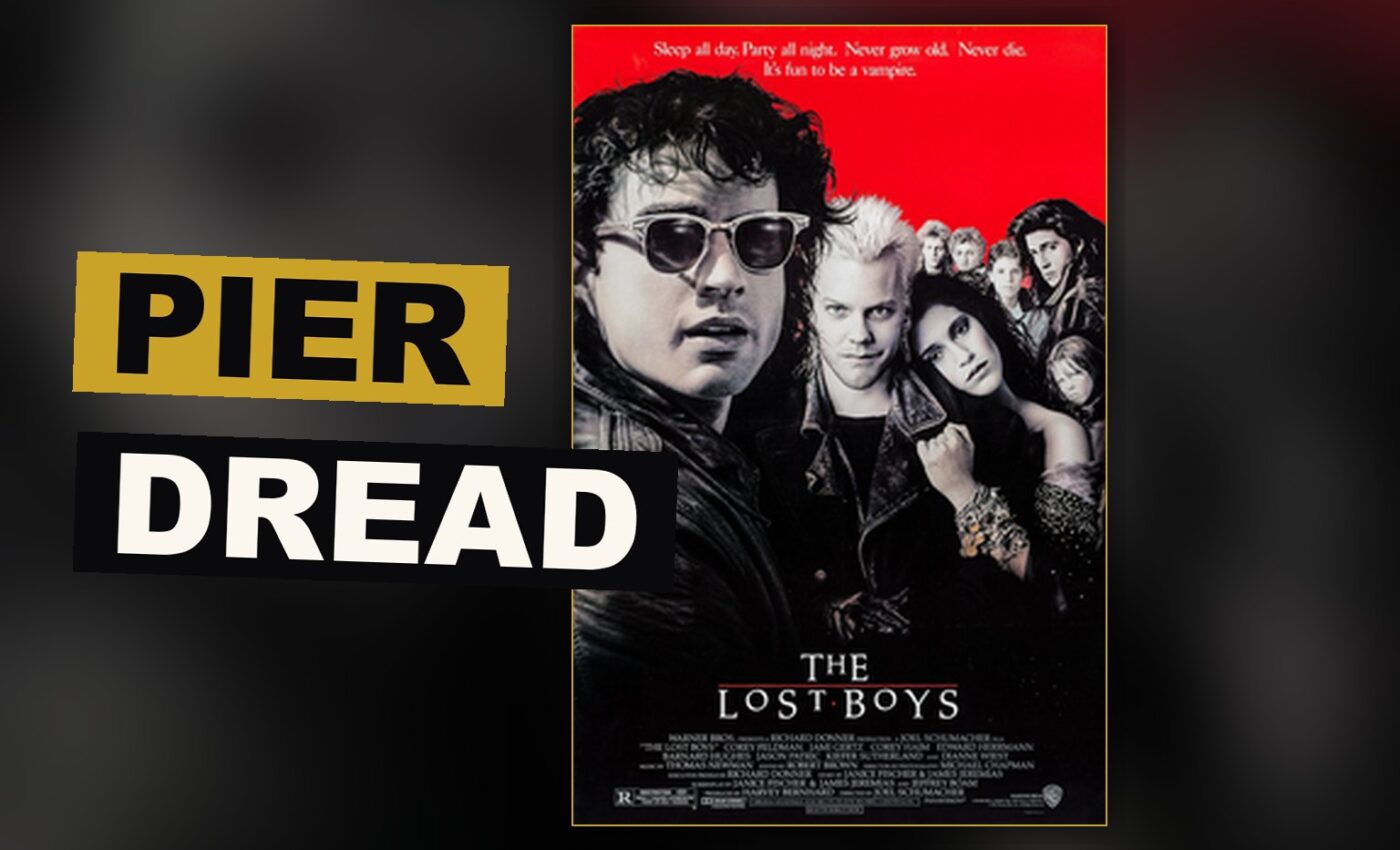
Vampires settled into a small California town in 1987, and horror took on a strange new look. Joel Schumacher’s The Lost Boys placed danger inside young lives and set the whole thing to a driving score full of shadow and energy. Years later, the film still works as a clever, funny, violent story about a town where growing older means facing something far worse than ordinary trouble.
The Setup
The Lost Boys follows a family that moves to a town said to hold more danger than most places around it. Two brothers are drawn into rival worlds: one drifts toward a group of young vampires who travel together at night near the water’s edge, while the other joins two brothers who run a comic shop and claim to hunt vampires for a living. The setup is simple. What Schumacher does with it is what makes The Lost Boys stand out.
Facts at a Glance
- Year: 1987
- Director: Joel Schumacher
- Genre: horror comedy
- IMDb score: 7.2 of 10
Cast and Setting
The young cast carries the film. The vampire group has real presence, all leather and confidence, and the hunters at the comic shop supply the comedy without harming the danger around them. Schumacher builds the vampires as a dark version of an ordinary group of friends, and the film keeps reminding its audience that joining them costs something that cannot be taken back. The mix of fear and humor works more often than it fails, and when it lands, The Lost Boys feels unlike anything else made at that time.
The town itself feels alive. Cloud drifts across the water at night, lights burn over the pier, and the open grounds by the pier after dark seem built for dread. Schumacher films the setting with a bright, uneasy look that marks the film as a work of its period, but that same look gives The Lost Boys its own identity. The music running through the film, full of deep, layered tones, holds the whole mood together.
Where It Struggles
The story is thin in places. Some side characters get less to work with than they deserve, and the pace loses energy in the middle before the film picks back up for a violent final act. None of this harms the film’s standing, but it explains why the film’s IMDb score has settled at a solid, not perfect, 7.2 of 10 over the years.
Its Place in Horror
The Lost Boys helped shape the wave of horror comedies built around a cast of young performers that came after it. Its mix of tone, style and young talent stands as an example worth following for years afterward. Its mark can be seen in how later horror films treat young characters as both figures of danger and figures of appeal at once, a balance The Lost Boys struck early and struck well.
The story also worked because it trusted its young cast to hold the screen without older, established stars to depend on. That choice paid off, and it became one reason later films followed a similar path. Few horror comedies before it had put so much weight on performers still new to the screen, and fewer still had made that choice pay off so completely.
Running Order
| Time in Story | Event |
|---|---|
| Opening | Family arrives in the new town |
| Night One | Brother meets the vampire group on the pier |
| Rising Action | Comic shop brothers begin their hunt |
| Turning Point | Truth about the vampires comes out |
| Final Act | Final battle at the family home |
| Closing Scene | Order is restored |
Critics who look again at The Lost Boys today tend to note how little the film depends on later horror trends to remain effective. Its humor, its music, and its cast have aged well, and the comic shop brothers in particular have earned a following far beyond the film itself. Their lines and their manner still turn up wherever people gather to discuss the film, a sign that two side characters became, in their own way, as important to viewers as the vampires at the center of the story.