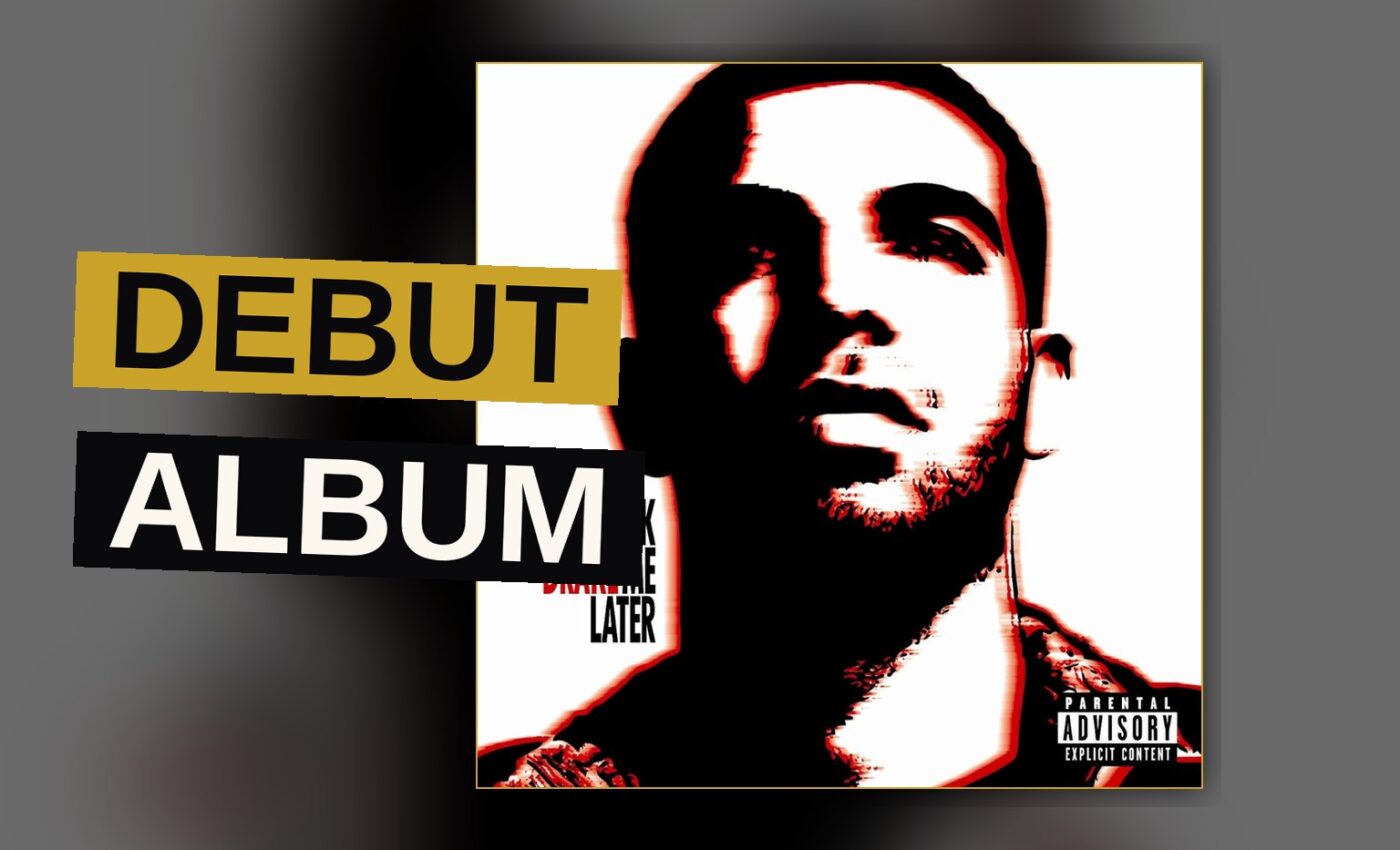
Drake’s debut album Thank Me Later is a record about the cost of getting what you asked for. Released in 2010, it arrives with the weight of a mixtape star’s transition to the mainstream.
It spends its 69 minutes probing the anxieties, disappointments and hollow victories that came with his sudden fame. The album is not a victory lap; it is a confession booth, with Drake rapping and singing about the loneliness of success, the fragility of romance under scrutiny, and the suspicion that the industry he has entered is less a stage than a trap.
It is introspective, emotionally transparent, and it owes a clear debt to the melodic, Auto-Tuned sadness of Kanye West’s 808s & Heartbreak and the spacey introspection of Kid Cudi. The result is a debut that is less concerned with proving Drake can rap than with proving he can feel — and that he is willing to make that feeling the product.
Fireworks and Karaoke
The album opens with “Fireworks,” a track that sets the tone immediately. Drake raps about the paradox of his new life, acknowledging that the success he chased has brought him a kind of isolation. The beat is lush, almost celebratory, but the lyrics are wary. He is not grateful so much as he is unsettled.
“Karaoke” follows, a murky, mid-tempo cut where Drake muses on relationships that have soured and the difficulty of trusting people now that his name carries value. It is not a standout, but it establishes the album’s central tension: the man on the mic is not sure the life he is living is the one he wanted.
The Resistance and Over
“The Resistance” is where the album starts to find its footing. Over a skeletal, mournful beat, Drake sings about a relationship that cannot survive his fame, and the track’s chorus — a half-sung, half-spoken plea — lands with real weight. It is one of the album’s most direct statements about the personal cost of his ascent.
Then comes “Over,” the album’s first major single and its most obvious bid for radio. The beat is brighter, the hook is bigger, and Drake sounds more confident, but even here the lyrics circle back to the same themes: the pressure to perform, the fear of losing himself, the sense that the clock is always running.
It is the most conventional track in the opening stretch, and it works precisely because it packages the album’s unease in a format that can fill a club.
Show Me a Good Time and Up All Night
“Show Me a Good Time” is a lighter moment, a track about wanting to escape the weight of his own thoughts. It is not a deep cut, but it is a necessary one, giving the album a breath of air before the run of collaborations that follow.
“Up All Night,” featuring Nicki Minaj, is a tougher proposition. The track is a boast, with Drake at his most insistent, and Minaj delivers a verse that is characteristically sharp and aggressive. It is a reminder that Drake can trade barbs and flex with the best of them, even if his default mode on this album is more reflective than combative.
Fancy and Shut It Down
“Fancy,” the collaboration with T.I. and Swizz Beatz, is the album’s most immediate crowd-pleaser. The hook is huge, the beat is sassy and summer-ready, and it is the rare track here that feels like pure fun. It does not resolve the album’s central anxieties; it just lets them rest for five minutes.
“Shut It Down” runs nearly seven minutes and is the album’s most indulgent moment. It is a slow, seductive track that stretches its mood across a long runtime, and while it is not the album’s strongest cut, it shows Drake’s willingness to let a vibe breathe rather than rushing to a payoff.
Unforgettable and Light Up
“Unforgettable” is a brief, wistful track that leans on a sample and a simple melody. It is pleasant but slight, one of the album’s lesser moments.
“Light Up,” featuring Jay-Z, is a different matter. This is the track where the album’s critique of the industry sharpens into something fierce. Jay-Z’s verse is a reminder of his own longevity, but Drake’s contribution is the more interesting one, as he raps about the damage the industry can wreak on a person’s sense of self. It is a takedown of the machinery that made him, delivered by a man who is still inside it.
Miss Me and the Interlude
“Miss Me” is a more conventional rap track, with Drake and Lil Wayne trading verses about their own prowess. It is solid but not revelatory, a reminder that Drake can hold his own in a straightforward rap context even when the album’s heart is elsewhere.
The interlude that follows is a short, atmospheric piece that functions as a palate cleanser before the album’s final stretch. It is not a song so much as a mood, and it works in context even if it would not stand alone.
Find Your Love and Thank Me Now
“Find Your Love” is one of the album’s best songs. It is a pop-leaning track with a driving beat and a hook that is almost painfully catchy, and Drake’s vocal performance is more confident than anywhere else on the record. It is the sound of an artist who has figured out how to make his melancholy commercial.
“Thank Me Now” closes the standard edition of the album, and it is a fitting summation of the record’s themes. Drake raps about the sacrifices he has made and the people he has left behind, and the title itself is a kind of warning: the success you are celebrating has a cost, and you will not understand it until later.
Bonus Tracks and the Running Order
“Best I Ever Had” and “9AM in Dallas” appear as bonus tracks on expanded editions of the album, not on the core 14-track release. “Best I Ever Had” is the breakout hit that made Drake a star, a love song with a conversational flow that felt fresh in 2009. It comes from a different era of Drake’s career, and it sits awkwardly alongside the newer material.
“9AM in Dallas” is a dense, lyrical cut that shows Drake’s technical skill more than any other song on the record. It is a rapper’s track, full of internal rhymes and layered references, and it ends the expanded edition on a note of pure competence rather than the emotional vulnerability that defines the rest of the project.
The standard edition runs 14 tracks. The expanded edition adds two more:
- “Best I Ever Had” (4:19)
- “9AM in Dallas” (3:39)
| Track | Title | Length |
|---|---|---|
| 1 | Fireworks | 5:13 |
| 2 | Karaoke | 3:48 |
| 3 | The Resistance | 3:45 |
| 4 | Over | 3:54 |
| 5 | Show Me a Good Time | 3:30 |
| 6 | Up All Night | 3:54 |
| 7 | Fancy | 5:19 |
| 8 | Shut It Down | 6:59 |
| 9 | Unforgettable | 3:34 |
| 10 | Light Up | 4:34 |
| 11 | Miss Me | 5:06 |
| 12 | Cece’s Interlude | 2:34 |
| 13 | Find Your Love | 3:29 |
| 14 | Thank Me Now | 5:33 |
| 15 | Best I Ever Had | 4:19 |
| 16 | 9AM in Dallas | 3:39 |
The Verdict
Thank Me Later is not a perfect album, but it is a brave one. Drake could have made a debut full of bangers, a record designed to prove he belonged on the charts. Instead, he made a record about the doubt that comes with success, and he did it with a level of emotional honesty that was rare in mainstream hip-hop at the time.
The album’s debt to Kanye West’s 808s & Heartbreak is clear, but Drake is not imitating West so much as he is using the same vocabulary to say something of his own. Where West’s album was a howl of grief, Drake’s is a quieter, more diffuse anxiety — a sense that the prize he won is not the one he expected.
The album’s weaknesses are real. The middle stretch drags in places, with “Shut It Down” and “Unforgettable” not earning their runtime. The inclusion of “Best I Ever Had” as a bonus track feels like a concession to the past rather than a statement about the present.
Drake’s tendency toward introspection can tip into self-absorption, with some tracks spending more time on his own feelings than on the people he is singing about. But the album’s strengths outweigh these flaws. “Light Up” is a fierce, necessary critique of the industry. “Find Your Love” is a pop song that does not sacrifice substance for catchiness. “The Resistance” and “Thank Me Now” are among the most honest songs about fame released in the decade they appeared.
The record works because Drake is willing to be unflattering to himself. He does not present his success as a triumph; he presents it as a series of trade-offs, each one costing him something he did not expect to lose.
A record that trades certainty for honesty, and it is better for it.
Get the Notebook.
The day's best stories and every fresh verdict, in plain English, in your inbox by seven. One email a day, no more.
- Fireworks5:13
- Karaoke3:48
- The Resistance3:45
- Over3:54
- Show Me a Good Time3:30
- Up All Night3:54
- Fancy5:19
- Shut It Down6:59
- Unforgettable3:34
- Light Up4:34
- Miss Me5:06
- Cece's Interlude2:34
- Find Your Love3:29
- Thank Me Now5:33
- Best I Ever Had4:19
- 9AM in Dallas3:39