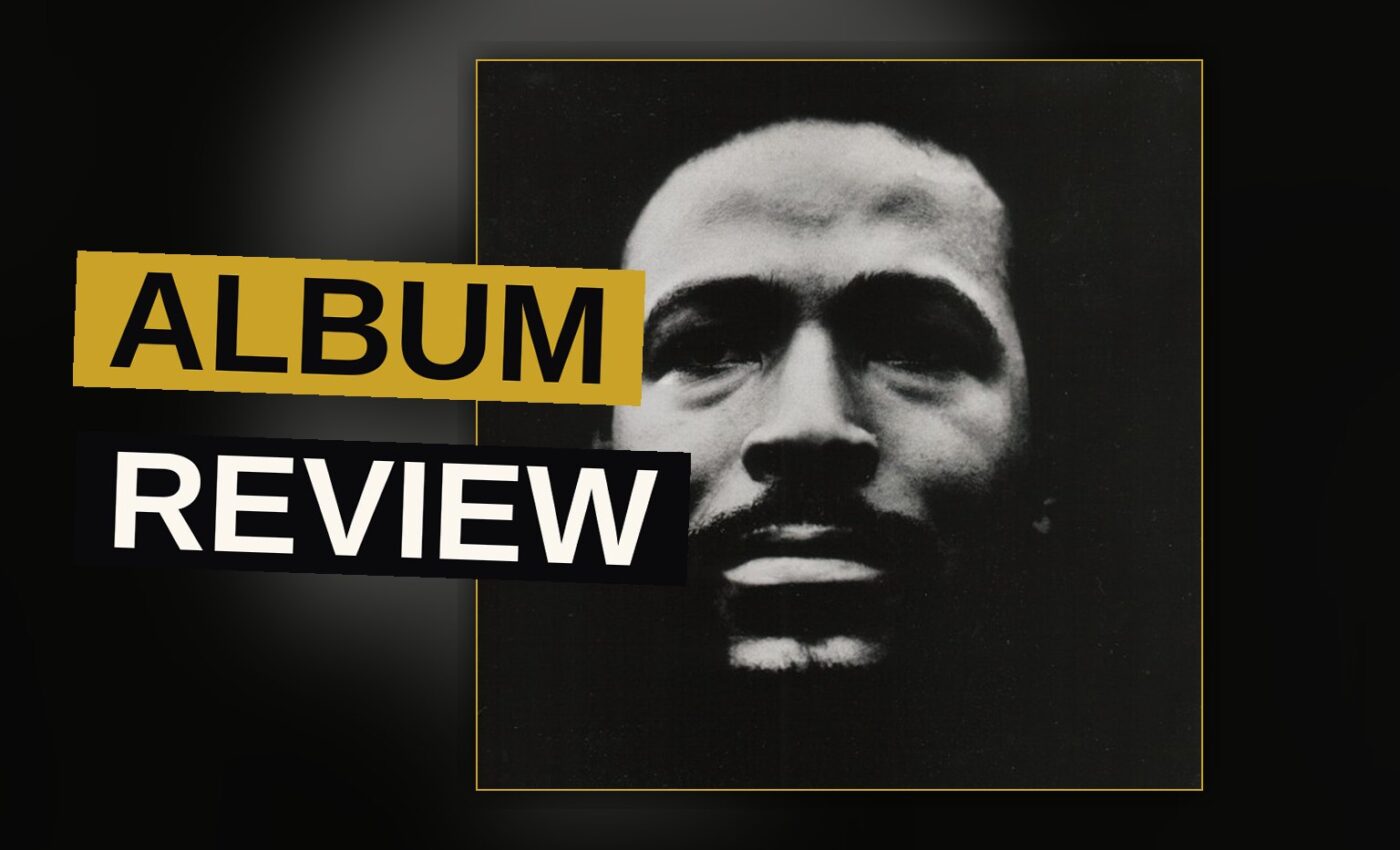
Marvin Gaye spent his later years fighting his label for the right to make the music he wanted to make. Vulnerable, released in 1997, is a strange artifact of that struggle: a ballad album that was never quite finished. Gaye died before the record was assembled and released without him. What survives is a portrait of Gaye doing something he rarely got to do on record — simply crooning, without a social message, without a funk groove, without a fight.
The album is a collection of ten tracks, seven performances and three alternate takes, running 28 minutes.
The Shelved Sessions
The history of this record is a patchwork. Gaye recorded these songs during a period when he was deeply unhappy with his label. He wanted out of his contract. He wanted artistic freedom. The sessions produced these ten tracks, then the project was shelved. The tapes sat in the vault for years, until the late 1990s, when they were assembled into an album — long after Gaye’s death.
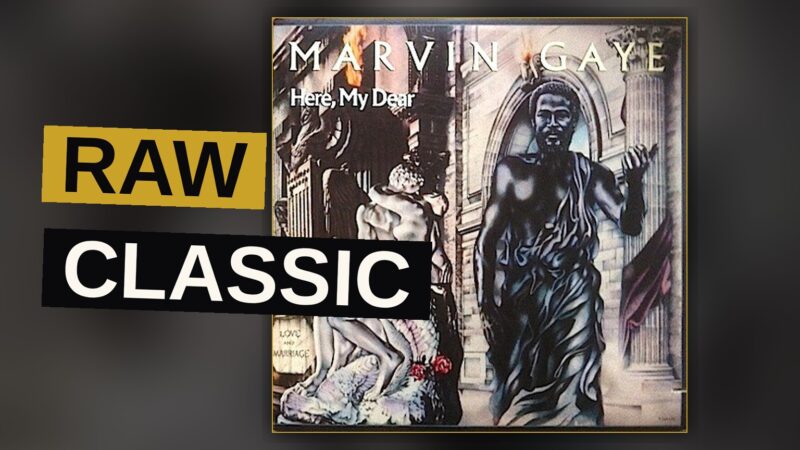
That history matters because it explains what the record is and what it is not. This is not a cohesive, intentional album in the way Here, My Dear is. It is a collection of performances, rescued from the archive and sequenced into a listening experience. The three alternate takes at the end make that clear — they are not bonus tracks in the modern sense, but rather a deliberate acknowledgment that this material was never finalized. These performances are exposed, unguarded, and deeply personal.
The one major review of the album, from Rolling Stone, praised the ballad performances as “forthright, spellbinding testimony.”
Walking the Track List
The album opens with “Why Did I Choose You,” a ballad about devotion that Gaye sings with a soft, searching tenderness. He does not push the melody. He lets it sit in his throat, and the effect is immediate — you lean in. The lyric is standard stuff, the kind of thing sung at weddings and in lounges, but Gaye’s phrasing turns it into a question he is actually asking.
“She Needs Me” follows, a slower, more insistent ballad. Gaye’s voice drops into a lower register, and he sounds almost weary, like a man who has been carrying this feeling for years. The strings are more present here, but they stay out of his way. The song is about devotion again, but where “Why Did I Choose You” is wondering, this one is certain.
“Funny, Not Much” is a melancholy waltz, and it is one of the album’s quiet highlights. The title is a shrug, and Gaye plays it that way — the song is about a love that faded without drama, without a scene. He sings it with a light touch, almost conversational, and the restraint is what makes it land.
“This Will Make You Laugh” is the first real dip. The song is a novelty number, the kind of thing that was already dated when Gaye recorded it. He does what he can with it, and the performance is competent, but the material fights him. You can hear why this project was shelved — this is the track that sounds like a session obligation.
“The Shadow of Your Smile” is the centerpiece. Gaye takes the famous standard and makes it his own, stretching the melody, bending the phrasing, turning a familiar tune into something private. The band is minimal — bass, piano, a touch of drums — and Gaye’s voice carries the whole thing.
“I Wish I Didn’t Love You So” swings the mood back toward melancholy. The song is about the agony of attachment, and Gaye sings it like a man who has been through it. The performance is direct and unadorned, and it is one of the most affecting tracks on the record.
“I Won’t Cry Anymore” closes the original seven performances. It is a defiant ballad, a promise to stop grieving, and Gaye gives it a steely edge. He is not convincing himself — he is telling you. It ends the main sequence on a note of resolve, which is fitting.
The three alternate takes follow. “Why Did I Choose You (alternate vocal performance)” is a slightly faster, looser reading of the opening track. “I Wish I Didn’t Love You So (alternate vocal performance)” is more intimate, with Gaye’s voice even more exposed. “I Won’t Cry Anymore (alternate vocal performance)” is the most different — Gaye takes more liberties with the melody, and the result is more raw.
Restraint as the Point
What makes Vulnerable work is what Gaye does not do. He does not oversing. He does not embellish. He does not turn these standards into showcases. He treats them as material, and he treats the material with respect. Rolling Stone put it well: “Gaye made every seduction a campaign, a quest, something worth carrying the torch for.” These are not passive performances. Each one is an active pursuit — he is trying to convince you, to win you over, to make you believe in the song.
The album’s weakness is its source material. Some of these songs are genuinely hackneyed, and no amount of vocal genius can fully redeem them. “This Will Make You Laugh” is the clearest example, but even the better songs carry the musty smell of the lounge. Gaye elevates them, but he cannot transform them entirely.
The other weakness is the brevity. Twenty-eight minutes is short, and the three alternates at the end feel like a compromise — a way to extend the runtime without recording new material. They are good, but they are not new.
Rolling Stone singled out three tracks for particular praise:
- “I Wish I Didn’t Love You So”
- “The Shadow of Your Smile”
- “Funny, Not Much”
A Fragile Masterpiece
Vulnerable is a strange record, and it is a beautiful one. It captures Marvin Gaye at a moment when he was fighting for his freedom, and still able to sit down and sing a love song with total conviction. It has something rarer than cultural weight or sensual charge: intimacy. It is a record that sounds like a man alone in a room, singing to no one in particular, and meaning every word.
The Rolling Stone review called the seven performances and three alternates proof that “Gaye could turn even the most hackneyed lounge-act tunes into forthright, spellbinding testimony.” That is the album in a sentence. It is not a great songbook, and it is not a great statement. It is a great singer, doing what great singers do — making you believe.
The record rewards patience. The first listen is pleasant; the second is absorbing; the third is devastating. The alternates, which initially feel like filler, become essential once you hear the differences — the way Gaye rephrases a line, the way he breathes, the way he finds new meaning in the same words.
The Verdict
This is not Marvin Gaye’s best album. It is not even his most important. But it is his most exposed, and that counts for something. In an era of overproduced, overthought music, Vulnerable is a reminder that a great voice and a simple song can be enough.
The album is a 7 out of 10. It loses points for its weak material and its brevity, but it earns its place in Gaye’s catalog as a document of his range, his restraint, and his gift. For anyone who has ever wondered what Marvin Gaye would sound like singing a standard, this is the answer. It is tender, it is true, and it is worth carrying the torch for.
Comparing the Track Lists
| Track | Original Performance | Alternate Take |
|---|---|---|
| “Why Did I Choose You” | 2:39 | 2:38 |
| “I Wish I Didn’t Love You So” | 2:35 | 2:36 |
| “I Won’t Cry Anymore” | 3:00 | 2:54 |
Get the Notebook.
The day's best stories and every fresh verdict, in plain English, in your inbox by seven. One email a day, no more.
- Why Did I Choose You2:39
- She Needs Me3:27
- Funny, Not Much2:44
- This Will Make You Laugh2:54
- The Shadow of Your Smile3:08
- I Wish I Didn't Love You So2:35
- I Won't Cry Anymore3:00
- Why Did I Choose You (alternate vocal performance)2:38
- I Wish I Didn't Love You So (alternate vocal performance)2:36
- I Won't Cry Anymore (alternate vocal performance)2:54