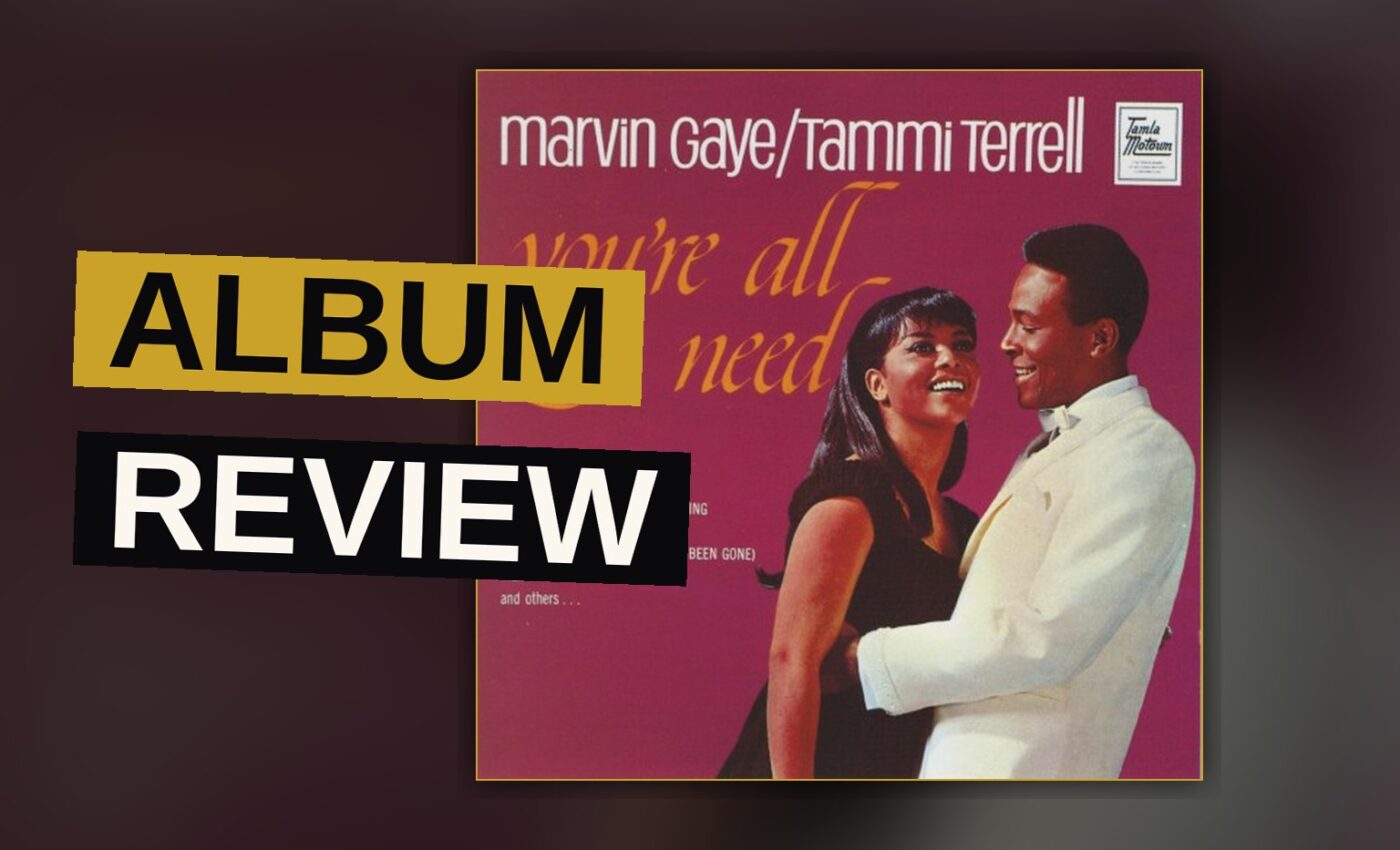
You’re All I Need is the second studio album from Marvin Gaye and Tammi Terrell, released in 1968. It is a record built on a simple, almost audacious premise: that two voices in love can carry an entire LP without gimmickry, filler theatrics, or genre hopping. The album does not try to expand soul music’s borders. It tries to perfect a narrow strip of it — the duet as a form of sustained, joyful argument between two people who cannot stop smiling at each other.
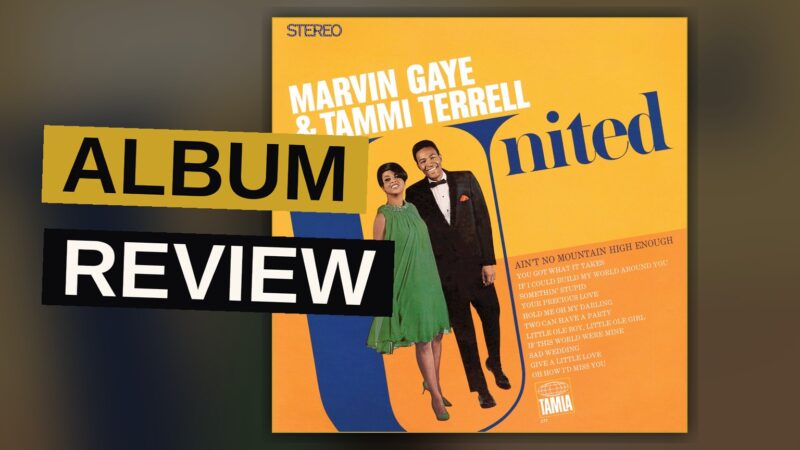
The pair had already worked together on their 1967 debut, United, and here the mission is repetition with refinement. Gaye and Terrell do not reinvent themselves; they deepen the partnership. The songs, mostly written by the powerhouse team of Ashford & Simpson, are love letters dressed as pop-soul singles. The arrangements are warm, the tempos mostly mid-range, and the harmonies lock together with a precision that feels effortless. This is an album less concerned with breaking new ground than with proving that the ground it stands on is solid enough to build a house.
Opening With Three Strong Singles
The record opens with “Ain’t Nothing Like the Real Thing,” and it is a statement of intent. The track is a duet in the truest sense — Gaye and Terrell trade lines like a couple finishing each other’s sentences, then merge for a chorus that glides. The production is clean, the bassline insistent, and the hook is immediate. It is the sound of two artists who know exactly what they are doing.
“Keep On Lovin’ Me Honey” follows and keeps the energy up without merely repeating the opener’s trick. The tempo is brisker, the vocal interplay more playful. Terrell takes the lead on the verses with a lightness that contrasts nicely with Gaye’s smoother, deeper responses. It is a song about persistence in romance, and the performance sells the idea that persistence is fun.
Then comes the centerpiece: “You’re All I Need to Get By.” This is the track that critics have repeatedly singled out, and it earns that attention. The song builds from a gentle piano intro into a full, swelling arrangement, and the vocals match the arc. Gaye and Terrell do not just sing the title phrase; they climb into it. The bridge, where the two voices intertwine over a rising string line, is the album’s emotional peak. It is the rare love song that feels both intimate and anthemic at once.
Middle Tracks Hold Their Ground
Track four, “Baby Don’tcha Worry,” cools things down slightly. It is a softer, more pleading number, with Terrell taking the lead and Gaye providing cushioning support. The song is not a standout, but it is not a weak link either — it functions as a breather between the big singles.
“You Ain’t Livin’ Till You’re Lovin'” picks the pace back up with a shuffle rhythm and a slightly cheeky lyric. The title is the thesis, and the duo sells it with a wink. It is a solid album cut that would have been a fine single for a lesser pair.
“Give In, You Just Can’t Win” is the first track that feels like filler. The melody is less distinctive, and the lyric — about surrendering to love as a losing battle — is a familiar trope. Still, the vocal chemistry elevates it. Gaye’s ad-libs in the final minute add a spark that the song’s structure does not provide on its own.
“When Love Comes Knocking at My Heart” returns to a brighter, more pop-oriented sound. The arrangement is busier, with horns and a jauntier beat, and the vocal trade-offs are sharp. It is not a revelation, but it is a pleasant, professional piece of craft.
Back Half: Softer, Then a Warm Close
“Come On and See Me” opens the back half with a slower, more seductive groove. Terrell’s delivery is the highlight here — she sounds patient, coaxing, and entirely in control. Gaye’s responses are softer than usual, which gives the track a late-night intimacy that the earlier songs lack.
“I Can’t Help but Love You” is a straightforward ballad, and it is the weakest track on the album. The melody is generic, and the arrangement — strings, gentle percussion, nothing distinctive — does little to lift it. The duo performs competently, but the song itself does not give them anything interesting to work with.
“That’s How It Is (Since You’ve Been Gone)” is a breakup song, and it is a welcome change of mood. The tempo is mid-paced, the vocal tone is more anguished, and the interplay between Gaye and Terrell shifts from flirtation to consolation. It is a reminder that they could do more than joy — they could do ache, too.
“I’ll Never Stop Loving You Baby” stretches out a slow, gospel-tinged arrangement. It is a grower, not a showstopper, but the final minute, where the vocals layer over each other in a rising cascade, is genuinely affecting.
The album closes with “Memory Chest,” a quiet, reflective number that works as a comedown. The lyric is about preserving love in a box of keepsakes, and the delivery is tender without being saccharine. It is a gentle, fitting end — not a grand statement, but a warm one.
Why the Partnership Carries the Record
The reason this album works, even when the material dips, is the chemistry at its center. Gaye and Terrell had a rare ability to make a duet feel like a conversation. They listen to each other. They respond. They leave space for the other to shine. On the weaker tracks, that chemistry is enough to keep the record afloat. On the strong ones, it turns good songs into great ones.
Terrell sounds vibrant, playful, and fully present throughout. Gaye, meanwhile, is content to be a partner rather than a solo star. That selflessness is part of what makes the album feel cohesive.
The production is consistent throughout. The arrangements favor warmth over flash — basslines that lock in, strings that swell at the right moments, horns that punctuate rather than dominate. It is a clean, professional sound that has aged well, even if it does not push any boundaries.
Strong but Not Perfect
You’re All I Need is not a groundbreaking album. It does not try to be. It is a polished, confident continuation of a partnership that was, at the time, one of the best in soul music. The three opening singles are as strong a run as any duet act produced in the 1960s, and the album’s consistency is admirable — even the lesser tracks are competent, never embarrassing.
What holds it back from greatness is the middle stretch. Tracks like “Give In, You Just Can’t Win” and “I Can’t Help but Love You” are serviceable but forgettable, and they dilute the impact of the stronger material. The album also lacks the sonic variety that would have made it feel like more than a collection of love songs in similar keys and tempos.
Still, judged on its own terms — as a duet album meant to showcase chemistry and craft — it succeeds. The title track is the finest recording either artist ever made, and the overall record shows what happens when two great voices find the right songs and the right partners.
Critics have praised the album as a strong, consistent continuation of Gaye and Terrell’s chemistry from their debut, anchored by standout Ashford & Simpson-penned singles.
“You’re All I Need equals the debut of Marvin Gaye & Tammi Terrell in every way except chart position and newness.”
That assessment, from AllMusic, is not hyperbole. The title track alone justifies the album’s existence.
- “Ain’t Nothing Like the Real Thing” — the strongest opener, immediate and hooky
- “You’re All I Need to Get By” — the peak, emotionally and musically
- “Keep On Lovin’ Me Honey” — playful and bright, nearly as good
- “That’s How It Is (Since You’ve Been Gone)” — the best deep cut, a change of mood
- “Come On and See Me” — intimate and seductive, a hidden gem
-
“I’ll Never Stop Loving You Baby” — slow-building and affecting
-
“Baby Don’tcha Worry” — pleasant but slight
- “You Ain’t Livin’ Till You’re Lovin'” — fun but forgettable
- “When Love Comes Knocking at My Heart” — professional, nothing more
- “Memory Chest” — a gentle, unremarkable close
- “Give In, You Just Can’t Win” — filler with a good ad-lib
- “I Can’t Help but Love You” — the weakest track, generic balladry
For fans of classic soul, of duets, or of either artist’s solo work, this is an essential listen. For casual listeners, the opening trio of tracks is worth the price of admission on its own.
It is not perfect. But it is a warm, enduring piece of work from two people who clearly loved singing together.
7 of 10.
Get the Notebook.
The day's best stories and every fresh verdict, in plain English, in your inbox by seven. One email a day, no more.
- Ain’t Nothing Like the Real Thing2:20
- Keep On Lovin’ Me Honey2:36
- You’re All I Need to Get By2:56
- Baby Don’tcha Worry3:00
- You Ain’t Livin’ Till You’re Lovin’2:52
- Give In, You Just Can’t Win2:38
- When Love Comes Knocking at My Heart2:34
- Come On and See Me2:30
- I Can’t Help but Love You2:52
- That’s How It Is (Since You’ve Been Gone)3:05
- I’ll Never Stop Loving You Baby3:25
- Memory Chest2:54