
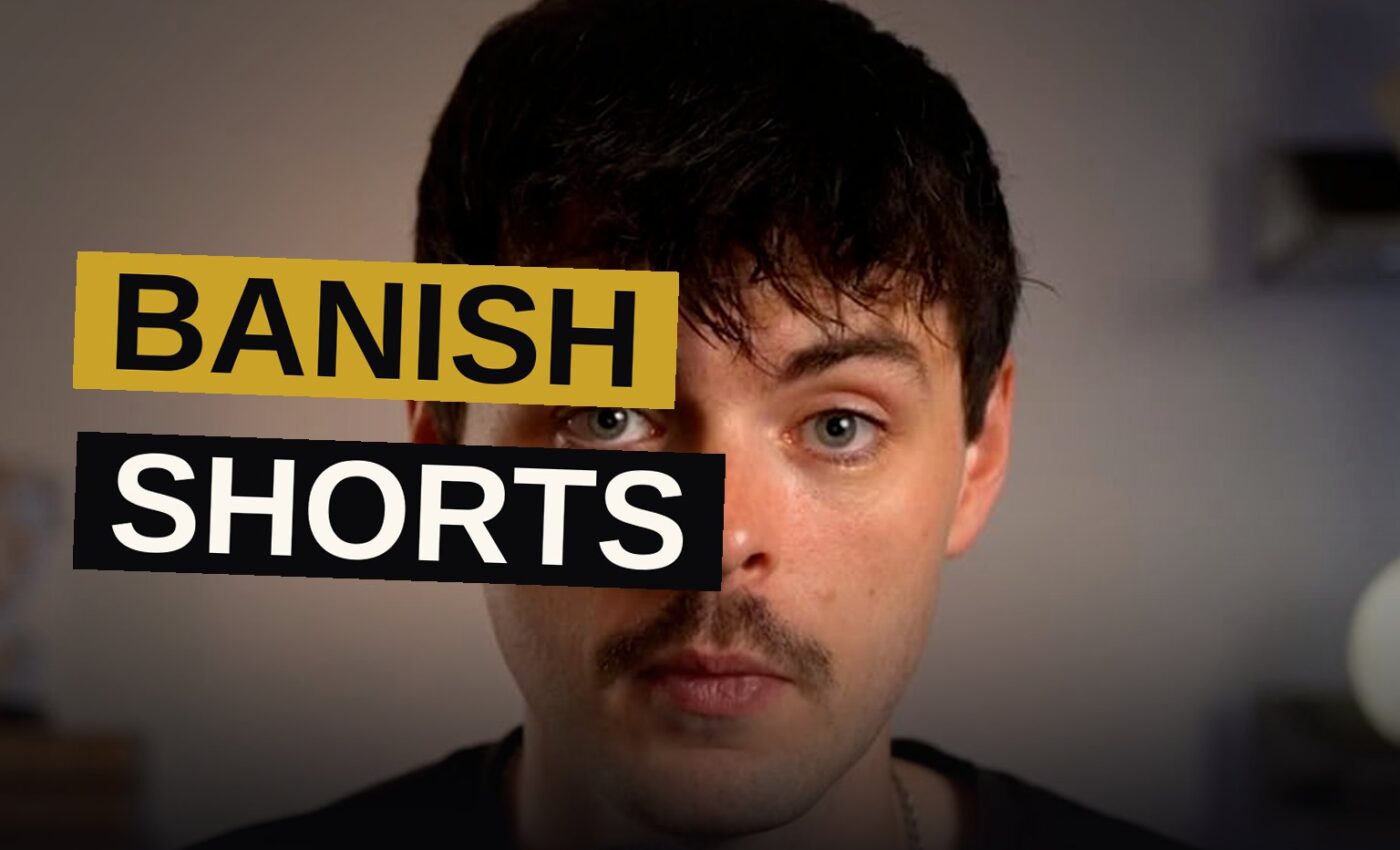
Podcast host and YouTuber Alex O’Connor has a simple fix for YouTube’s biggest problem: split Shorts off into its own app. Speaking to Dexerto, O’Connor said he would “banish” the short-form video feature to a separate platform, keeping long-form content clean and distraction-free.
His idea is part of a growing chorus of creators who say Shorts have made YouTube worse. Danny Gonzalez has said he wants to “get rid” of them, and users complain that Shorts flood their search results and homepages. O’Connor’s solution is more specific: put Shorts somewhere you have to go looking for it.
O’Connor’s Plan for a Shorts-Free YouTube
O’Connor told Dexerto exactly what he would do if he ran the platform. “I think if I were in control of YouTube’s rules, one thing I would probably do is separate out Shorts from, I suppose, what we could call longs, that is, long-form videos. I mean like different apps,” he said.
His frustration comes from how the two formats mix. “The problem with YouTube is that you’re watching a long-form, educational video about the history of Indonesia, and underneath there is a video about the new meta in Warzone. You click on it and, before you know it, you’re scrolling for eight hours.”
That kind of drift, he argued, is the opposite of what YouTube should be. He noted that social media usage should be “intentional,” and long-form videos match that, whereas shorts don’t. His proposed fix is blunt: “Banish those Shorts to some app that doesn’t show up on your home screen, and you have to search for.”
Creators Who Want Shorts Gone
O’Connor is not alone in this view. Danny Gonzalez, a fellow YouTuber, has said he avoids the app on his phone entirely because Shorts pull him in. He admitted he gets “sucked in” by the format, which is why he wants them gone.
Users have echoed the complaint. One user said back in July 2025: “If you try to search for something even remotely obscure, your results’ll be flooded with random Shorts that have nothing to do with your search.”
The format itself is not new. Vine grew into TikTok, and TikTok’s success pushed Instagram to launch Reels and YouTube to launch Shorts. Short-form video has become a standard feature across platforms, but YouTube’s version sits awkwardly next to its original product: long, deliberate videos.
Why YouTube Probably Won’t Do It
O’Connor’s suggestion is unlikely to become policy. Shorts bring significant engagement to YouTube, and the company has leaned into the format since its launch. Splitting it off would mean splitting that engagement, which is not something a platform typically does willingly.
That is the core tension: creators and users may want a cleaner feed, but the metrics favor keeping Shorts where they are.
Still, the conversation is not going away. O’Connor’s version is one of the clearest, because it does not ask YouTube to delete Shorts. It just asks for a wall between them and long-form content.
A Separate App for Shorts
O’Connor’s proposal has a specific shape. He does not want Shorts removed from existence. He wants them moved to an app that does not appear on your home screen, one you have to actively search for. That is a different ask from removal.
The model already exists. TikTok is its own app. Instagram Reels lives inside Instagram. YouTube hosts both long-form and short-form in the same place.
A separate app would mean users who want Shorts can have them. Users who do not want them would never see them. The search results would stop being flooded with random clips.
That is the pitch, and it is a clean one. The question is whether YouTube would ever accept it, and the evidence says no.
Engagement and the Shorts Question
Short-form video is popular across platforms. That is why platforms keep copying it. YouTube treats Shorts as a core feature, not an experiment.
No specific engagement figures are available, and it is not known exactly how much of YouTube’s traffic Shorts account for. What is clear is that YouTube treats Shorts as a core feature, not an experiment.
That makes O’Connor’s proposal a hard sell. A platform that profits from engagement is unlikely to banish one of its most engaging features to a separate app. The complaint is real, but the incentive structure points the other way.
User Complaints About Shorts
The user complaint from July 2025 is part of a pattern. Search for something obscure, and Shorts crowd out the results. The homepage is the same: Shorts mixed in with long-form recommendations.
O’Connor’s own example captures the absurdity. You watch a serious educational video about the history of Indonesia. The next recommendation is a Warzone meta video. You click it, and suddenly you are eight hours deep. It is a design choice, and it is one he wants reversed.
His phrase “banish” is telling. He is not asking for a gentle tweak. He is asking for Shorts to be removed from the main experience, pushed to a corner of the internet where they can only be found by people looking for them.
The Likely Outcome
Given the engagement Shorts bring, a split seems unlikely. YouTube has shown no interest in banishing its most engaging feature to a separate app, and the math of engagement says it probably never will.
That does not make the conversation pointless. Every time a creator like O’Connor raises the issue, it puts pressure on YouTube to at least address the complaints. The search flooding, the homepage clutter, the accidental doomscrolling — these are real problems, and they are not going to solve themselves.
For now, Shorts stay where they are. O’Connor’s idea is a thought experiment, a clear one, but a thought experiment nonetheless.
- Alex O’Connor: podcast host and YouTuber
- Danny Gonzalez: fellow YouTuber who wants Shorts “get rid” of
- July 2025: date of user complaint about Shorts flooding search results
- O’Connor’s proposal: separate Shorts into its own app, “banish” from home screen
Source: dexerto.com