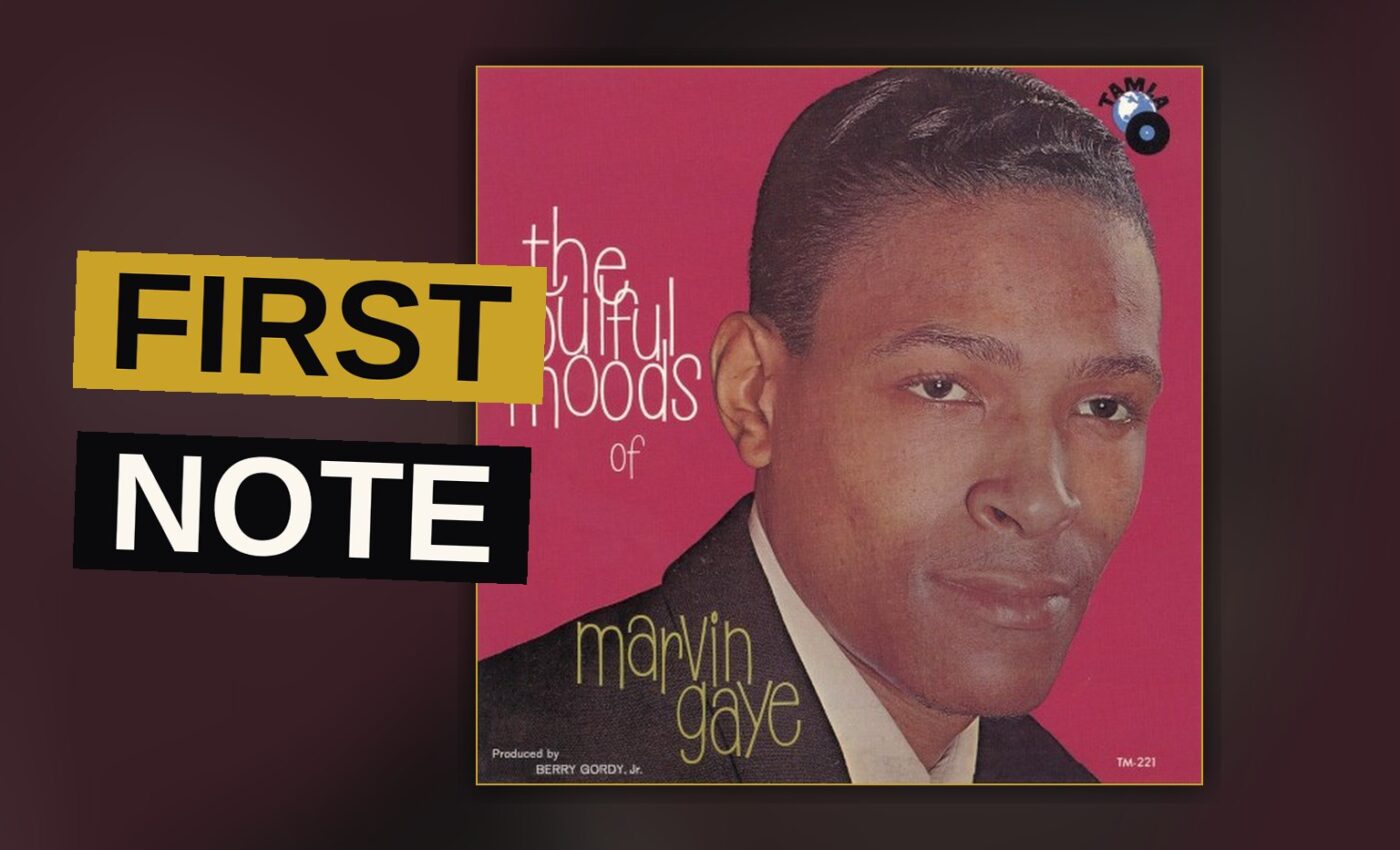
Marvin Gaye’s debut album, The Soulful Moods of Marvin Gaye, is a standards record, not the soul landmark his later work would become. Released in 1961, it finds the 22-year-old singer working through familiar material with a voice that is already remarkable, even if the identity behind it is still forming. The album is trying to prove Gaye can sing anything. It succeeds, mostly, at the cost of showing us who he actually is.
Walking Through the Tracks
The record opens with “Masquerade,” a slow, theatrical title track that sets the tone. Gaye leans into the melody with a controlled vibrato, treating the song like a stage piece rather than a confession. It is polished, but it keeps the listener at arm’s length. “Funny Valentine” follows, and here Gaye softens his approach. The phrasing is tender, and he finds a genuine warmth in the verses that the opener lacked.
“Witchcraft” brings a lighter touch. Gaye swings through the tune with obvious pleasure, and his timing is sharp. It is the first moment where he sounds like he is enjoying himself rather than auditioning. “Easy Living” pulls the mood back down. The ballad suits his lower register, and he holds the long notes with patience, though the arrangement is plain and does little to elevate the material.
“How Deep the Ocean” is a highlight. Gaye takes the song and gives it a genuine sense of longing. “Love for Sale” is the riskiest cut on the record. The song’s subject matter is adult, and Gaye handles it with a knowing smirk in his voice, but the production is stiff, and the performance never quite ignites.
The Middle Stretch and the Ballads
“Always” is pleasant and forgettable. Gaye sings it cleanly, but there is no hook, no interpretive twist to make it stick. “How High the Moon” is the most energetic track on the album. Gaye scats briefly, showing off a dexterity that the slower numbers never demanded. It is a reminder that he had chops beyond the ballad work.
“Let Your Conscience Be Your Guide” is a curious inclusion. It is the only track that hints at the gospel roots Gaye grew up with, and his delivery is more urgent here than anywhere else on the record. “Never Let You Go” is a lightweight pop tune that feels out of place among the standards. Gaye does what he can with it, but the song is simply not on the level of the surrounding material.
The album closes with “You Don’t Know What Love Is,” a ballad that is the right choice for a finale. Gaye’s voice cracks with believable pain on the high notes, and he lingers on the final phrase with a restraint that suggests he knew exactly what he was doing. It is the most complete performance on the record.
for the most part these are fine performances considering the versatile range of his voice and the depth of feeling he brought to most of his performances — AllMusic
Where Gaye Stands
The comparison to his later work is unavoidable. The Soulful Moods of Marvin Gaye is a debut that shows range, not identity. The tracks that work best are the ones where Gaye commits fully to the emotion of the lyric. The ones that fail are the ones where he is merely singing the notes correctly.
| Album | Release Year | Signature Sound |
|---|---|---|
| The Soulful Moods of Marvin Gaye | 1961 | Vocal versatility, no distinct identity |
| Let’s Get It On | Later work | Fully developed, innovative style |
| What’s Going On | Later work | Fully developed, innovative style |
The voice is there. The feeling is there, at least in patches. What is missing is the artist. Gaye had not yet found the sound that would define him, and this album captures him searching.
The Verdict
The Soulful Moods of Marvin Gaye is a good debut, not a great one.
It is worth hearing for “How Deep the Ocean” and the closing “You Don’t Know What Love Is,” both of which show a singer with real gifts. The rest of the record is competent but unremarkable, the work of a man who could sing anything but had not yet decided what he wanted to say.
Marvin Gaye would go on to make albums that changed music. This is not one of them. It is a portrait of an artist before the picture was finished, and that is its own kind of value.
7 of 10.
Get the Notebook.
The day's best stories and every fresh verdict, in plain English, in your inbox by seven. One email a day, no more.
- Masquerade5:13
- Funny Valentine3:32
- Witchcraft2:28
- Easy Living3:08
- How Deep the Ocean3:12
- Love for Sale2:57
- Always3:02
- How High the Moon2:32
- Let Your Conscience Be Your Guide3:06
- Never Let You Go2:45
- You Don’t Know What Love Is3:55