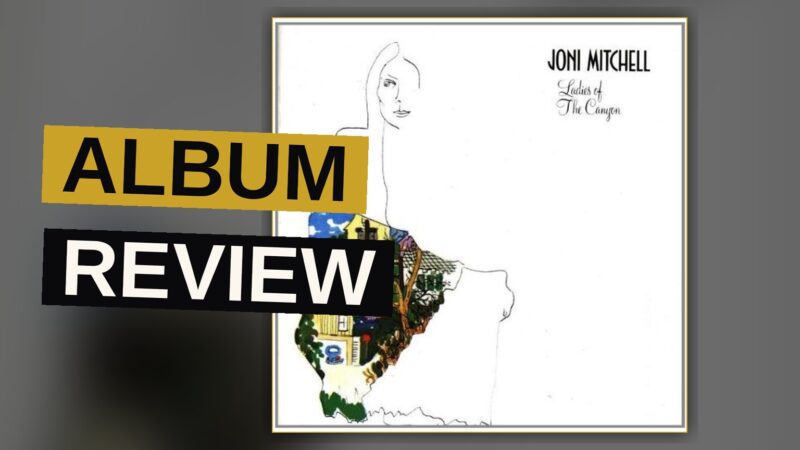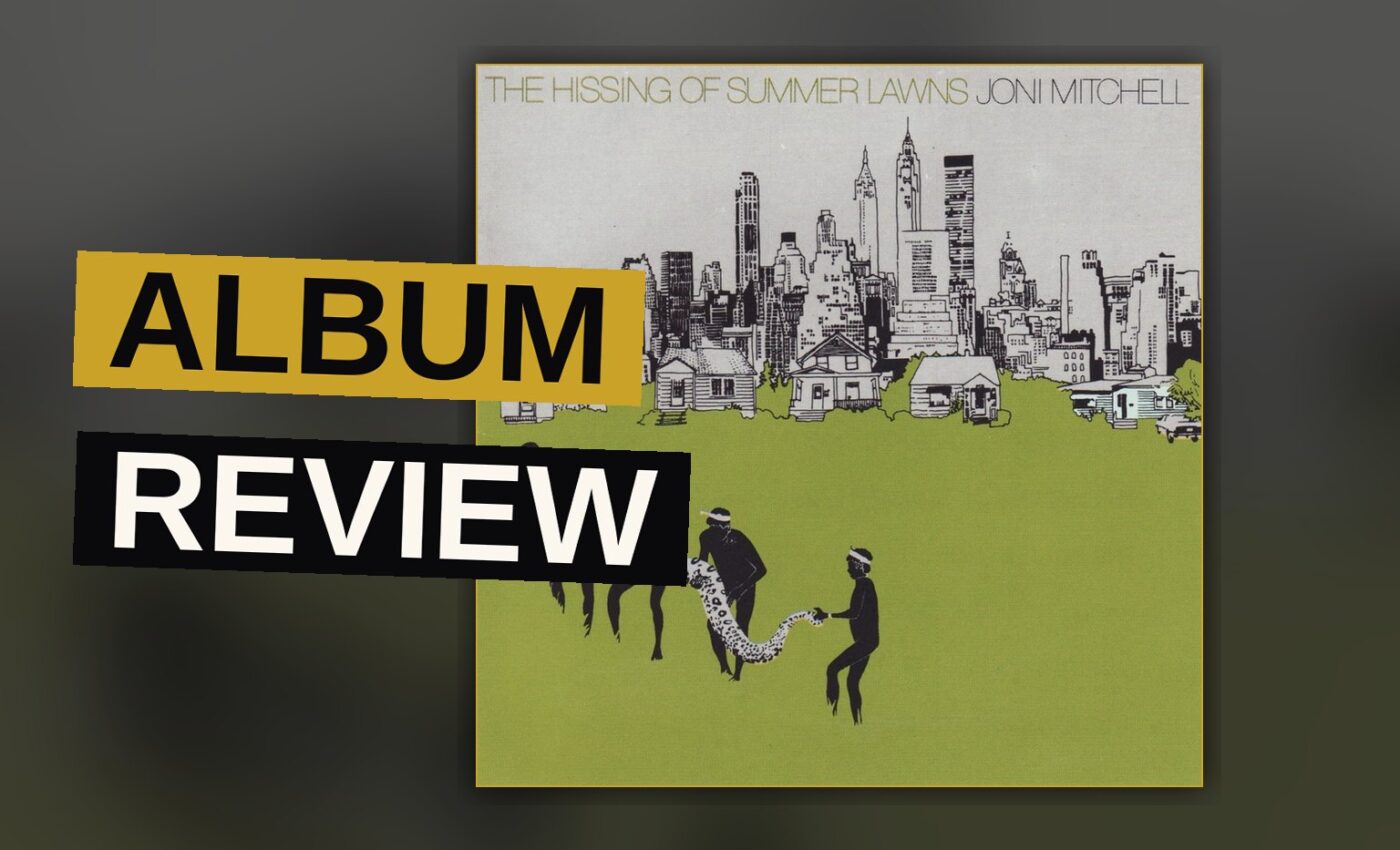
Joni Mitchell’s The Hissing of Summer Lawns is not an easy record. Released in 1975, it arrived at the peak of her commercial fame, and it did everything it could to alienate the people who had made her famous. This is not the Joni Mitchell of Ladies of the Canyon or even Blue. This is a restless, exacting artist dismantling her own folk foundation and reassembling it with jazz chords, synthesizers, and a sharp, unflinching eye on the rot beneath the American dream.
The album is a concept piece in the loosest sense, a suite of ten songs that trace the fault lines of gender, power, and class in mid-1970s America. It is a record about the cages people build for themselves—gilded, comfortable, and suffocating. The title track’s hissing lawns are the sound of a pristine suburb that is quietly burning from the inside. Mitchell is not singing about love here; she is singing about transactions, about the deals women make with men, and about the price of comfort.
It was a dramatic evolution, one that divided critics and listeners upon release, yet it has since been recognized as one of her most sophisticated and daring works. The sound is the first shock. Mitchell had been moving toward jazz for a while, but here she leaps in fully, trading her acoustic guitar for a dense, textural palette of synthesizers, saxophones, and complex, off-kilter rhythms. The production is dry and intimate, but the arrangements are ambitious and unpredictable. Nothing resolves the way you expect it to. This is music that demands attention, and it punishes the passive listener.
Main Street Opens the Door
The record opens with “In France They Kiss on Main Street,” and it is the closest thing to a concession to her old sound. The track is built on a driving, almost rock-and-roll groove, a rarity for Mitchell. It is a memory piece, a song about teenage romance and the thrill of rebellion in a small town. The narrator looks back at a time when kissing in public was an act of defiance, a small revolution against the drabness of postwar life.
But even here, there is a distance. Mitchell is not nostalgic; she is observational. She watches the kids on Main Street with a knowing, slightly weary eye. The song is a warm, inviting gateway, but it is also a trap. It lulls you into thinking this might be a fun record. It is not. The track earns its place as a single, though, with its propulsive energy and a vocal performance that snaps and crackles with life.
Jungle Line and the Kingpin
Then the floor drops out. “The Jungle Line” is the moment where Mitchell loses half her audience. It is a four-and-a-half-minute experiment built on a relentless drum loop, one of the first uses of world music percussion in pop. The track is a surreal, hallucinatory travelogue, but it is not a celebration. It is a meditation on colonialism, on the way Western artists paint jungles they have never seen, inventing a savage, exotic other to satisfy their own fantasies.
The drums are relentless, almost hypnotic, and Mitchell’s voice floats over them like a ghost. It is a difficult, confrontational piece of music. It does not care if you like it. And yet, there is a logic to it. The track is much more ambitious in its sonic palette than earlier records, and while this has proved divisive, the unconventional instrumentation works terrifically alongside Mitchell’s voice, providing greater intrigue and weight to her lyrical explorations. It is a statement of intent, a declaration that this record will not be safe.
“Edith and the Kingpin” follows, and it is a different kind of terror. This is a quiet, sinister jazz ballad about a madam and her star employee, a woman named Edith who is being sold to a powerful man. The song is all implication and shadow. The piano lines are delicate, the bass is low, and Mitchell sings in a hushed, conspiratorial register. It is a portrait of power dynamics, of the way women are traded and the way they sometimes trade themselves. The song never names the transaction, but it hangs in the air, heavy and unspeakable.
Sorrow and Scarlett
“Don’t Interrupt the Sorrow” is the record’s most conventional song, but it is no less cutting. It is a bluesy, electric number about a woman who is falling apart in public, and the people around her who refuse to acknowledge it. The narrator is the one who has to watch, who has to hold the space. The song is a study in complicity, in the way we let people drown because it is easier than pulling them out.
Mitchell’s vocal is raw, almost frayed at the edges. The guitar work is sharp and jagged, cutting through the mix like a blade. It is a song about the exhaustion of caring, and it is one of the most emotionally direct moments on the record.
“Shades of Scarlett Conquering” is where Mitchell’s ambition pushes into denser territory. It is a jazz-fusion exploration that circles around themes of female identity and the masks women wear. The title plays on a famous literary heroine, and the song is a critique of the performative femininity that women are forced to adopt to survive. The music is knotty and restless, carried by an orchestral string arrangement that swells and recedes around Mitchell’s vocal. It is a track that rewards patience, but it demands a lot of it. This is the point where casual listeners will check out, and it is hard to blame them.
Hissing at the Center
The centerpiece, “The Hissing of Summer Lawns,” is a masterpiece of quiet dread. The song is a portrait of a wealthy woman trapped in a loveless marriage, living in a beautiful home that is, in reality, a prison. The lyrics are some of the finest Mitchell ever wrote, filled with small, devastating details. The woman’s husband gives her gifts of silk and jewelry, but he does not give her his time. She is an ornament, a possession.
The music is a slow, hypnotic pulse, with a jazz guitar line that loops and a synthesizer that hums like a distant power line. The hissing of the lawns is the sound of the sprinklers, but it is also the sound of a life leaking away. The song builds to a tense, unresolved climax, and then it just stops. There is no catharsis, no release. Just the hissing. It is a chilling, perfect piece of songwriting, and it is the heart of the record.
Boho Dance and Harry’s House
“The Boho Dance” is a self-lacerating critique of the bohemian scene Mitchell herself inhabited. The song is about the pretense of authenticity, the way artists perform poverty and rebellion for an audience that is secretly wealthy. Mitchell is merciless with herself and her peers. She sings about the props of the artist life—the instruments, the clothes—but she knows it is all theater. The music is a gentle, swinging jazz waltz, but the lyrics are a scalpel.
“Harry’s House / Centerpiece” is the longest track on the record, a six-and-a-half-minute suite that is the closest Mitchell comes to a traditional narrative. The first half is a portrait of a middle-class man named Harry, who is content with his life, his wife, and his house. He is not a villain; he is just a man who has made his peace with mediocrity. The second half, “Centerpiece,” is a jazz standard that Harry’s wife listens to on the radio, a song that represents the passion and romance her life lacks.
The juxtaposition is devastating. The music shifts from a laid-back, conversational groove to a straight-ahead jazz swing, and Mitchell sings both parts with equal conviction. It is a song about the gap between what we have and what we want, and the way we fill that gap with fantasy. It is also a showcase for Mitchell’s incredible range as a vocalist, moving from spoken-word intimacy to full-throated jazz phrasing with ease.
Sweet Bird and Shadows
“Sweet Bird” is a gentle, pastoral song that offers a brief respite from the darkness. The lyrics turn on images of time passing and beauty fading—a meditation on mortality and the slow erosion of youth. The music is sparse and acoustic, a return to the folk sound of her earlier records. It is a beautiful, fragile song, but it is also a sad one. The song does not offer escape; it offers only the awareness of what is slipping away.
The closer, “Shadows and Light,” is the record’s thesis statement. It is a song about the duality of existence, the way light and dark, joy and sorrow, are always intertwined. The music is a slow, meditative gospel-inflected piece, with backing vocals providing a choral texture. Mitchell sings about the shadows and light that get in the way, and she accepts them both. It is a peaceful, resigned ending to a record that has been anything but peaceful. It is not a victory, but it is an acceptance.
Verdict
The Hissing of Summer Lawns is not a record that is easy to love. It is dense, difficult, and often alienating. It is a record that asks you to meet it on its own terms, and it will not come down to meet you. But that is also its greatness. Mitchell took a massive risk here, abandoning the commercial safety of her folk sound to make something challenging, ambitious, and unapologetically weird. She was rewarded with a critical drubbing at the time. History has been kinder.
The record is now viewed as a sophisticated and daring work, a crucial bridge between her folk past and her jazz future. It is a record that sounds more prescient with each passing year, a sharp critique of the American dream that has only become more relevant. It is not her most accessible record, and it is not her best. But it is her most interesting, a bold, flawed, and utterly singular statement from an artist at the height of her powers.
The unconventional instrumentation works terrifically alongside Mitchell’s voice, providing greater intrigue and weight to her lyrical explorations.
It is a record that rewards the patient listener, and it reveals new depths with every listen. The songs are dense and layered, and the performances are fearless. Mitchell is not trying to please anyone here. She is trying to tell the truth, as she sees it, about the world around her. That truth is uncomfortable, but it is also essential.
- “In France They Kiss on Main Street” is a warm, deceptive opener.
- “The Jungle Line” is a confrontational, hypnotic experiment.
- “Edith and the Kingpin” is a chilling portrait of power.
- “The Hissing of Summer Lawns” is the masterpiece at the center.
This is a record for listeners who want more than background music.
It is a record for listeners who are willing to work.
Get the Notebook.
The day's best stories and every fresh verdict, in plain English, in your inbox by seven. One email a day, no more.
- In France They Kiss on Main Street3:20
- The Jungle Line4:26
- Edith and the Kingpin3:37
- Don't Interrupt the Sorrow4:05
- Shades of Scarlett Conquering4:59
- The Hissing of Summer Lawns3:01
- The Boho Dance3:51
- Harry's House / Centerpiece6:48
- Sweet Bird4:12
- Shadows and Light4:17