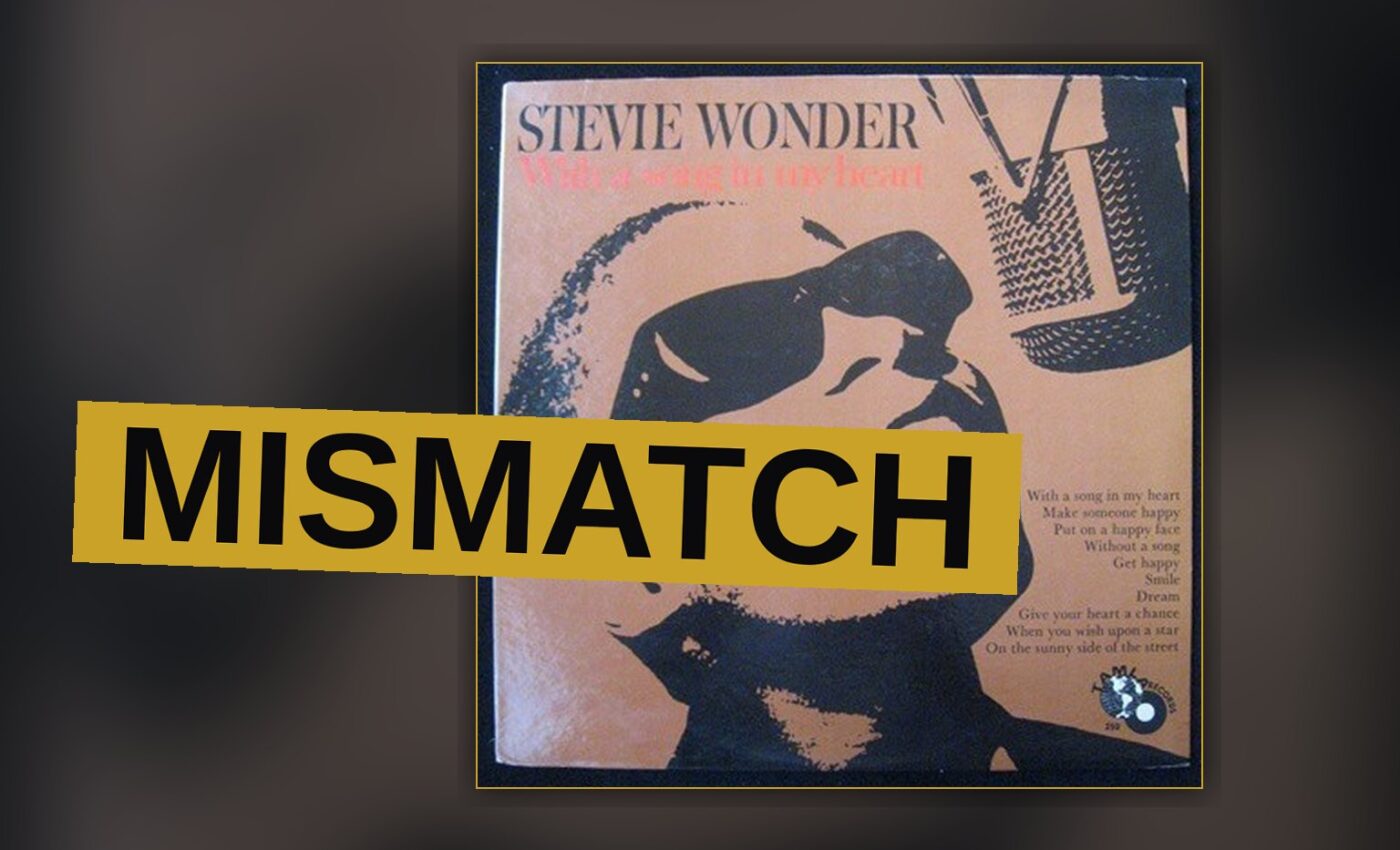
In 1963, Motown decided that the 13-year-old Stevie Wonder was ready for the supper club. The label dressed him in adult material, pulled from the Great American Songbook, and released With a Song in My Heart. It is a record that fights its own star at every turn, burying a prodigy under songs written for people three times his age.
The album is a mismatch of intent. Motown wanted a crossover crooner, someone who could play the lounges and ballrooms. What they had was a kid whose genius was raw, rhythmic, and utterly unsuited to the polite restraint of standards. The result is a fascinating failure—a document of a label fumbling its most precious asset.
Opening With a Song
The title track sets the tone immediately. “With a Song in My Heart” (3:15) is a standard, and Wonder sings it with the earnestness of a child performing for proud relatives. His voice is clear, his pitch is true, and his diction is careful. But there is no grit, no swing, no sense that he believes a word of it. He is imitating a style he has not lived long enough to own.
“When You Wish Upon a Star” (3:02) follows, and here the problem sharpens. The Disney classic is a song about faith and magic, which should suit a teenager. Yet the arrangement is syrupy, the strings are thick, and Wonder’s delivery is forced into a smoothness that flattens his natural spark. He hits the notes, but the song does not move. It sits there, polite and inert.
These two tracks establish the album’s central error: treating Wonder as a vessel for other people’s emotions rather than a source of his own. The boy who would later define the sound of soul music is here reduced to a well-behaved mimic. It is competent. It is also dull.
Smile and the Middle Stretch
“Smile” (3:23) is the first track that nearly works. The song has a melancholy undercurrent that Wonder touches with surprising delicacy. His phrasing is more relaxed, and for a moment the restraint feels like choice rather than constraint. It is the closest the album comes to a genuine performance.
“Make Someone Happy” (5:07) is the longest track on the record, and it earns every second of its runtime. The song stretches, the band settles into a comfortable groove, and Wonder begins to improvise slightly. He scats, he bends notes, he plays with the melody. It is a glimpse of the artist he would become, and it makes the surrounding stiffness more frustrating.
“Dream” (2:43) is a throwaway. The standard is slight, and Wonder’s treatment is slighter. He sings it straight, the arrangement does nothing to elevate it, and the track ends before it has made any impression. It is filler, and it sounds like it.
Put on a Happy Face and the Second Half
“Put on a Happy Face” (2:39) is a mistake. The song is bouncy and theatrical, and Wonder cannot find the irony or the joy in it. He performs it as instructed, but the performance is hollow. The track is short, and it still feels too long.
“On the Sunny Side of the Street” (4:01) is the album’s best moment. The tempo is brighter, the band sounds more engaged, and Wonder finally lets loose a little. He swings on the chorus, his voice gaining the confidence that the earlier tracks lack. It is not a great performance, but it is a living one. For the first time, the record sounds like a musician rather than a student.
“Get Happy” (2:14) is a stumble back. The standard demands a belt, a preacher’s fire, a soul singer’s conviction. Wonder gives it a polite smile. The song is about finding joy in the face of sorrow, and the 13-year-old simply does not have the life experience to sell it. He sounds like a kid at a school assembly, hitting the right notes and missing the point.
Give Your Heart a Chance and the Closers
“Give Your Heart a Chance” (2:19) is the only original on the album, and it is the weakest track of the set. The melody is forgettable, the lyric is generic, and Wonder’s delivery is flat. It has none of the fire he would bring to his own compositions just a few years later. It is a placeholder, and it shows.
“Without a Song” (4:14) closes the record with a standard that should be a showcase. The song is built for a big voice, a dramatic finish, a moment of transcendence. Wonder does not get there. He sings it well, but that is not what this song demands. It demands a life’s worth of hurt and triumph. He is 13. He has not earned it yet.
The track list, taken as a whole, is a study in misplaced ambition. Ten songs, all of them beyond Wonder’s reach at this moment in his development. The running order does him no favors, front-loading the weakest material and saving the two best performances for the middle and the back half. The album never builds momentum because it never knows what it wants to be.
The Production Behind the Record
The arrangements are the album’s quiet enemy. The strings are everywhere, thick and syrupy, smothering Wonder’s voice in a layer of adult sophistication he cannot penetrate. The rhythm section is competent but uninspired, locked into a polite shuffle that never threatens to break into a groove. The whole record sounds like a demo for a singer who never showed up.
The production choices suggest a label hedging its bets. Motown was not sure what Wonder was, so they tried to make him everything at once. A crooner, a balladeer, a polite pop singer—none of these fit. The album is a series of experiments, none of which succeed, all of which are recorded with the same glossy sheen.
- The title track is a misfire, all effort and no feeling.
- “When You Wish Upon a Star” is inert.
- “Smile” nearly works.
- “Make Someone Happy” is the first real performance.
- “Dream” is filler.
- “Put on a Happy Face” is a mistake.
- “On the Sunny Side of the Street” is the best track.
- “Get Happy” lacks conviction.
- “Give Your Heart a Chance” is forgettable.
- “Without a Song” closes without landing.
The band deserves some blame. They play with the precision of session musicians, which they were, but there is no spark in their performance. They are following charts, not making music. The listener never gets the sense that anyone in the room was excited to be there.
Context and Aftermath
This album sits at a strange point in Wonder’s career. He had already scored hits, and his talent was obvious to anyone paying attention. But Motown was still figuring out how to package him. The label saw a young Black artist and reached for the safest possible template: the supper-club crooner, the polite entertainer, the man who could play any room without offending anyone.
It did not work. The album was not a commercial disaster, but it was not a success either. Critics at the time and since have noted the mismatch. The AllMusic review put it bluntly, describing the album as an attempt to turn Wonder into a “Lounge Lizard” and noting that the material was “years beyond his abilities.” Tom Hull gave it a C−, a grade that feels generous.
Wonder would not stay in this lane for long. Within a few years, he would take control of his own music, write his own songs, and redefine what a soul artist could be. With a Song in My Heart is a snapshot of the moment before that transformation, a record of a label trying to force a square peg into a round hole.
It is also a reminder that even geniuses have growing pains. Wonder’s voice is here, but it is not yet his voice. He is still borrowing other people’s styles, other people’s songs, other people’s dreams. The album is a collection of covers that never becomes a statement.
Final Verdict on the Record
With a Song in My Heart is a failed experiment that is nonetheless worth hearing. It is the sound of a prodigy being held back, of a label playing it safe, of an artist not yet ready to break free. The best tracks—”Make Someone Happy” and “On the Sunny Side of the Street”—offer glimpses of what was coming. The rest is polite, pleasant, and utterly forgettable.
The album is not a disaster. It is too competent for that. But it is a misfire, a record that misunderstands its own star and wastes his time. Wonder would recover, and quickly. The lessons he learned here, about what did not work, would push him toward what did.
For fans of Wonder, this is a curiosity, a footnote in a great career. For everyone else, it is a lesson in the dangers of trying to fit a square peg into a round hole. The record is not essential, but it is instructive.
It is a 3 out of 10.
Get the Notebook.
The day's best stories and every fresh verdict, in plain English, in your inbox by seven. One email a day, no more.
- With a Song in My Heart3:15
- When You Wish Upon a Star3:02
- Smile3:23
- Make Someone Happy5:07
- Dream2:43
- Put on a Happy Face2:39
- On the Sunny Side of the Street4:01
- Get Happy2:14
- Give Your Heart a Chance2:19
- Without a Song4:14