
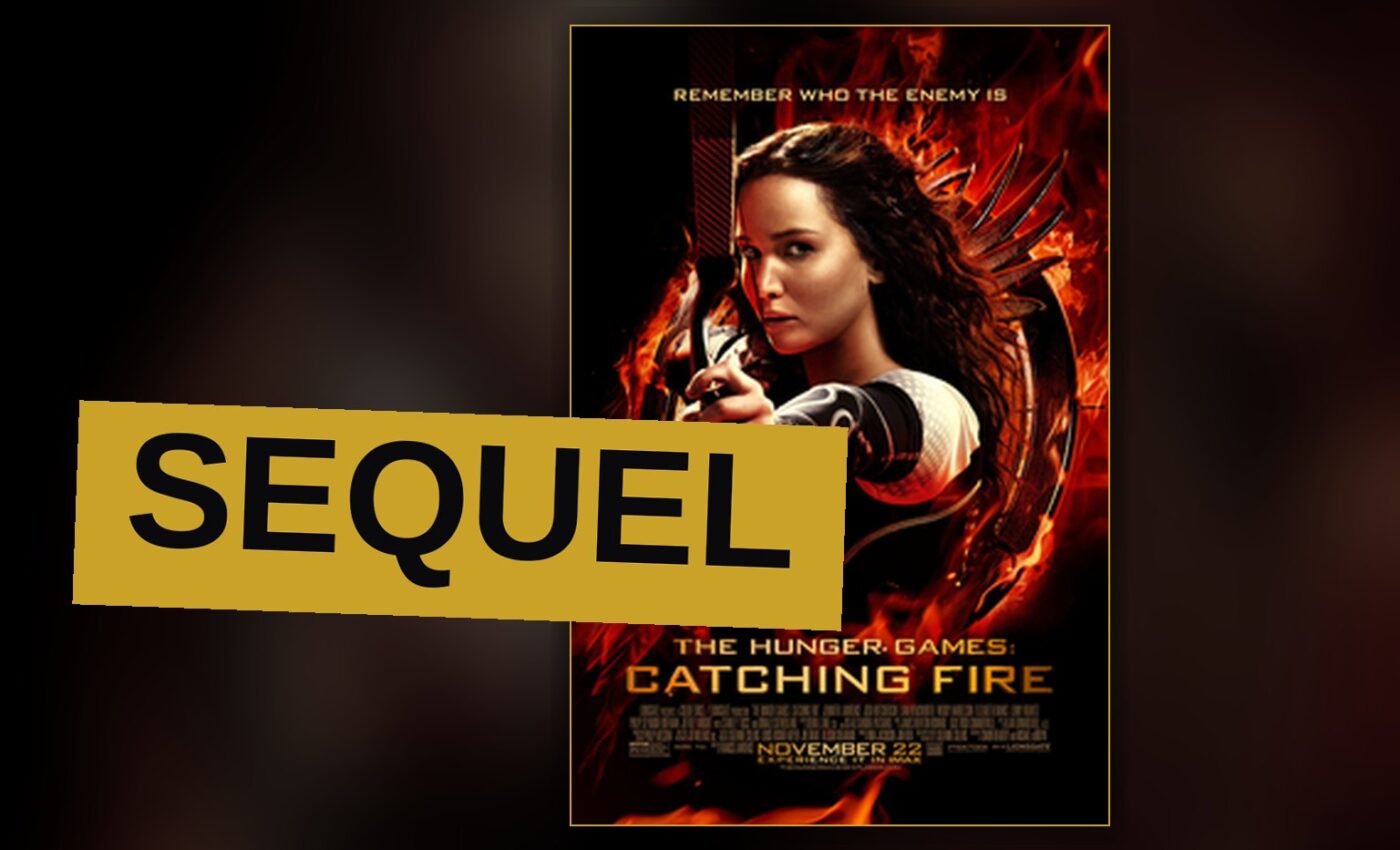
The Hunger Games: Catching Fire opens on a victory that feels like a defeat. Katniss Everdeen and Peeta Mellark are back in District 12, living in material comfort and emotional unease after their joint win in the 74th Hunger Games. Katniss is traumatized. She stays distant from Peeta. Then President Snow arrives with a demand.
Trailer, via The Hunger Games.
Snow’s Threat in District 12
Snow tells Katniss her defiance in the Games has inspired revolts across Panem. To suppress the rebellion, he wants her and Peeta to feign love during the Victory Tour. He needs the districts to believe their planned double suicide was romantic, not an act of defiance. If they refuse, he threatens to destroy District 12 and kill their families and friends.
The film, directed by Francis Lawrence, runs 146 minutes. It is a sequel to 2012’s The Hunger Games and the second installment in the series, adapted from Suzanne Collins’ 2009 novel Catching Fire. Simon Beaufoy and Michael deBruyn wrote the screenplay. Lionsgate released it in the United States on November 22, 2013, after a London premiere at the Odeon Leicester Square on November 11.
Katniss agrees to Snow’s terms. It does not work. Their Victory Tour speeches only lead to further unrest across the districts. They announce their engagement in public to persuade Panem’s citizens of their love. Snow remains unconvinced.
The Quarter Quell Twist
Back home, Katniss witnesses the brutality of the Capitol’s Peacekeepers. Gale Hawthorne, her best friend, is publicly whipped for trying to intervene in their beating of civilians. The confrontation pulls in Katniss, Peeta and Haymitch Abernathy.
Then comes the announcement: the 75th Hunger Games, the third Quarter Quell, will draw tributes from the existing pool of victors. As the only living female victor from District 12, Katniss must compete. At the Reaping, Haymitch’s name is drawn. Peeta volunteers for him.
Peeta lies during his pre-Games interview, claiming he and Katniss are married and expecting a child. The claim causes an uproar among Capitol citizens and demands to cancel the Games. Snow orders Katniss to wear a wedding dress for her interview. Cinna designs it to shift.
Jennifer Lawrence Carries the Unease
The cast is deep. Jennifer Lawrence plays Katniss, Josh Hutcherson plays Peeta, Liam Hemsworth plays Gale, Woody Harrelson plays Haymitch, Elizabeth Banks plays Effie Trinket, Donald Sutherland plays President Coriolanus Snow, Lenny Kravitz plays Cinna, Philip Seymour Hoffman plays Plutarch Heavensbee, Jeffrey Wright plays Beetee Latier, Stanley Tucci plays Caesar Flickerman, Toby Jones plays Claudius Templesmith, and Willow Shields plays Primrose Everdeen.
The tagline is “Remember who the enemy is.” It is a better line than most franchise marketing earns.
A Sequel Built Without Gary Ross
Lionsgate announced a sequel based on Collins’ second novel in 2012. Gary Ross was initially set to return as director. He was replaced with Lawrence that May. DeBruyn completed several rewrites to Beaufoy’s screenplay. The main cast was confirmed by September 2012, and principal photography began later that month, lasting until March 2013. Filming locations included Georgia, Hawaii, and New Jersey.
Casting moved through the summer of 2012. In July, Jena Malone was set as Johanna Mason, Amanda Plummer as Wiress, and Philip Seymour Hoffman as Plutarch Heavensbee. In August, Lynn Cohen was cast as Mags. Melissa Leo was considered for Mags before Cohen; Leo later said she was disappointed she didn’t get the role.
Alan Ritchson was cast as Gloss on August 9, Sam Claflin as Finnick Odair on August 22, and Jeffrey Wright as Beetee on September 7. Tony Shalhoub was reported to be the frontrunner for Beetee. Grant Gustin auditioned for Finnick. Garrett Hedlund was offered the role but passed while working on On the Road. Taylor Kitsch and Armie Hammer were reported frontrunners for Finnick; Kitsch later said it wasn’t going to happen.
What the Quarter Quell Gets Right
The film received critical acclaim, with praise for Lawrence’s performance, action sequences, musical score, screenplay, visual effects, emotional depth, and themes. Many critics considered it the best film in the series. That consensus holds up.
Catching Fire works because it refuses to let the first film’s ending be a happy one. The victory is the problem. Snow’s visit turns a teenage romance into a political instrument, and the movie keeps that pressure on for 146 minutes. The Quarter Quell twist is the smartest structural move in the series: it takes the Games’ premise and makes it crueler by forcing former winners back into the arena, which means the audience already knows these people and already knows what the Capitol is willing to do to them.
Jennifer Lawrence is the reason the unease lands. Katniss spends much of the film saying one thing in public and meaning another, and Lawrence plays that gap without announcing it. Hoffman’s Plutarch arrives late but changes the temperature of every scene he is in. Sutherland’s Snow is calm, which is worse than rage.
Key Facts
- Title: The Hunger Games: Catching Fire
- Year: 2013
- Director: Francis Lawrence
- Writers: Simon Beaufoy, Michael deBruyn
- Based on: Catching Fire by Suzanne Collins (2009)
- Runtime: 146 minutes
- Genres: Adventure, Action, Science Fiction
- US release: November 22, 2013
- London premiere: November 11, 2013
- Distributor: Lionsgate
- TMDB audience score: 7.4/10 (18,748 votes)
The flaws are real. The film’s middle stretch leans on speeches and ceremony, and the Victory Tour can feel like a tour of sets rather than a tour of a country. The ending is abrupt by design, setting up the next installment rather than closing this one. That is a franchise obligation, not a storytelling choice, and it costs the film a measure of satisfaction.
Still, Catching Fire is the rare sequel that improves on its predecessor by narrowing its focus. The first film had to build a world. This one gets to live in it and show what the world does to the people who survive it. The tagline asks the audience to remember who the enemy is. The film’s answer is more complicated than the marketing suggests, and that is to its credit.
Get the Notebook.
The day's best stories and every fresh verdict, in plain English, in your inbox by seven. One email a day, no more.


