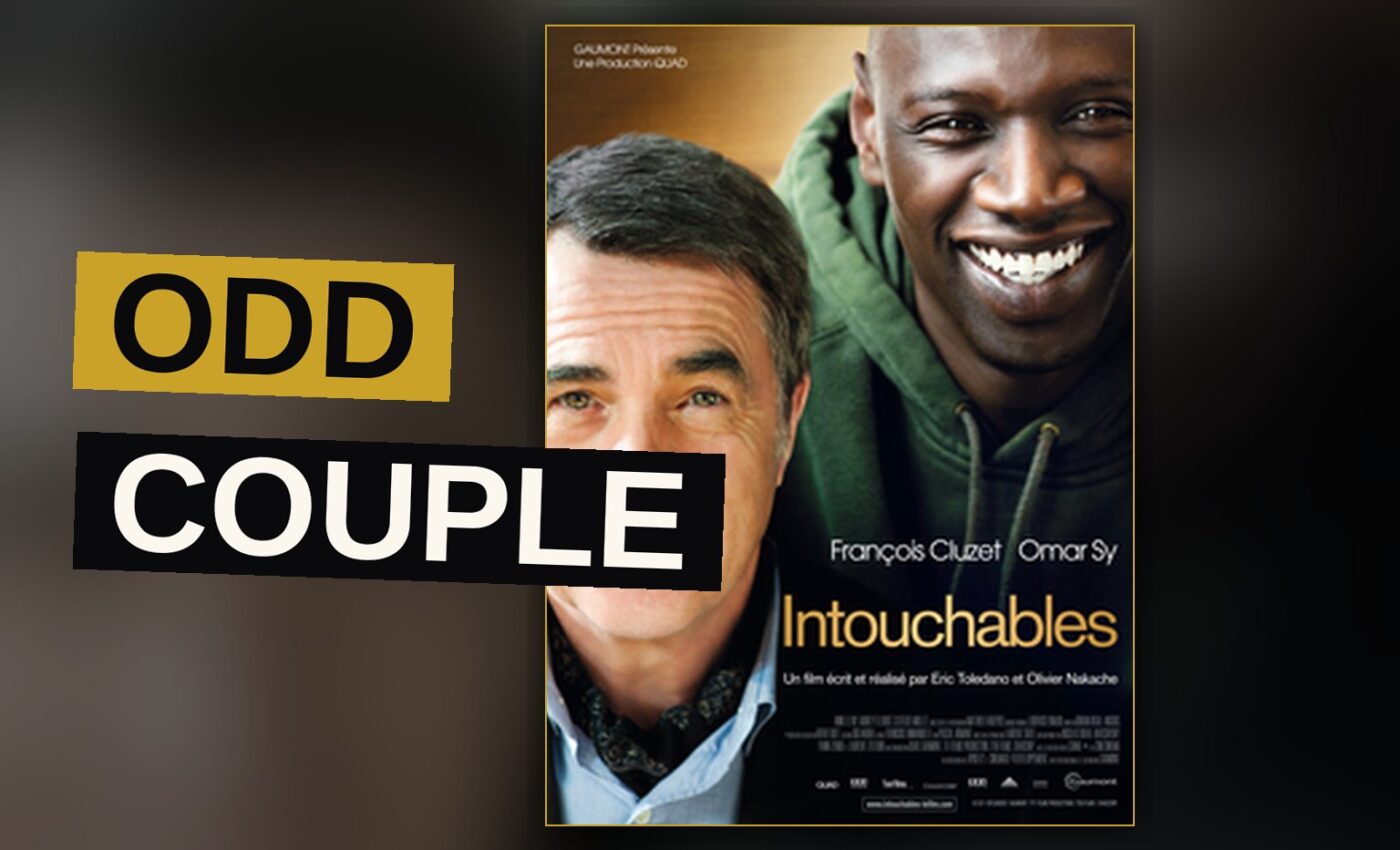
The Intouchables, the 2011 French comedy-drama directed by Olivier Nakache and Éric Toledano, remains one of the most beloved films of the decade. It tells the true story of Philippe, a wealthy quadriplegic who hires Driss, a young man from the projects, as his live-in caregiver. The film is a masterclass in chemistry, humor, and quiet humanity.
Trailer, via eOnefilms.
The Odd Couple
Philippe (François Cluzet) is a cultured aristocrat who has lost all movement from the neck down. Driss (Omar Sy) is a street-smart ex-convict who needs a signature to prove he is job hunting. Their first meeting is a disaster of manners, yet Philippe sees something raw and honest in Driss. He hires him on a whim, and the pair begins an unlikely friendship.
The script gives both actors room to breathe. Cluzet conveys immense depth with only his face and voice, a remarkable feat for a character who cannot move. Sy is a whirlwind of energy, dancing, joking, and refusing to treat Philippe like a fragile object.
Music and Movement
The soundtrack is a vital character in The Intouchables. Ludovico Einaudi’s piano pieces underscore the film’s tender moments, while Earth, Wind & Fire’s “September” becomes a signature scene of pure joy. Driss introduces Philippe to pop music, and Philippe returns the favor with classical opera.
One of the film’s most famous sequences involves Driss dancing to “Boogie Wonderland” at a birthday party. It is a scene of pure, uncomplicated happiness.
The Real Story
The film is based on the memoir Le Second Souffle by Philippe Pozzo di Borgo, the real man behind the character. Pozzo di Borgo has said he preferred his caregiver Abdel, who treated him with a normalcy that others lacked. The film captures that spirit, even if it changes names and details.
The famous paragliding scene is a dramatization of a real event. Pozzo di Borgo and Abdel did fly together, and the film uses it as a metaphor for trust and freedom.
Awards and Reception
The Intouchables won multiple awards and became the second-highest-grossing French film of all time. Omar Sy won the César Award for Best Actor for his role, a historic win for a Black actor in France.
Key honors include:
- César Award for Best Actor (Omar Sy)
- Tokyo International Film Festival Grand Prix
- Multiple nominations at the César Awards, including Best Film
- A worldwide box office gross exceeding $400 million
A Brief Critique
The film has faced criticism over the years, particularly for its portrayal of race and class. Some argue that Driss exists to serve Philippe’s emotional needs. Others point out that the real-life story involved a man of Algerian descent, not Senegalese.
These are valid points, but they do not diminish the film’s core achievement. The Intouchables is not a political treatise; it is a character study about two men who see past each other’s defenses.
A Running Order
The film’s structure moves through distinct emotional beats:
| Beat | Key Moment | Tone |
|---|---|---|
| Opening | Philippe interviews Driss | Tense, funny |
| Early Days | Driss learns the job | Awkward, warm |
| Midpoint | September plays during a dance | Joyful |
| Paragliding | Trust in the air | Exhilarating |
| Final Act | Driss leaves, then returns | Bittersweet |
That pacing keeps the film engaging from start to finish.
The Intouchables is not perfect. Some subplots, like Driss’s family troubles, feel underdeveloped. The ending is a little neat. But these are minor complaints against a film that is so warm, funny, and alive.
It earns its laughter and its tears. It is a film about living fully, despite the odds. I give it 8.3/10.