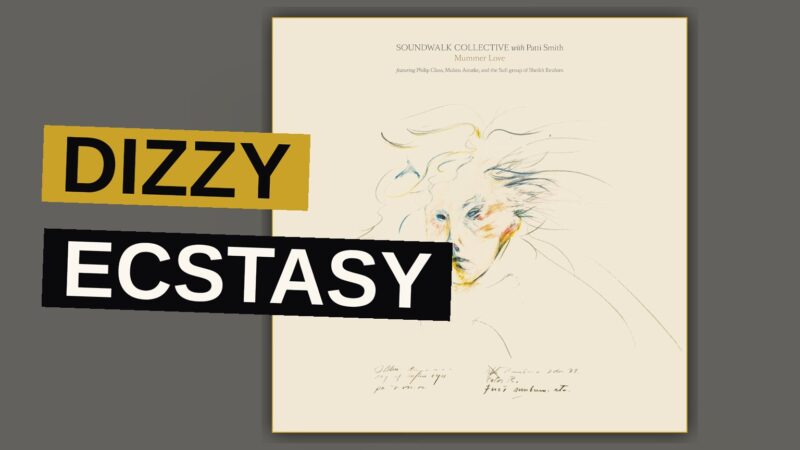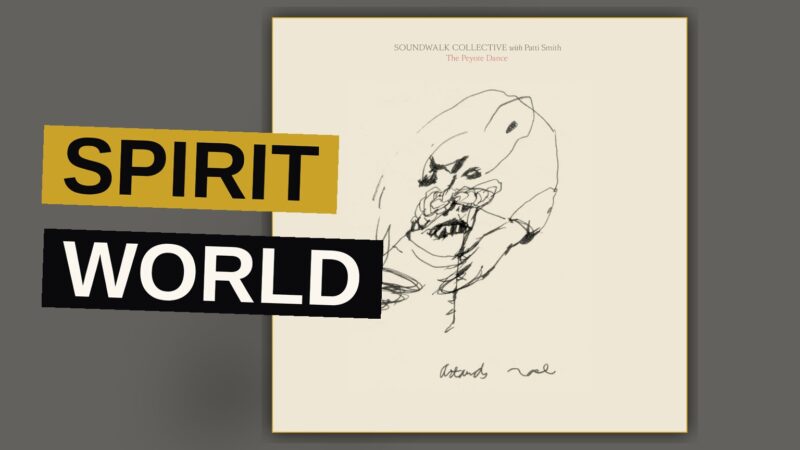
Correspondences, Vol. 1 is a quiet, strange record that wants to make poetry feel like a place you can walk through. The album pairs Patti Smith with the Soundwalk Collective, and it runs just two tracks, both built around figures from classical mythology and film history. The idea behind it is simple: Smith reads her writing over field recordings, sound collages, and ambient textures, turning each piece into a kind of guided meditation. Whether it works depends on how much you want to sit with silence.
What Correspondences, Vol. 1 Is Trying To Do
This is not a pop album. It is not a rock record either. It is a collection of spoken-word pieces set against layers of noise, drone, and environmental sound. The Soundwalk Collective has made similar work before, pairing field recordings with literary readings, and this record continues that tradition. Smith’s role here is as a reader and narrator, not a performer in the conventional sense. Her voice is low, intimate, and sometimes barely audible, which makes the experience less about performance and more about immersion.
The title itself points to the record’s central concern. “Correspondences” suggests a correspondence between inner experience and outer environment, between human emotion and natural sound. The collective has spent years exploring this space, and this record is the latest in a series of collaborations with Smith that began with their 2013 release, The Book of Houses. Each subsequent album has deepened the connection between text and sound, and this one pushes the relationship further still.
Pasolini
“Pasolini” opens the record and sets the tone immediately. It is a tribute to Pier Paolo Pasolini, the Italian filmmaker and poet whose work often dealt with the intersection of politics, religion, and sexuality. The track is constructed from fragments of dialogue, street noise, and Smith reading passages from her own writing. The sound design is dense but not overwhelming. It feels like wandering through a city street at dusk, where conversations drift in and out of earshot.
Smith’s delivery is unhurried and deliberate. She pauses between lines, lets words settle before moving on, and the effect is meditative rather than urgent. The track builds slowly, layering new sounds on top of old ones until the whole thing coheres into a single, enveloping texture. By the time it reaches its twelve-minute mark, the listener is fully inside the piece, no longer able to distinguish between the words and the world around them.
“It’s refreshing to hear the avant-garde poetic touch of truly timeless creativity and this feeling is found in abundance”
That line captures the record’s core appeal. Smith’s writing is sharp and specific, and the collective’s sonic backdrop amplifies rather than overwhelms it. This is a record that rewards patience, and “Pasolini” is the clearest example of that principle in action.
Medea
“Medea” follows the opening track and shifts the focus from a living artist to a mythological figure. The title character is a figure from Greek legend, a sorceress who commits murder and revenge in service of love and betrayal. The track draws on themes of violence, passion, and the destructive power of emotion. It is darker than “Pasolini,” and the sound design reflects that shift.
The track is fourteen minutes long, and it moves through several distinct sections. It begins with a slow, atmospheric introduction, then builds into a denser, more chaotic middle section, and finally resolves into a quieter, more reflective conclusion. The transitions are smooth, and the overall structure feels carefully considered. The collective’s ability to build tension without losing cohesion is on full display here.
Smith’s reading is particularly compelling in this track. She inhabits the character with a sense of urgency that contrasts sharply with the calmness of “Pasolini.” The emotional range she brings to the material is what elevates the piece beyond mere recitation. It is a performance, even if it is a restrained one.
The Two Tracks Compared
“Pasolini” and “Medea” are clearly related, but they are not identical. Both draw on literary and historical figures, both use spoken-word narration, and both rely on ambient soundscapes. The difference lies in tone and intent. “Pasolini” is reflective and elegiac, while “Medea” is dramatic and unsettling.
The shorter track is the more accessible entry point. It is easier to digest in a single sitting, and its themes are more immediately relatable. The longer track demands more attention, but it also offers a richer payoff. Together, they form a complete statement about the nature of creative collaboration and the relationship between language and sound.
The Record’s Structure
The two-track format is a deliberate choice. It forces the listener to engage with the material deeply, rather than skimming across a dozen short songs. There is no filler here, no instrumental interludes, no palate cleansers. Every minute is earned, and every second carries weight.
The sequencing is also telling. Starting with “Pasolini” establishes the reflective mood, then “Medea” pushes the listener into a more intense emotional space. The record ends on a note of resolution, but it is a quiet one, not a triumphant one. That restraint is part of the point. The music is meant to linger, not to overwhelm.
What Works And What Doesn’t
Not everything lands. Some sections feel overly dense, with too many competing sounds fighting for attention. The pacing can also be uneven, with some stretches dragging and others rushing past too quickly. These are minor complaints, though. The record’s strengths far outweigh its weaknesses.
The standout moments come when the spoken word and the ambient textures sync perfectly. When Smith’s voice cuts through the haze with clarity, the effect is powerful. When the sound design recedes into a gentle hum, the poetry becomes the foreground. Those moments are frequent enough to justify the entire project.
How It Stacks Up Against The Previous Work
Soundwalk Collective has released three prior albums with Smith, and this one picks up where those left off. The evolution is visible. The earlier records were exploratory, but this one feels more refined. The collective’s technical skill has improved, and Smith’s involvement has deepened. The result is a more cohesive, more confident piece of work.
The record also stands apart from Smith’s solo career. Her solo work is characterized by a raw, visceral energy, while this record is more cerebral. It is a different kind of creative outlet, one that allows her to explore ideas in a way that her rock albums could not. That distinction is worth noting, because it explains why this record exists outside her usual catalog.
The Verdict
Correspondences, Vol. 1 is a strong addition to the collective’s discography and a rewarding listen for anyone interested in experimental music. It is not a casual record, and it is not a background record. It requires attention, and it repays that attention in full. The two tracks are well-crafted, well-performed, and well-conceived.
There are rough edges, and there are moments where the density of the soundscapes threatens to bury the poetry. But those moments are exceptions, not the rule. The record succeeds because it trusts its material and its audience. It does not try to explain itself, and it does not apologize for its ambition.
This is a record for people who enjoy listening, not just hearing. It is a record for people who want to lose themselves in sound and emerge with something to think about. It is a record that rewards repeated listens, because each pass reveals new details in the texture.
Get the Notebook.
The day's best stories and every fresh verdict, in plain English, in your inbox by seven. One email a day, no more.
- Pasolini12:56
- Medea14:07