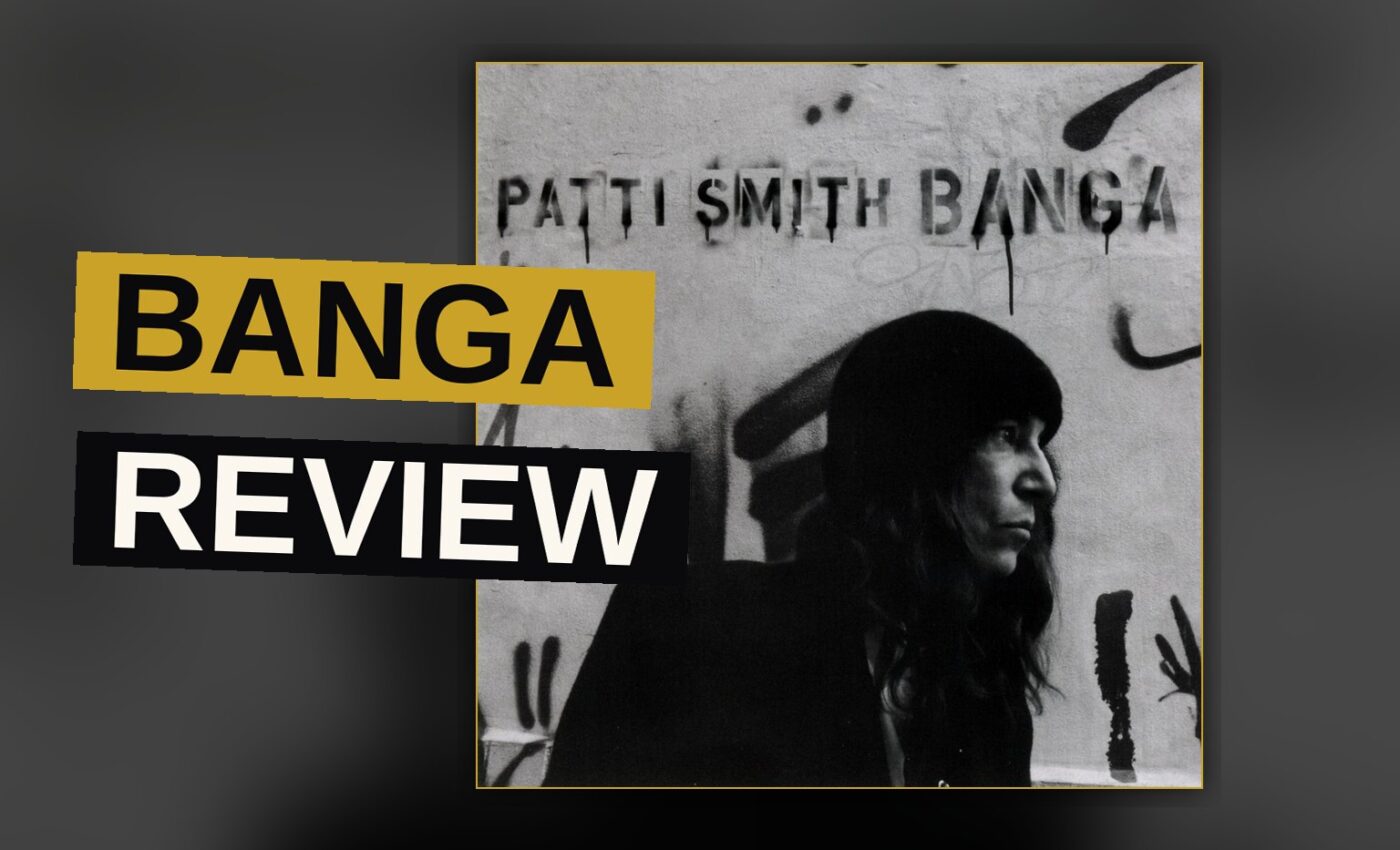
Patti Smith’s Banga is a record about obsession, memory, and the weight of history. It is also her most cohesive work in years, a 12-track album that moves from a meditation on the American continent to a tribute to a filmmaker, a dream of Constantine, and a cover of Neil Young. The album’s title track, “Banga,” sets the tone: it is a song about a moment, a feeling, a fragment of life that refuses to settle into narrative order. That refusal is the point.
Smith has spent decades building a reputation as a poet who sings, and Banga is the sound of that reputation catching up to her. The songs here are dense with literary references, personal grief, and political observation, but they never feel like a lecture. They feel like a conversation with a friend who has read everything and is not afraid to talk about it.
Opening With America
The album opens with “Amerigo,” a slow, atmospheric track that takes its title from the explorer after whom the Americas were named. The song is a meditation on the continent itself, its history, and the violence that shaped it. It is not a happy song, but it is not a bitter one either. It is a song about looking at the land and seeing what it has done.
“April Fool” follows, a lighter, more playful track that uses the fool as a metaphor for the absurdity of fame and the media circus. It is a welcome change of pace after the weight of the opener, and it shows Smith’s range as a songwriter.
“Fuji-san” is a tribute to the mountain in Japan, and it carries a sense of reverence without ever becoming sentimental. The song builds slowly, adding layers until it reaches a climax that feels earned rather than forced.
“This Is the Girl” is a love song, and it is one of the most direct emotional statements on the record. It is simple in its structure but complex in its feeling, a song about commitment and the quiet moments that make a relationship last.
“Banga” itself is a short, punchy track that serves as the album’s thesis statement. It is a song about the present, about the moment you are living in right now, and it is the perfect entry point for the record.
The Middle Stretch
“Maria” is a song about a woman, and it is one of the most personal tracks on the album. It is a love song with a melancholic edge, a reminder that even the strongest relationships have their shadows. The song is built on a steady rhythm that feels almost hypnotic, and it is a standout.
“Mosaic” is a song about memory, fragmentation, and the way we put pieces of our lives together. It is a track that rewards repeated listening, as its structure reveals itself over time.
“Tarkovsky (The Second Stop Is Jupiter)” is a tribute to the filmmaker, and it is one of the most ambitious tracks on the record. The song uses a line from his work as its title, and it captures the epic sweep of his films while remaining grounded in human emotion. It is a song about cinema, about the power of images, and about the way art can transport us.
“Nine” is a shorter, more direct track that deals with the number nine and its associations. It is a song about counting, about patterns, and about the way we organize our world. It is a funereal track, and it sets the tone for the darker second half of the album.
The Long Final Run
“Seneca” is a track that deals with the philosopher and his ideas, and it is a song about the nature of existence. It is a slow, brooding piece that builds tension before releasing it, and it is one of the most atmospheric tracks on the record.
“Constantine’s Dream” is the centerpiece of the album, a ten-minute epic that tells the story of the Roman emperor Constantine and his vision of the cross. It is a song about faith, about power, and about the cost of leadership. It is a tour de force, and it is the longest track on the record.
“After the Gold Rush” closes the album with a cover of Neil Young’s classic. It is a strange choice for a finale, but it works. The song is about loss and nostalgia, and it fits the album’s themes of memory and regret.
What Works and What Doesn’t
The album’s strengths are its ambition and its cohesion. The songs work together as a whole, and the literary references are woven into the music rather than slapped onto it. The weaker tracks are the ones that feel slighter, the ones that don’t quite land. “April Fool” is charming but slight, and “Nine” is competent but forgettable. These are minor complaints against a strong record.
The album’s flaws are also its strengths in disguise. The literary references can be dense, and some listeners might find themselves reaching for a dictionary. The political observations can be heavy-handed, and some critics have noted that the album’s engagement with current events sometimes overshadows its artistic ambition. These are fair criticisms, but they do not diminish the record’s overall impact.
The Verdict
Banga is a great Patti Smith record. It is her best work in years, a cohesive album that balances literary ambition with emotional directness. The songs are well-crafted, the performances are committed, and the sequencing is masterful. The album’s weaknesses are minor compared to its strengths, and its ambition is its greatest asset.
The record is a triumph of the artist’s long career, a statement of purpose that arrives late but arrives with full force. It is an album that rewards attention, and it is one that will endure.
8 out of 10.
Key Facts
- Artist: Patti Smith
- Album: Banga
- Release: 2012
- Tracks: 12
- Total runtime: 58 minutes
- Metacritic score: 81/100
Track List
- Amerigo (4:36)
- April Fool (3:47)
- Fuji-san (4:13)
- This Is the Girl (3:49)
- Banga (2:51)
- Maria (5:05)
- Mosaic (4:13)
- Tarkovsky (The Second Stop Is Jupiter) (4:50)
- Nine (5:03)
- Seneca (5:40)
- Constantine’s Dream (10:20)
- After the Gold Rush (4:13)
Get the Notebook.
The day's best stories and every fresh verdict, in plain English, in your inbox by seven. One email a day, no more.
- Amerigo4:36
- April Fool3:47
- Fuji-san4:13
- This Is the Girl3:49
- Banga2:51
- Maria5:05
- Mosaic4:13
- Tarkovsky (The Second Stop Is Jupiter)4:50
- Nine5:03
- Seneca5:40
- Constantine's Dream10:20
- After the Gold Rush4:13