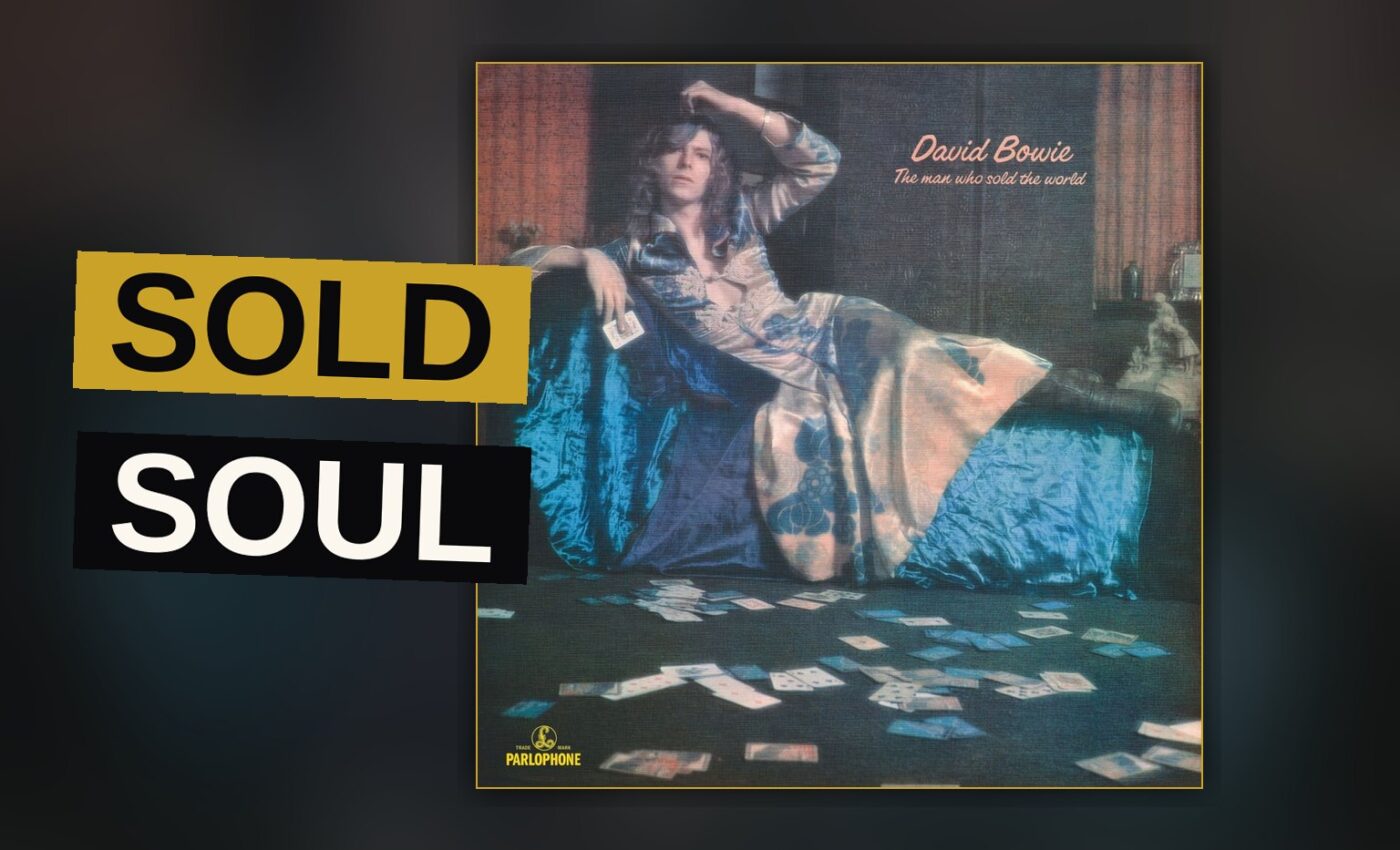
David Bowie’s third album, The Man Who Sold the World, is a strange, heavy record that trades pop hooks for something darker. Recorded after he left his native Britain for America, it sounds like a man stepping into a new life without knowing how it ends. The title track is the headline, but the whole record wants to unsettle you, and it mostly succeeds.
Opening With the Width of a Circle
The record opens with “The Width of a Circle,” eight minutes of slow, layered build that sets the tone. It is patient where Bowie’s earlier work was quick, and it earns its length through atmosphere rather than melody. It is the kind of opener that tells you this is not a pop record.
“All the Madmen” follows with a sharper edge. It is shorter and more direct, a song about outsiders and the people who chase them down. It is the strongest track here, a real highlight that critics have always singled out.
Black Country Rock and After All
“Black Country Rock” is the album’s most obvious rocker, built on a riff that feels borrowed from somewhere rougher than Bowie’s usual sound. It is a good track, though it does not quite reach the heights of the songs around it.
“After All” is a quieter, more fragile piece, a love song set against a cold, mechanical backing. It is pleasant but slight, the kind of track that fills space without demanding attention.
Running Gun Blues and Saviour Machine
“Running Gun Blues” is a loose, bluesy number that leans on guitar work rather than Bowie’s singing. It is fun, but it is also the weakest link in the record’s middle stretch.
“Saviour Machine” picks things back up, a song about machines and religion that builds into something tense and uneasy. It is not a standout, but it holds the record together when the middle section threatens to collapse.
She Shook Me Cold and the Title Track
“She Shook Me Cold” is a slow, eerie ballad that critics have often pointed to alongside the title track. It is moody and atmospheric, but it lacks the sharp focus of the songs that came before it.
Then comes the title track itself, “The Man Who Sold the World.” It is the reason the record exists, a song about a man who sells his soul for fame, and it is everything critics have claimed. The melody is simple, the arrangement is sparse, and the chorus hits harder than anything else Bowie had written up to that point.
The Supermen Close It Out
“The Supermen” closes the record on a note of quiet resignation. It is a decent closer, but it does not match the ambition of the title track that precedes it.
What Stands Out
If you are looking for the best of this record, the order to hear it is simple:
- “The Width of a Circle”
- “All the Madmen”
- “Black Country Rock”
- “The Man Who Sold the World”
Those four songs carry the weight of the album. The rest fills out the running time without adding much to the total.
Final Word
The Man Who Sold the World is not a perfect record. Its middle section drags, and some tracks feel like filler rather than statement. But the title track is a genuine classic, and the songs around it are strong enough to make this a worthy addition to Bowie’s early work. It is a record that rewards patience and punishes skipping.
8.5 out of 10.
Get the Notebook.
The day's best stories and every fresh verdict, in plain English, in your inbox by seven. One email a day, no more.
- The Width of a Circle8:09
- All the Madmen5:41
- Black Country Rock3:36
- After All3:55
- Running Gun Blues3:15
- Saviour Machine4:29
- She Shook Me Cold4:17
- The Man Who Sold the World4:00
- The Supermen3:42