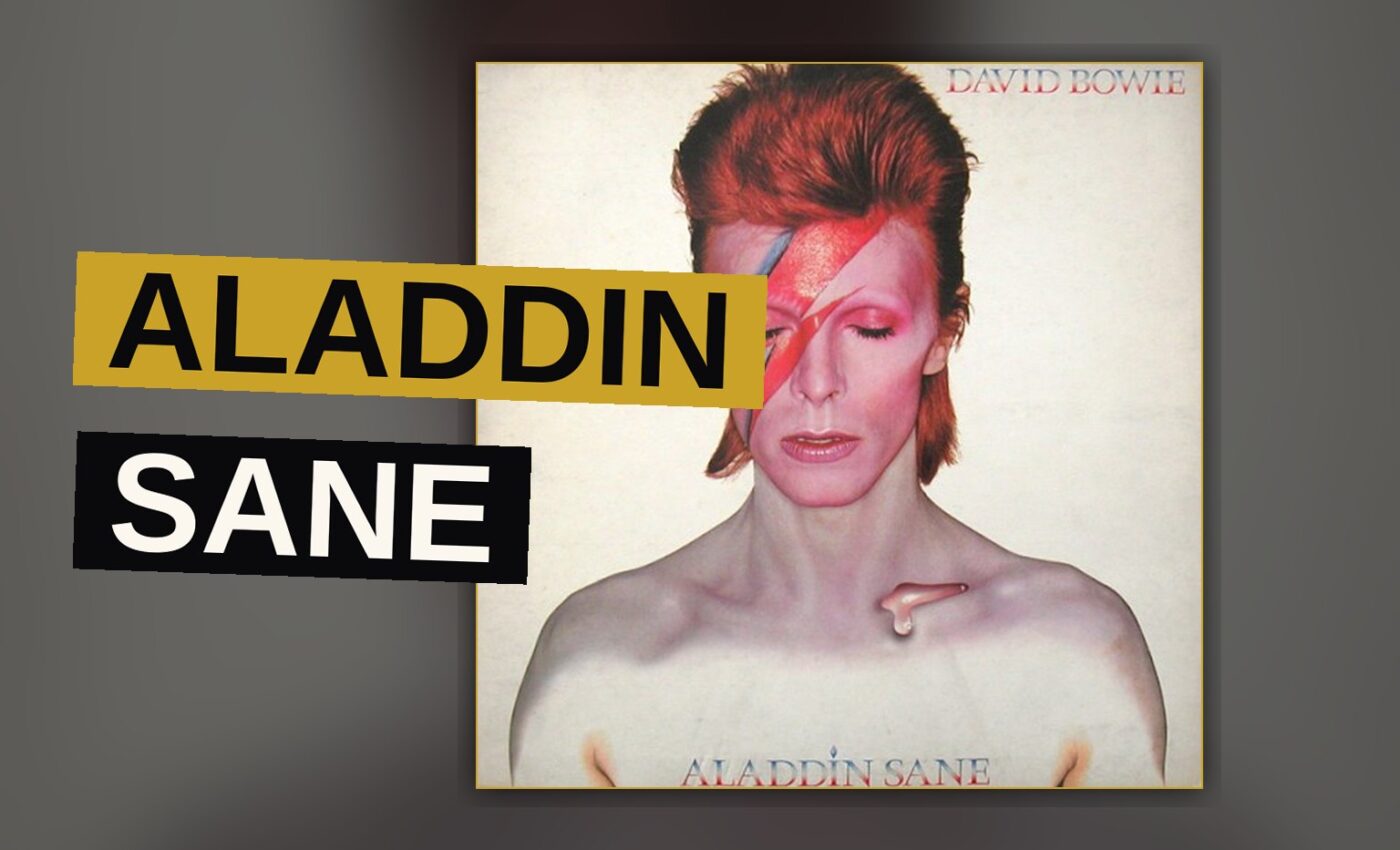
David Bowie’s Aladdin Sane is a record about fame, paranoia, and the United States of America. It is the sound of a man who has arrived, who has traded the stage for the street, and who is not sure he likes what he sees. The album follows Ziggy Stardust by about a year, and it is a harder, rougher, and more anxious record. Bowie is no longer playing a rock star; he is living one.
The title comes from a photograph of Bowie taken during his first American tour, with a lightning bolt across his face. The image is the album’s thesis: a man struck by something he cannot control. The music matches it. This is Bowie at his peak, writing songs that are both personal and political, and performing them with a band that sounds like it is chasing the amps.
Watch That Man Opens the Record
The record starts with “Watch That Man,” a slow, bluesy opener that sets the tone. It is a warning, a cautionary tale about watching yourself. The song is built on a simple riff, and Bowie’s vocal is weary, almost defeated. It is not a statement, but it sets the stage for what follows.
Then comes the title track, “Aladdin Sane.”
The Title Track Sets the Terms
This is the heart of the record. It is a three-part suite, with the years marking the album’s themes: the past, the present, and the future. The song is a collage of pop culture, politics, and personal fear. Bowie sings about the Rolling Stones, all in the same breath. The chorus is a question, not an answer. It is the most famous song here, and it earns that fame.
“Drive-In Saturday” follows, and it is a strange, beautiful failure. The song is about the end of the world, and it is a mood piece, not a song, and it does not hold together the way “Aladdin Sane” does.
“Panic in Detroit” is the record’s other standout. It is a punk-tinged rant about the city’s decay, and it is Bowie at his most aggressive. The guitar is loud, the rhythm is relentless, and the lyrics are blunt. It is a portrait of a place falling apart, and it is a standout track.
“Cracked Actor” is a short instrumental interlude, and it is forgettable. It is a pause, a breath, a moment of quiet before the storm.
The Middle Stretch Runs Short
“Time” is a ballad about aging and regret, and it is pleasant but slight. The melody is nice, but it does not stick. It is a filler track, and it is easy to skip.
“The Prettiest Star” is better. It is a country-tinged love song, and it is tender without being saccharine. Bowie’s vocal is warm, and the harmonies are sweet. It is a welcome change of pace, even if it does not match the energy of the record’s highlights.
“Let’s Spend the Night Together” is the record’s second great song. It is a cover of a classic rock standard, and Bowie makes it his own. The version here is slower, more seductive, and more dangerous. It is the track that critics singled out, and it is easy to hear why.
“The Jean Genie” is the third great song. It is a glam-punk anthem about a drug dealer, and it is pure fun. The riff is iconic, and the chorus is a call to arms. It is the sound of Bowie at his most confident, and it is one of the best singles he ever released.
“Lady Grinning Soul” closes the record, and it is a strange, atmospheric piece. It is about a woman who is both beautiful and terrifying, and it is Bowie at his most theatrical. The song builds to a climax, but it never quite resolves. It is a fitting end to a record that refuses to settle.
What Works and What Doesn’t
The record’s strengths are its ambition and its character. Bowie is not content to make a safe pop record; he wants to make something that feels urgent, something that reflects the chaos of the world around him. The songs that work — “Aladdin Sane,” “Panic in Detroit,” “Let’s Spend the Night Together,” “The Jean Genie” — are the ones that commit fully to that vision. They are bold, they are memorable, and they are essential.
The songs that don’t work — “Drive-In Saturday,” “Cracked Actor,” “Time,” “The Prettiest Star” — are the ones that play it safe. They are competent, they are pleasant, but they do not leave much of an impression. They are the tracks that critics noted as weaker than the rest, and they are easy to forget.
The record is also uneven in its sequencing. The middle stretch — “Cracked Actor,” “Time,” “The Prettiest Star” — is a dull patch, and it drags the overall experience down. The record is better when it is focused, and it is at its best when it is committed to its own ideas.
A Record Worth Hearing Again
Aladdin Sane is a great album, but it is not a perfect one. It is the sound of an artist at the height of his powers, making bold choices and taking risks. The songs that work are among the best he ever wrote, and the songs that don’t are still better than most artists’ best work. It is a record that rewards attention, and it is a record that deserves to be heard again.
It is not the equal of Ziggy Stardust, but it is close. It is a worthy successor, and it is a document of a particular moment in time. It is a record about America, about fame, and about the feeling of being struck by something you cannot control. It is a record about being Bowie, and it is a record that captures him at his most alive.
Key Facts
– Artist: David Bowie
– Album: Aladdin Sane
– Release: 1973
– Tracks: 10
– Total running time: 41 minutes
– Best tracks: “Aladdin Sane (1913–1938–197?),” “Panic in Detroit,” “Let’s Spend the Night Together,” “The Jean Genie”
– Score: 8 of 10
Get the Notebook.
The day's best stories and every fresh verdict, in plain English, in your inbox by seven. One email a day, no more.
- Watch That Man4:30
- Aladdin Sane (1913–1938–197?)5:08
- Drive‐In Saturday4:36
- Panic in Detroit4:28
- Cracked Actor3:02
- Time5:15
- The Prettiest Star3:31
- Let’s Spend the Night Together3:10
- The Jean Genie4:07
- Lady Grinning Soul3:52