
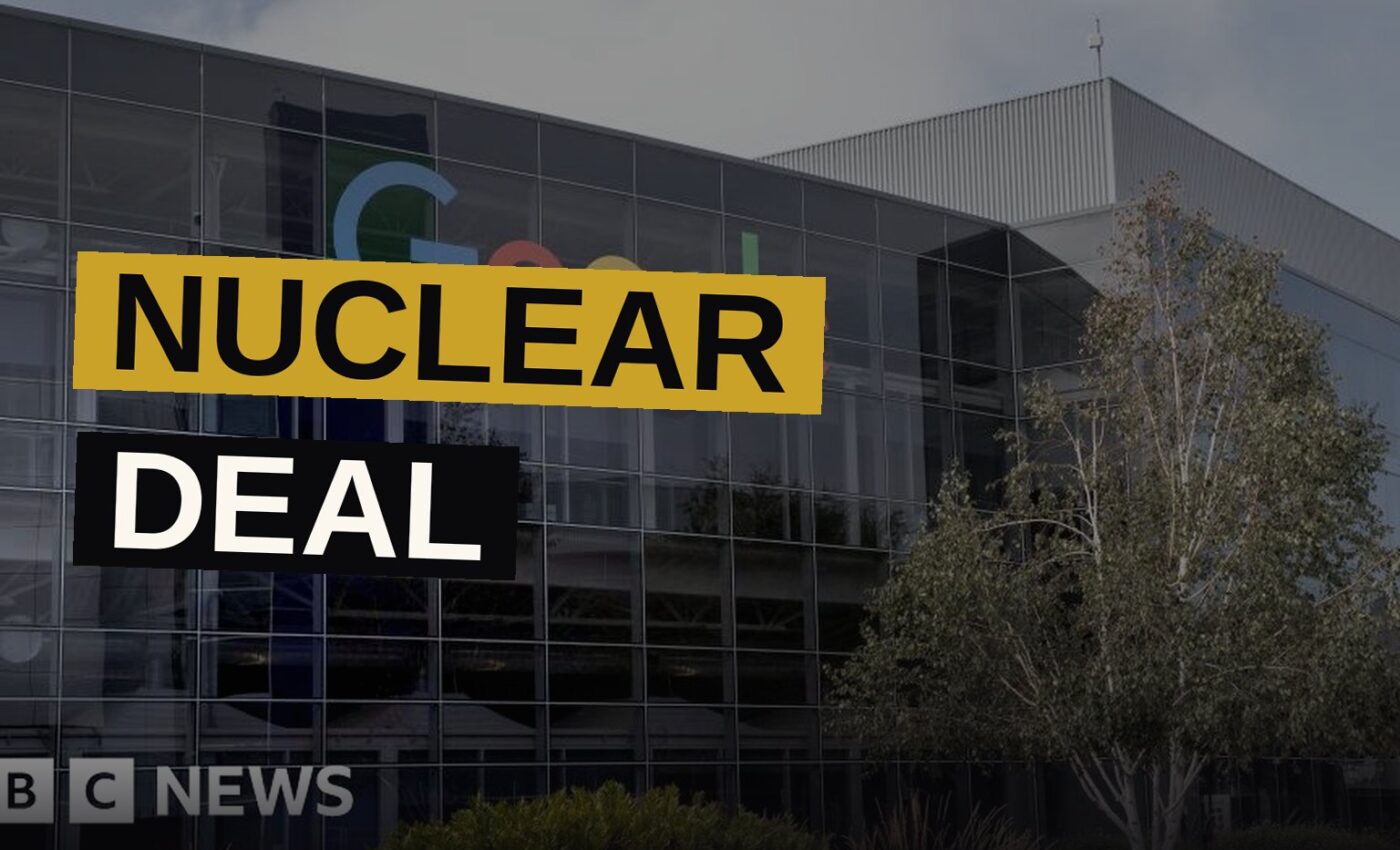
Google will buy up to half the electricity produced by one of Finland’s nuclear power plants as part of a record €13bn (£11bn; $15bn) investment in the country’s AI infrastructure, the company announced.
The US tech giant said the package would fund three new data centres, expand an existing site and support energy projects to power growing demand for AI services. The company said on Wednesday that the deal represents its largest single investment in Europe and a sign of Finland’s leadership in building AI infrastructure responsibly.
The Deal With Fortum
As part of the deal, Google signed a 22-year contract with Finnish utility Fortum to buy up to 50% of the output from the Loviisa nuclear power plant. The agreement provides long-term financial certainty for the Loviisa plant, which currently generates about 10% of Finland’s electricity.
Fortum said Google’s commitment would support an investment programme aimed at extending the life of the nuclear station and increasing its generating capacity.
Why Finland Won
Finland has emerged as an attractive location for data centres because of its cool climate, plentiful low-carbon electricity and relatively uncongested power grid. The colder temperatures can reduce the energy needed to cool facilities packed with computer servers.
Technology companies are racing to secure power supplies as the AI boom drives demand for vast networks of data centres.
Jobs and GDP
The Google investment is expected to support more than 37,000 jobs during construction and boost Finland’s GDP by €3.6bn a year, according to Google. Construction is set to take place in 2027 and 2028.
Other Companies Arriving
Earlier this week, TikTok announced a $1bn investment in Finland to build a new data centre in Kouvola, pointing to the country’s “strong digital infrastructure, clean energy mix, robust data governance and skilled tech talent”.
The two announcements suggest Finland is becoming a hub for global tech firms looking to anchor their European operations.
The Data Centre Plan
Google will build new data centres in Kajaani, Muhos and Vaala, while expanding its existing facility in Hamina, which it established after converting a former paper mill in 2009.
The infrastructure will help support products such as its AI chatbot Gemini, alongside services including Search, Maps and YouTube.
Energy and Community Funds
Google said the investments also covered “clean energy projects, and dedicated nature and community funds to support local biodiversity, education, research, and workforce development”.
The Government Response
Finland’s Prime Minister Petteri Orpo welcomed the investment, saying it was a clear sign of the country’s strengths.
Orpo added that the value of the data economy extends far beyond direct investment into spurring innovation, research and development.
He concluded that deepening the collaboration with Google will deliver lasting benefits for both parties.
Alphabet’s Spending Plans
Earlier this year, Google’s parent company Alphabet raised its global spending plans to as much as $205bn as it sought to expand computing capacity for AI services.
The Numbers Behind the Deal
| Event | Date |
|---|---|
| Data centre construction | 2027 and 2028 |
| Contract length | 22 years |
| Loviisa plant share | Up to 50% |
Key facts:
– Investment: €13bn (£11bn; $15bn)
– Data centres: Three new, plus expansion of Hamina
– Electricity share: Up to 50% of Loviisa output
– Jobs: More than 37,000 during construction
– GDP boost: €3.6bn per year
– Contract: 22 years with Fortum
– Plant output: About 10% of Finland’s electricity
– Alphabet spending: Up to $205bn
The deal reflects a broader shift in how tech companies think about location. Data centres need reliable, low-carbon power, and Finland offers both. The country’s nuclear fleet generates a known share of the national electricity supply, its grid is open, and its climate reduces cooling costs.
Ruth Porat, president and chief investment officer of Alphabet and Google, framed the investment as part of a broader push to build out its technical infrastructure responsibly.
Porat said: “This investment underscores Google’s commitment to grow our presence responsibly, pairing the expansion of our technical infrastructure with new energy capacity, grid enhancements, and energy affordability initiatives.”
The move also carries strategic weight for Google. The company is expanding its computing capacity for AI services, and the 22-year contract with Fortum locks in a predictable supply of low-carbon electricity, which matters as data centre loads grow and the industry looks for ways to meet its emissions targets.
For Finland, the deal cements its position as a serious player in the global data centre market. The country has been positioning itself as a destination for cloud providers, offering a combination of cold weather, renewable energy and a stable political environment. This investment from Google is a clear signal that the strategy is working.
The economic impact is substantial. More than 37,000 jobs during construction, plus a €3.6bn annual boost to GDP, make this one of the largest single foreign investments the country has attracted. The construction work will span 2027 and 2028.
The timing of the TikTok announcement adds context. Both companies chose Finland, and both cite similar factors: strong digital infrastructure, clean energy, robust data governance and skilled talent.
The community funds component deserves attention too. Google said the investments cover “dedicated nature and community funds to support local biodiversity, education, research, and workforce development”. That language points to a broader approach than simply building boxes and running cables. The company is committing resources to local communities, which is a notable addition to the standard data centre playbook.
The deal is a major vote of confidence in Finland’s ability to host some of the world’s largest data operations. Google’s Ruth Porat framed the investment as part of a broader push to build out its technical infrastructure responsibly.
Porat, president and chief investment officer of Alphabet and Google, said: “This investment underscores Google’s commitment to grow our presence responsibly, pairing the expansion of our technical infrastructure with new energy capacity, grid enhancements, and energy affordability initiatives.”
The two announcements together mark a significant moment for Finland’s tech sector. The country has spent years positioning itself as a data centre destination, and these two deals show that the strategy has paid off. Google and TikTok have chosen Finland over other European locations, and the reasons are consistent across both companies: reliable power, a stable grid, a cool climate and a skilled workforce.
The construction timeline will test the country’s infrastructure. Building three new data centres and expanding an existing one in multiple locations requires coordination across planning, permitting and logistics. Finland’s relatively uncongested power grid helps.
The economic benefits are clear. The €3.6bn annual GDP boost and the 37,000 jobs during construction represent a significant lift for the Finnish economy. The data centre sector has become a major employer in the country, and this investment will extend that role for years to come.
The deal also carries environmental significance. Nuclear power produces low-carbon electricity, and securing a long-term contract means Finland’s grid will continue to benefit from that output for decades. The clean energy projects component of the investment adds to that picture, though details of those projects have not been released.
The government’s response was warm. Orpo welcomed the investment and emphasised the broader value of the data economy. His remarks pointed to innovation, research and development as secondary benefits of the deal, beyond the direct investment itself.
Source: bbc.com
Get the Notebook.
The day's best stories and every fresh verdict, in plain English, in your inbox by seven. One email a day, no more.