
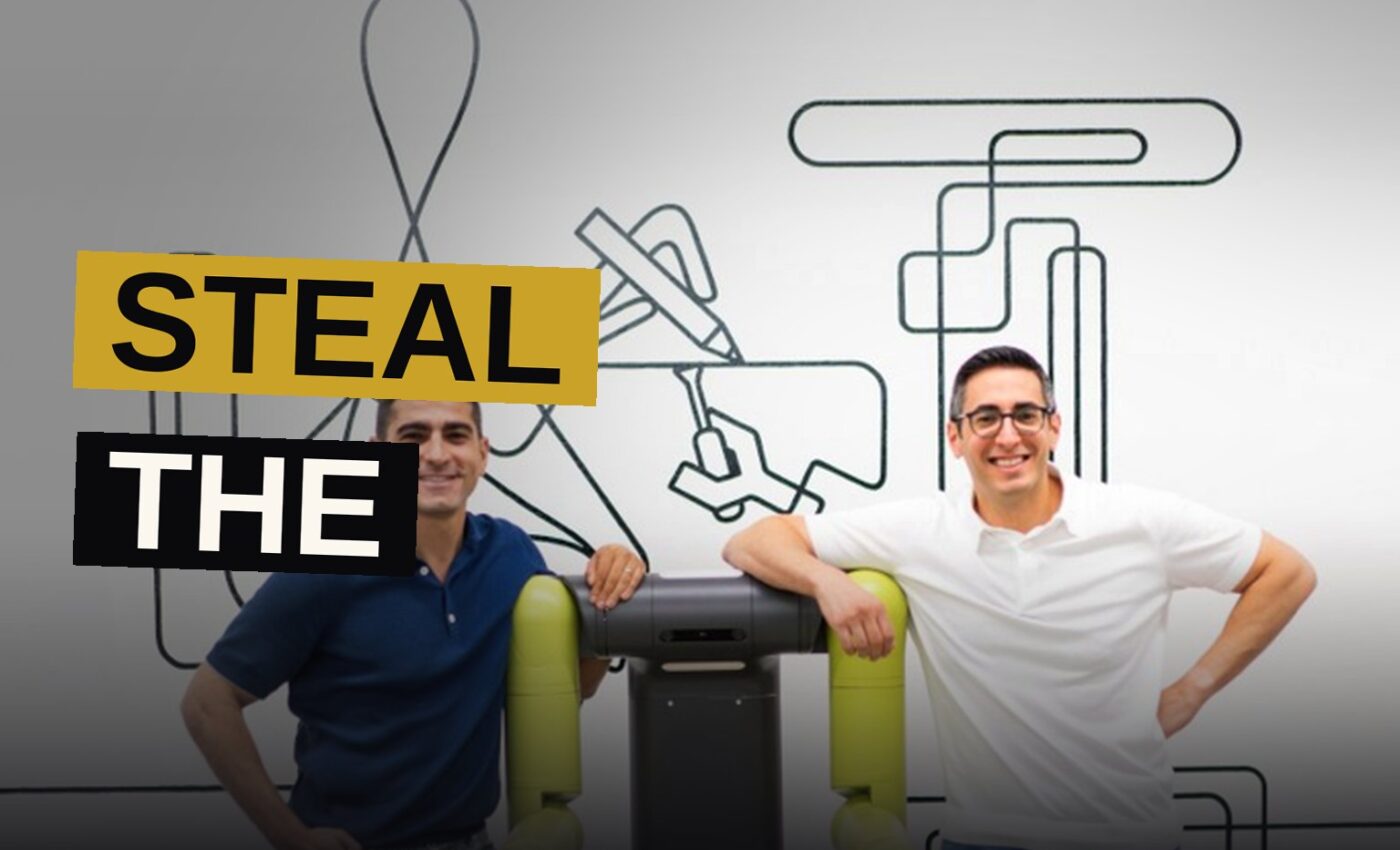
Today Maven Robotics stepped out of secrecy with $100 million in funding from investors such as RoboStrategy, which is backed by LocalGlobe, Vine Ventures, and XTX Markets Ventures. The startup’s argument is straightforward: instead of selling you a robot, it sells you a solution that substitutes human labor in the warehouse.
Hamza Derbas, CEO and co-founder of the company, told TechCrunch that the business won against rivals with existing robots by concentrating on the entire end-to-end workflow instead of just the hardware. “We’re not trying to solve a single robot problem,” he explained. “We’re trying to autonomously take on the task end to end: It hooks in from one side to a warehouse management system; product goes on trucks on the other side.”
Winning the Deal
The tale begins in 2024, before Maven became a cartoon robot and a band of people stood behind it. A major firm dealing in household goods came to town to speak with four competing robot makers regarding automation. Derbas managed to get himself invited to a meeting, and rather than offer his own ideas on machines, he requested permission to tour the firm’s factories and storage centers instead.
“We saw how people were working; we zeroed in on flows we could immediately bring value to,” he said. “We showed them that our approach to robotics is different — we’re not trying to solve a single robot problem. We’re trying to autonomously take on the task end to end: It hooks in from one side to a warehouse management system; product goes on trucks on the other side.”
Derbas reports that Maven now runs up to eight robots for that company, which it has worked with for two years alongside a few other partners, with the machines operating 16 hours per day and holding uptime of 99% or more.
The $100 Million Raise
RoboStrategy has come out of hiding following its funding round, which brought in $100 million. That money will go toward constructing 250 of the company’s third-generation robots and starting work on a fourth-generation platform. The startup counts LocalGlobe, Vine Ventures, and XTX Markets Ventures among its backers.
The company’s robots sit on wheeled bases capable of moving 10 miles an hour, with two arms that can lift up to 30 kilograms. Their main job is “mixed palletizing” — wooden pallets carrying boxed goods come from different factories to a distribution center, where the robot creates a new pallet containing a mix of goods to be sent to a store.
“Within 48 hours of them putting the stuff on the shelves, they want to change the mix based on real-time demand. Here’s an order with different mixed
-

Extra! Front Page — Clay Tribune Hoodie
$54.00 Select options This product has multiple variants. The options may be chosen on the product page -
Extra! Front Page — Clay Tribune Tee
$32.00 Select options This product has multiple variants. The options may be chosen on the product page -
Not a Psychopath — Clay Tribune Hoodie
$52.00 Select options This product has multiple variants. The options may be chosen on the product page -
Not a Psychopath — Clay Tribune Tee
$28.00 Select options This product has multiple variants. The options may be chosen on the product page -
Scored. Argued. Filed. — Clay Tribune Hoodie
$52.00 Select options This product has multiple variants. The options may be chosen on the product page -
Scored. Argued. Filed. — Clay Tribune Tee
$28.00 Select options This product has multiple variants. The options may be chosen on the product page -
Stay Curious — Clay Tribune Hoodie
$54.00 Select options This product has multiple variants. The options may be chosen on the product page -
Stay Curious — Clay Tribune Tee
$32.00 Select options This product has multiple variants. The options may be chosen on the product page -
Stay Curious. Make Stuff. Have an Opinion. — Clay Tribune Hoodie
$52.00 Select options This product has multiple variants. The options may be chosen on the product page -
Stay Curious. Make Stuff. Have an Opinion. — Clay Tribune Tee
$28.00 Select options This product has multiple variants. The options may be chosen on the product page -
The Crest — Clay Tribune Hoodie
$56.00 Select options This product has multiple variants. The options may be chosen on the product page -
The Crest — Clay Tribune Tee
$34.00 Select options This product has multiple variants. The options may be chosen on the product page -
The Verdict 9.8/10 — Clay Tribune Hoodie
$54.00 Select options This product has multiple variants. The options may be chosen on the product page -
The Verdict 9.8/10 — Clay Tribune Tee
$32.00 Select options This product has multiple variants. The options may be chosen on the product page -
Written in Plain American English — Clay Tribune Hoodie
$52.00 Select options This product has multiple variants. The options may be chosen on the product page -
Written in Plain American English — Clay Tribune Tee
$28.00 Select options This product has multiple variants. The options may be chosen on the product page











The Santa Clara Facility
Inside Maven’s Santa Clara training ground, a robot glides through its tasks with vacuum suckers that grasp and set the boxes down at a steady pace. A live video feed captures two robots operating in a customer location as workers move about them.
Derbas’s Background
Derbas spent his career in automotive engineering, with a focus on EVs, but before Maven he spent nine years working at Apple on the company’s special project group. He wouldn’t discuss what the group was building, but it is widely thought to have been working on a self-driving car before it was disbanded in 2024. That was when he started Maven with his brother, Khalid, who serves as the company’s CFO after a career in private equity.
How Maven works is built from the Apple way of doing things. Derbas instead favors industrial systems over a pure research approach.
What Sets Maven Apart
This firm sets itself apart from rivals such as Agility, which is entering the public market this autumn through a $2.5 billion SPAC merger. While Agility concentrates on security and particular industrial processes, its machines move on two feet.
The report says that comprehension of the practical challenges of overheated facilities and the requirements of those who run them has aided their progress with the startup. However, should Maven wish to move past its present set of procedures, it must develop a research culture of some sort.
The Next Set of Tasks
Palletization might be an $80 billion market, but the next set of tasks Maven targets will require robotic manipulation capabilities that don’t yet exist. The company’s next big push follows a clear order:
- Collect more data and train its robots to handle materials.
- Move toward automation and fabrication.
The firm relies on its own machinery and turns to outside suppliers alike, while also having built a pair of pincer-like gloves that let people copy the shape they want for their robotic hands. Even though it calls itself a general-purpose robot builder, its approach moves step by step toward that aim, one job at a time.
“We’re grounded in solving one customer problem at a time,” Derbas said. “If you focus on solving problems and you pick sizeable problems, each problem is a multibillion-dollar market. If you do that, there’s plenty of data to master these skills.”
The Data Pipeline
Maven follows the same path as other physical AI firms by tapping veterans of self-driving car work, whose teams have built some of the most refined methods for teaching autonomous hardware from actual data. This demands data pipelines capable of delivering details from robots in operation back to analysts within minutes or hours.
“Then retrain, evaluate, run ablation studies, figure out what’s the right set of weights, redeploy, and then turn that loop again,” Derbas told TechCrunch.
The Race Against Models
The company is betting that the race isn’t about models at all. “We’re not in the race for models — we’re in the race to solve industrial labor and make this work possible at the scale the world needs,” Derbas told TechCrunch.
One problem at a time is the plan. Choose sizable issues for customers, then let the data take over.
Source: techcrunch.com
Get the Notebook.
The day's best stories and every fresh verdict, in plain English, in your inbox by seven. One email a day, no more.