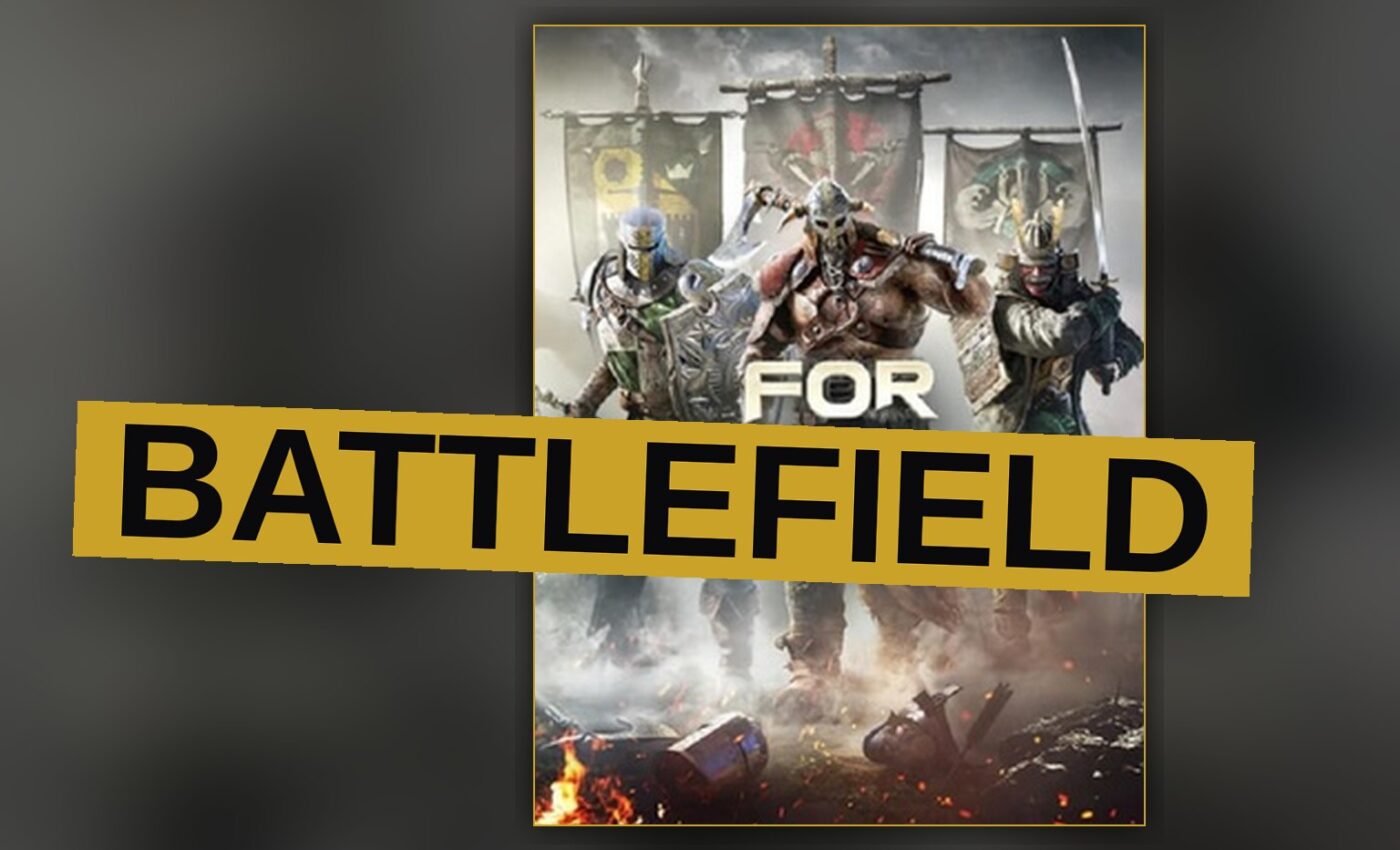
Ubisoft Montreal shipped For Honor in 2017 with a promise that sounded like a joke: knights, Vikings and samurai in the same melee, decided by a combat system with real weight behind it. Nine years later, the game is still standing, still adding factions, still pulling players into the Art of Battle. That survival is the story. The launch was rough, the balance has never been perfect, and the single-player campaign is thinner than the multiplayer that surrounds it. But the core idea — two warriors locked in a duel where every swing is a decision — has held up better than most of what came out that year.
Art of Battle, nine years on
The tactical combat system is called Art of Battle, and it activates when a player meets another player or a player-like AI in multiplayer, or higher-health AI in the campaign. Aim at an opponent and you enter a dueling mode. From there, the fight is about reading direction, timing and stamina, not mashing. That single design choice is what separates For Honor from every other game wearing a sword.
It is also why the game is hard to learn and harder to leave. The system does not forgive. A player who guesses wrong on a heavy attack eats the damage. A player who runs out of stamina gets punished. Ubisoft Montreal built a fighting game and dressed it as a historical brawler, and the disguise mostly works.
Four classes, five factions
Heroes are split into four classes. The Vanguard is described as well-balanced, with strong offense and defense. The Assassin is fast and efficient in a duel but deals much less damage to multiple enemies. The Heavies, also called Tanks, resist damage and hold capture points, though their attacks are slow. The Hybrid mixes two of the other three and uses uncommon skills.
Every hero has a unique weapon, skill set and fighting style. Players pick from five factions: the Iron Legion (Knights), the Warborn (Vikings), the Dawn Empire (Samurai), the Wu Lin (introduced in October 2018 with the Marching Fire expansion), and the Outlander faction, added in January 2022. The roster is the game’s best argument for itself. No two heroes play the same way, and the differences are not cosmetic.
The campaign that sets it up
The single-player story follows the warmonger Apollyon, who seizes control of the knights of the Blackstone Legion after murdering her rivals. She believes the Knights, Vikings and Samurai have grown weak and wants an age of all-out war. Her method is manipulation: keep each faction fighting the others so none of them ever settles.
The campaign moves through each faction’s perspective. A Warden, second-in-command to the mercenary Hervis Daubeny, helps stop the Blackstone siege and beats the Blackstone champion. After defeating a Blackstone captain named Ademar, the Warden is made a knight of the Legion by Holden Cross, Apollyon’s lieutenant, and leaves with him. The Warden later realizes Apollyon cares nothing about protecting people.
From there, Apollyon’s forces sack the Viking strongholds of Valkenheim, leaving only enough food to fight over. The clans turn on each other until a warrior called Raider comes down from the mountains and unites them under the Warborn banner, alongside Warlord Stigandr, Valkyrie Runa and Berserker Helvar. It is a real story, told with some ambition, and it is over too fast.
Feats, minions and the shape of a match
In most missions, players fight alongside AI minions. They are much weaker than the player character and pose little threat. They exist to make the battlefield feel populated, and they do that job without ever becoming a problem.
Perform certain actions — killing multiple enemies in a row, for instance — and you gain Feats, additional perks that let you earn points and strength, call in a barrage of arrows or a catapult strike, or heal yourself. Feats are the pressure valve on a match. They reward aggression and give a losing player a way back in, which keeps games from ending early.
The setting itself is a medieval fantasy, not a history lesson. After a natural catastrophe sets the most fearsome warriors against each other over resources and territory, Apollyon works to keep the sparks flying between the Legion, the Warborn and the Chosen from the Myre. Later downloadable content added the Wu Lin, based on Chinese culture, and in-game lore ties the Romans fighting for the Legion to a fifth Roman-based faction that never appears in the game.
Season 21 and the Golden Age
The live content has kept moving. For Honor: Season 21, subtitled Golden Age, arrived in 2022 with a premise pulled from the deep past of Heathmoor. Travelers from faraway lands unearth the lost reliquary of Wyverndale. Among the treasures is the Chalice of Immortality, an artifact that sheds light on the ancient past.
The lore goes back before the Cataclysm, when Knights, Wu Lin, Samurai and Vikings lived in harmony in the citadel of Wyverndale. That era was built by Lord Ramiel, a heroic Knight later known as the First Warden, who made a pact with the Great Wyvern — a mythical, fire-breathing creature — to end a terrible war. The Wyvern helped him defeat his enemies, and together they watched over Heathmoor for generations.
Season 21 handed players 100 Tiers of rewards for all heroes, available only during the Golden Age run, plus old weapons from Heathmoor’s original warriors. It is a nostalgia play, and it works because the game’s history is now long enough to mine.
What holds up and what does not
For Honor received generally favorable reviews at launch, with the difficult and original combat mechanics singled out. The published critic aggregate on IGDB sits at 7.7 out of 10 across 22 outlets, and that number is fair for the same reason it was fair in 2017: the highs are genuinely high and the lows are structural.
The Art of Battle system is the best thing Ubisoft Montreal has built this decade. It is also a wall. New players bounce off it, because the game explains the inputs and not the psychology. Reading an opponent is the actual skill, and no tutorial teaches that.
The campaign is the weakest part of the package. Apollyon is a strong villain with a clear motive, and the Warden’s turn against her is the emotional spine of the story. But the campaign spends its best material on setup and then hands the player off to multiplayer, where the narrative stops mattering entirely.
The faction roster is a genuine achievement. Five factions, four classes, and heroes that feel distinct in the hand is a lot to keep balanced, and Ubisoft has not always managed it. Seasonal content like Golden Age papers over the gaps with rewards rather than fixes. That is the trade the game has made for nine years of life.
Where the score lands
For Honor is not for everyone, and it has never pretended to be. It is a fighting game wearing armor, and it asks players to treat it that way. The 2017 release on PlayStation 4, PC and Xbox One built something durable, and the later versions that followed carried it forward without changing what made it work.
The single-player campaign is a decent prologue, not a reason to buy. The multiplayer is the reason. The Wu Lin and Outlander additions widened the roster without diluting it. Season 21’s Golden Age content is a solid excuse to return, though it is content for people who already love the game, not a conversion tool for anyone on the fence.
What matters most is the duel. Two players, one exchange, no way to blame the engine. For Honor gets that right, and it has spent nine years getting it more right. The rough edges are real, and the learning curve is steep enough to lose people in the first hour. But the game that survives that first hour is one of the most distinctive things Ubisoft has published.
The numbers
- Title: For Honor
- Developer: Ubisoft Montreal
- Publisher: Ubisoft Entertainment
- Release: 2017
- Platforms: PlayStation 4, PC (Microsoft Windows), Xbox One
- Genres: Fighting, hack and slash/beat ’em up
- Modes: Single player, multiplayer, co-operative
- Perspective: Third person
- Season 21: Golden Age, 2022, 100 Tiers of rewards
- Published critic score: 7.7/10 (IGDB aggregate, 22 outlets)
- Clay Tribune score: 7.7 of 10
Get the Notebook.
The day's best stories and every fresh verdict, in plain English, in your inbox by seven. One email a day, no more.