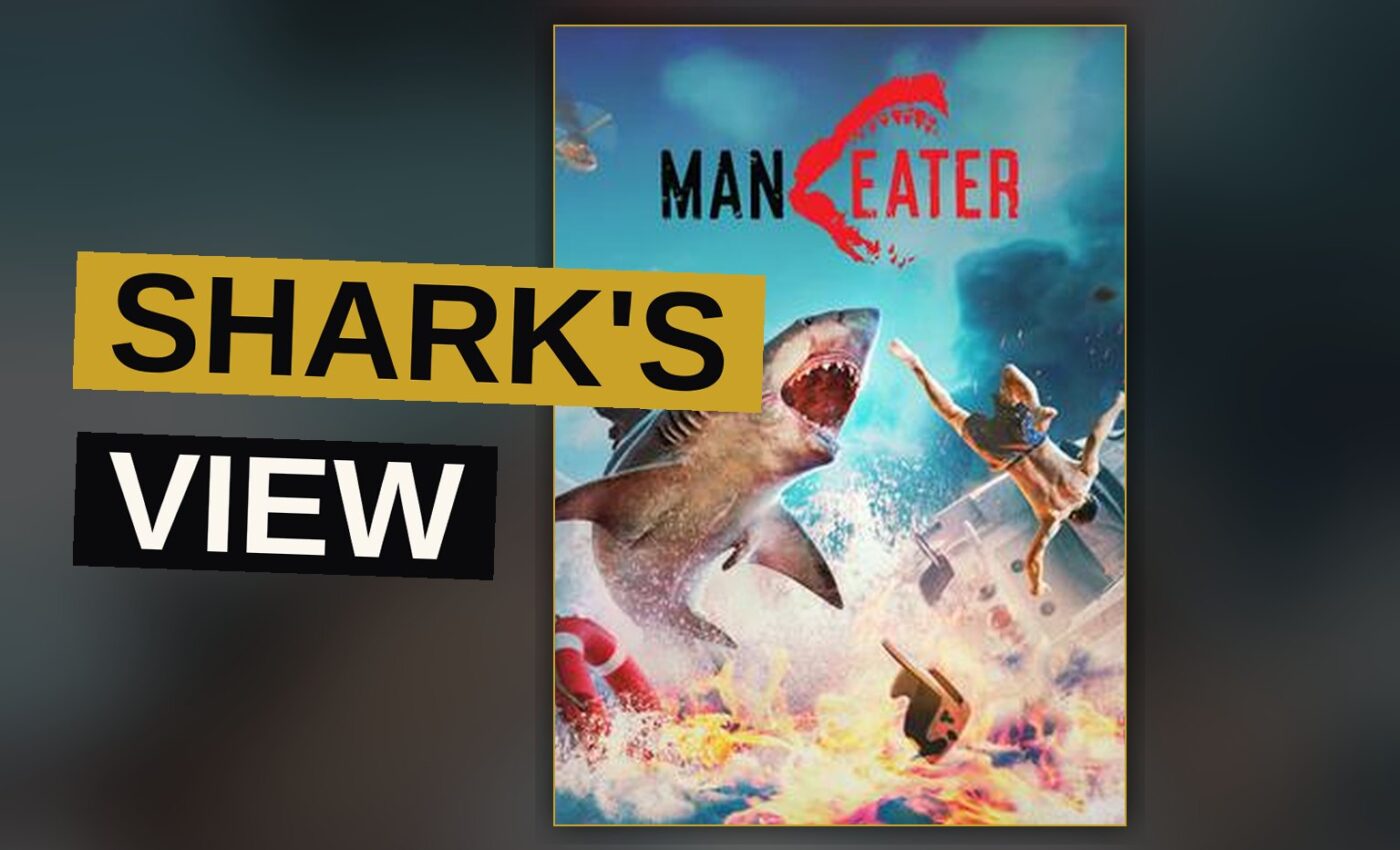
Maneater puts you in the skin of a shark. That simple premise carries the whole game: you are a newborn Great White, and you grow by eating other creatures. It sounds grim, and it mostly delivers.
The game is built around a series of missions that send you hunting human prey, rival sharks, and environmental hazards. Between those missions, you roam a map of coastal waters, rivers, and open ocean, feeding to increase your size and your stats. The loop is simple, repetitive, and effective.
Trailer, via Tripwire Interactive.
Shark Size Matters
The core mechanic is the size progression. Each meal adds experience points, and once you hit a milestone, your shark grows. Bigger means tougher, faster, and more capable of taking down larger prey. The game tracks your progress across health, speed, and bite damage, so you always know what stat you are chasing.
The map itself is dense with side content. Smaller fish, crabs, and marine life populate the water, and eating them fills your hunger bar while giving you smaller gains. Larger targets, like crocodiles or bears, offer bigger rewards. The balance between quick snacks and major meals shapes how you approach each area.
A Shark’s View
The camera is the game’s biggest strength. Maneater lets you see the world from below the surface, through the water, and from a bird’s-eye view high above. Switching perspectives is fast, and it changes how you plan an attack. A bear charging you from the shore looks very different from the air, and that shift in perspective keeps the combat fresh.
Combat itself is straightforward. You circle your target, wait for an opening, and strike. The timing window is forgiving early on, but it tightens as you grow larger and your enemies get harder. Maneater leans on momentum and position over complex button combos, which fits the shark’s nature.
The Human Prey
The missions against humans are where Maneater shows its darker edge. You are tasked with hunting specific people, often for revenge or political gain. These missions break up the shark-focused gameplay with stealth sections on land, where you crawl through grass and avoid detection. It is a strange mix, and it does not always work.
The stealth segments feel tacked on. Maneater is clearly built for a shark living in water, and putting you on dry land for extended periods stretches the formula. Some missions work better than others, but none fully justify the shift away from the shark’s natural domain.
Sound Design
The audio design sells the world. The sound of the water, the crackle of thunder during storms, and the ambient chatter of human settlements all contribute to a sense of place. The music is sparse but effective, letting the environment speak for itself. When a mission calls for stealth, the quiet is used to build tension. When a fight breaks out, the chaos is loud and chaotic.
The voice acting is solid. Your shark can talk, and the performances behind it are expressive enough to carry the tone of the story. The dialogue is witty and dark, leaning into the shark’s predatory nature without taking itself too seriously. It is a tone that could easily fall flat, but it lands consistently.
Performance Across Platforms
Maneater runs on Series X|S, PS4, PC, and PS5. The performance varies by platform, and the differences are noticeable. On Series X|S and PS5, the frame rate holds steady during fights and exploration. On PS4, the frame rate dips more frequently, especially in busier areas. The PC version offers the most flexibility, letting you adjust settings to match your hardware.
Here is a rough breakdown of how each version performs:
| Platform | Frame Rate | Recommended Hardware |
|---|---|---|
| Series X | S | Stable |
| PS5 | Stable | High-end GPU |
| PS4 | Dips frequently | Mid-range GPU |
| PC | Adjustable | Varies |
The game is demanding on lower-end systems, and the performance gap between consoles and PC is wide. Players with older hardware may find themselves waiting for load times and fights to catch up.
What Works Best
- The shark movement and the camera work together beautifully.
- The stealth missions are a mixed bag, but they offer variety.
- The audio design supports the setting well.
- The size progression gives the player clear goals.
- The mission structure keeps the pace moving.
What does not work as well:
- The land-based stealth sections feel out of place.
- The PS4 version lags compared to the other platforms.
- Some missions repeat the same objectives with minor changes.
- The story relies on a shark talking, which some players find silly.
Final Word
Maneater succeeds because it commits fully to its premise. A shark’s life is about swimming, hunting, and growing, and the game captures that without apology. The stealth missions and land sections are the weakest parts, but they do not sink the whole package.
The game is best enjoyed as a pure action adventure, not a deep narrative. The story exists to give the missions shape, but the real draw is the shark itself. Maneater is a solid, sometimes frustrating, often thrilling ride that knows exactly what it wants to be.
Get the Notebook.
The day's best stories and every fresh verdict, in plain English, in your inbox by seven. One email a day, no more.