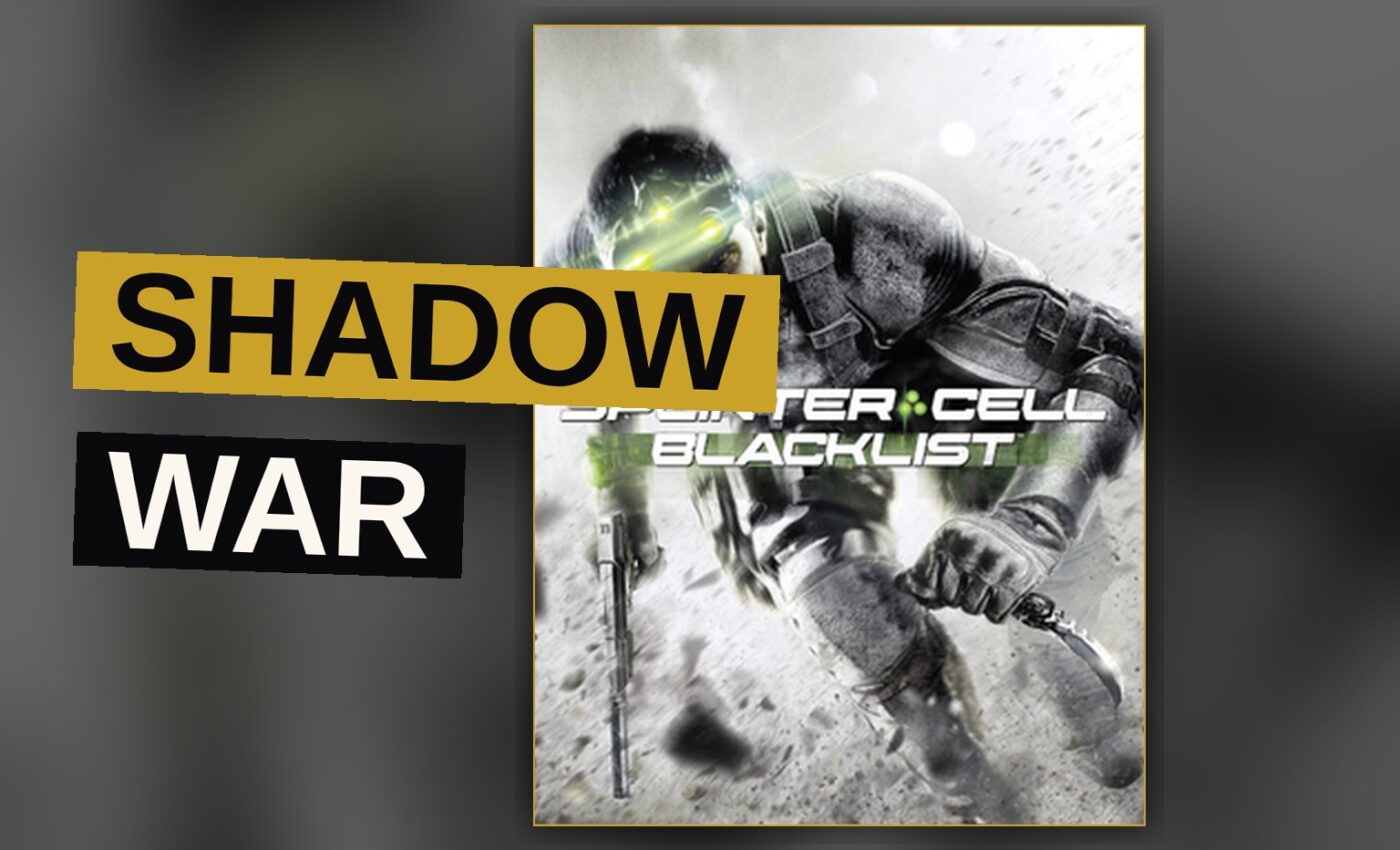
Tom Clancy’s Splinter Cell: Blacklist puts Sam Fisher back in the ops suit and goggles, and it hands him more ways to use them than the series has offered before. Ubisoft Toronto built the 2013 release for PlayStation 3, PC, Wii U and Xbox 360, and it is the seventh Splinter Cell and the direct sequel to Conviction. The pitch is choice: Ghost, Assault or Panther.
Trailer, via Ubisoft.
Ghost, Assault, Panther
Those three labels describe how Blacklist wants you to think. Ghost players stay unseen. Assault players lean on instincts and firepower. Panther players strike lethally from the shadows, silent and efficient. The game rewards whichever you pick, and it mostly means it.
The stealth is traditional where it counts. You can finish levels without any enemy noticing, taking cover or scaling ledges. Kill a guard and his companions will spot the body; hide the corpse and they will not. Fisher can shoot out nearby lights to build his own dark, and his customizable night-vision and sonar goggles see through walls. The Tri-Rotor drone spies, distracts, shocks and self-destructs. Conviction’s mark-and-execute system returns, refined, letting you mark several targets and drop them all at once.
The Engineers and the Blacklist
The story gives all of that a clock. The United States keeps troops in two-thirds of the countries on earth, and a group calling itself the Engineers has had enough. Their Blacklist is a countdown of escalating attacks on US interests at home and abroad, meant to force a full withdrawal.
Two years after Third Echelon dissolves, Fisher works as a mercenary with Victor Coste. An assault on Andersen Air Force Base in Guam kills hundreds of American servicemembers and leaves Coste badly hurt. The Engineers publicly claim the attack. President Caldwell responds by putting Fisher in charge of Fourth Echelon, a black-ops unit flying out of the Paladin. The trail runs through arms supplier Andriy Kobin to Iraq, to the Engineers’ leader, Majid Sadiq, a former MI6 agent who defected after an American drone strike. Chicago is next, then Paraguay and London.
Eric Johnson takes over as Fisher, replacing Michael Ironside, who could not return after a cancer diagnosis. Kate Drummond returns as Grim, with Dwain Murphy as Isaac Briggs and David Reale as Charlie Cole.
What Ubisoft Toronto Got Right
Blacklist is a first game from a new studio, and it shows in the best way: it is a careful study of what worked before. Maxime Béland, who worked on Conviction, directed, and the design deliberately merges Conviction’s action push with the older games’ patience. The result is a game that rarely forces one answer.
- Ghost: remain undetected
- Assault: instincts and firepower
- Panther: lethal, silent strikes from the shadows
Players can define their personal play styles and be rewarded for those choices.
That is the whole idea, and it holds up. The Wii U version came from Ubisoft Shanghai, which also handled multiplayer, and Spies vs. Mercs returns here for the first time since Pandora Tomorrow.
Spies vs. Mercs Returns
The seams show. A game built to satisfy three audiences at once will occasionally satisfy none of them in a single room, and the aggressive stealth line is a compromise more than a synthesis. But the flexibility is real, the Guam opening lands hard, and Johnson’s Fisher is his own man rather than an impression. This is the strongest argument the series has made for staying flexible.
Get the Notebook.
The day's best stories and every fresh verdict, in plain English, in your inbox by seven. One email a day, no more.