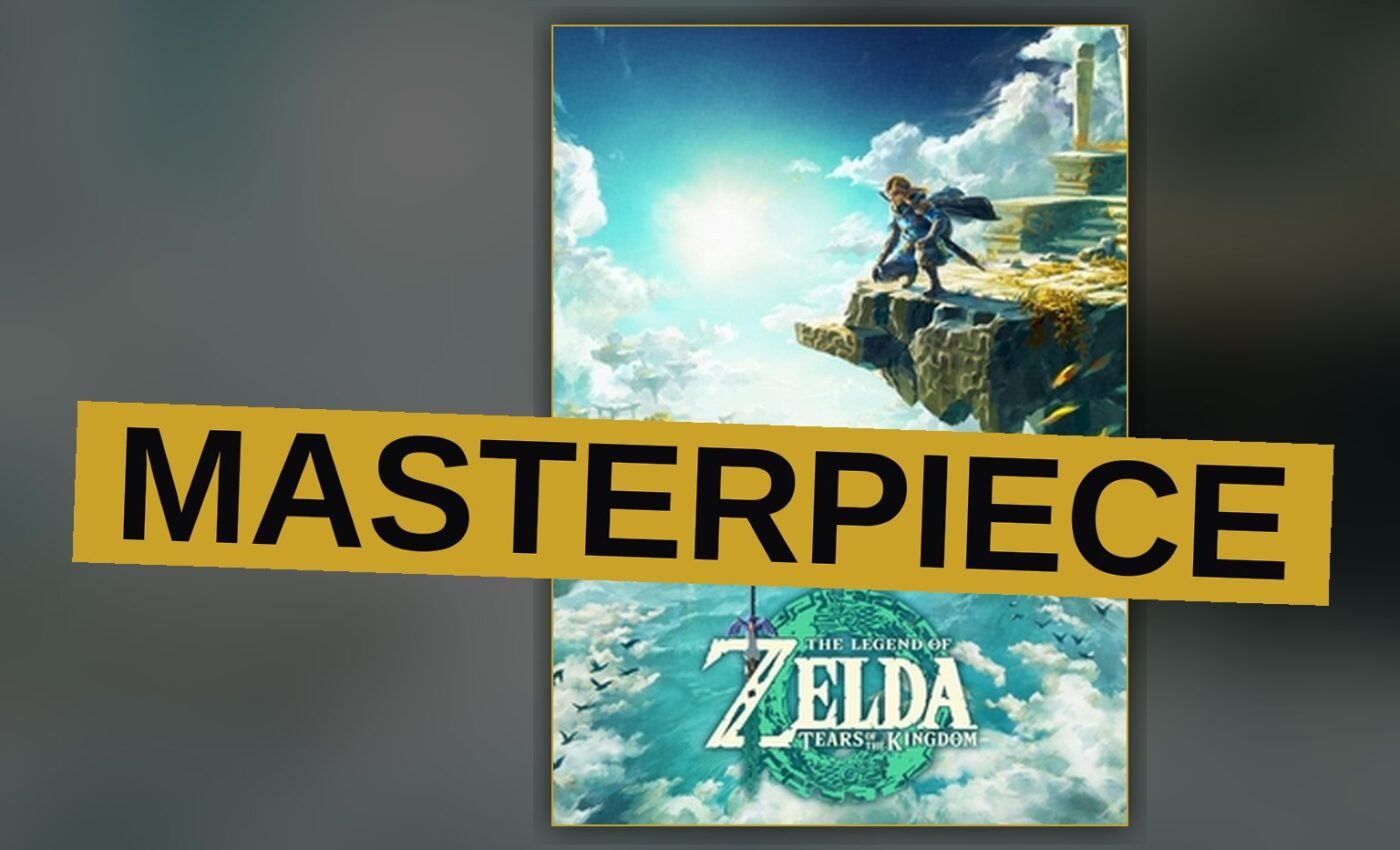
The Legend of Zelda: Tears of the Kingdom is the rare sequel that makes its predecessor feel like a rough draft. It takes the open world of 2017’s Breath of the Wild, keeps its best ideas, and then builds an entire second game on top of them. The result is a masterpiece that rewards curiosity at every turn.
This is not a simple retread. The kingdom of Hyrule is back, but it is split across three layers: the familiar surface, the floating Sky Islands above, and the shadowy Depths below. Each layer offers its own kind of discovery, and the game lets you move between them with a freedom that feels almost illegal.
Trailer, via Nintendo of America.
New Abilities, New Rules
The heart of Tears of the Kingdom is its new toolkit. Link now carries four powers that replace the old runes. Ultrahand lets you pick up almost any object and glue it to another, building bridges, boats, or ridiculous flying machines. Fuse combines weapons with monster parts, rocks, or even other weapons to create new gear. Ascend lets you swim up through solid ceilings. And Recall rewinds an object’s motion, letting you ride a fallen boulder back into the sky.
These are not gimmicks. They are verbs that change how you solve every problem. A shrine that blocks your path with a wall becomes a puzzle about rotating a platform. A gap too wide to jump becomes a chance to strap a fan to a plank. The game rarely tells you the answer, but it always lets you try something stupid first.
Engineering Chaos
The most astonishing part is the physics sandbox. You can attach a steering stick to a cart, add a flame emitter, and create a makeshift tank. You can fuse a Keese eyeball to an arrow for a homing shot. You can build a hot air balloon with a campfire and a balloon fabric. The game tracks every part, every joint, every wobble.
This is where Tears of the Kingdom becomes more than a game. It becomes a playground for engineering. Players have already built working hoverbikes, catapults, and even a rudimentary mech. The game does not judge your designs. It simply asks if they work, and when they fail, it lets you try again.
The Depths Below
The Depths are the game’s boldest addition. A pitch-black underground mirror of Hyrule, lit only by glowing seeds and the light of your own devices. It is eerie, dangerous, and full of rare materials. Exploring it requires preparation, courage, and a steady supply of brightbloom seeds.
The Depths are also where the game’s story finds its weight. The mysteries of the Zonai, the ancient tribe behind the Sky Islands, are tied to what lies below. The narrative is darker than Breath of the Wild‘s, with a villain who is more present and more threatening. Ganondorf is not a distant cloud of malice here; he is a man with a plan, and he moves against you.
A Darker Tale
The plot follows Link as he investigates a corruption spreading through Hyrule. Princess Zelda is missing, and her fate is the central mystery. The game parcels out its revelations through main quests and the memories you recover, and it lands with genuine emotional force. One late-game sequence, involving a dragon and a promise, is among the best moments in the series’ history.
The voice acting is solid, the music is restrained and effective, and the art direction remains stunning. Hyrule Field is still green and golden, but the Sky Islands are white and blue, and the Depths are a black canvas for your own light.
A Trusting Game
Tears of the Kingdom is a game of staggering scope. It is dense, generous, and often overwhelming. The menu for building devices can be clunky, and the game’s early hours throw a lot at you. But those are minor complaints against a work that feels alive.
It is a game that trusts you. It trusts you to experiment, to fail, to wander off, to build something ugly that still works. That trust is rare, and it is precious. This is the best game on the Nintendo Switch, and one of the best games ever made.
Key facts
- Title: The Legend of Zelda: Tears of the Kingdom
- Platform: Nintendo Switch
- Release year: 2023
- Score: 9.5/10, per the IGDB critic aggregate across 6 outlets
Game structure at a glance
| Layer | Location | Role in gameplay |
|---|---|---|
| Surface | Hyrule Field | Main overworld, familiar landmarks |
| Sky Islands | Above Hyrule | New shrines, Zonai devices, traversal puzzles |
| Depths | Below Hyrule | Dark exploration, rare materials, story revelations |
Get the Notebook.
The day's best stories and every fresh verdict, in plain English, in your inbox by seven. One email a day, no more.