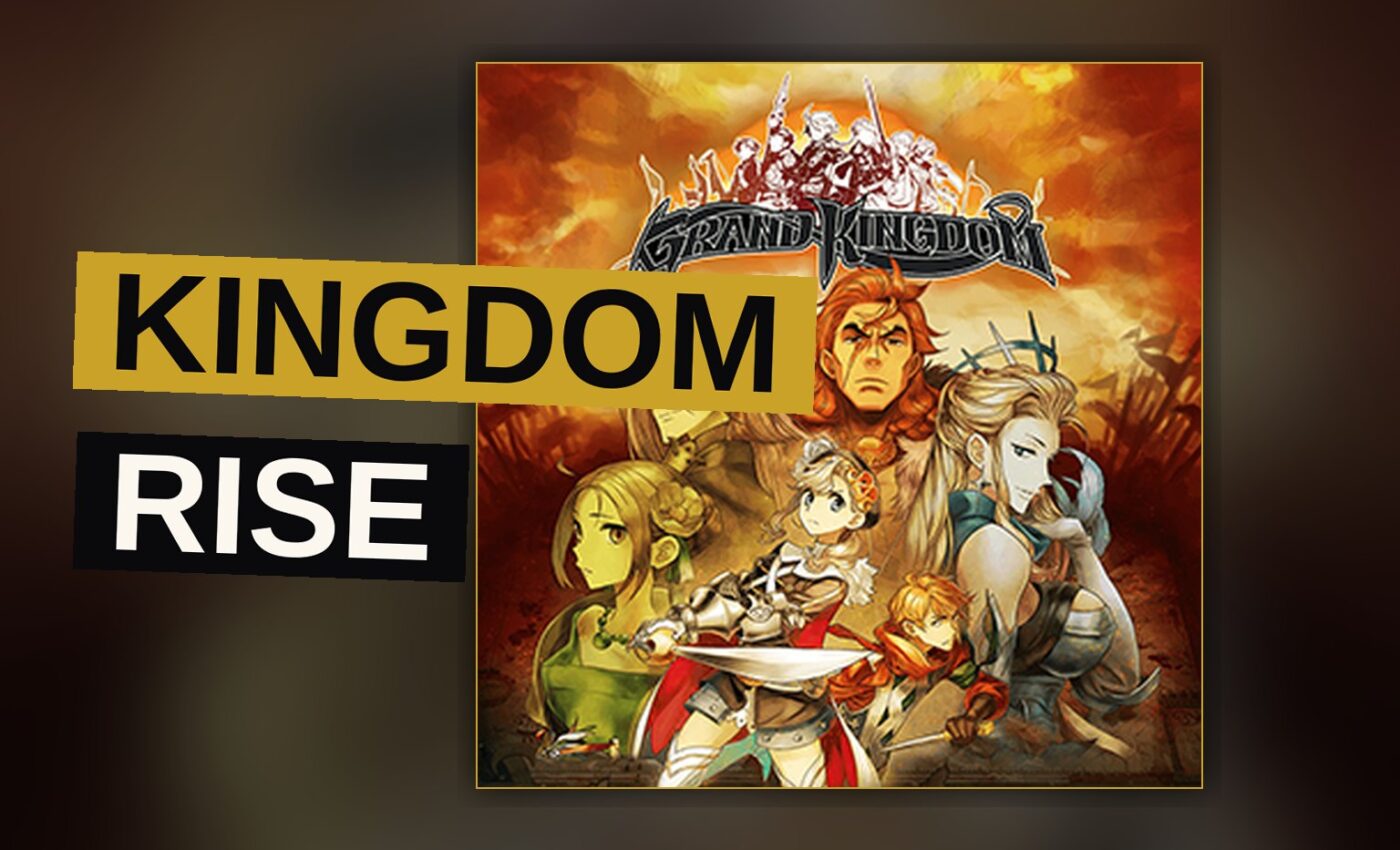
Grand Kingdom arrived in 2015 with a pedigree worth noting: a director from Vanillaware, a character designer told to steer clear of moe, and a soundtrack handled by Basiscape. It got the last part right. The rest is a tactical RPG that understands its battle system better than it understands what to do with it.
Trailer, via PlayStation Europe.
The Board Game Map and the Chess Piece Squad
Grand Kingdom casts you as a mercenary commander on Resonail, a continent fractured after the Uldein Empire collapsed a hundred years ago. Four nations—Landerth, Valkyr, Fiel, and Magion—have been at each other’s throats ever since, and the fighting is outsourced to mercenary bands organized by the independent Guild.
The developer is Monochrome. Spike Chunsoft published in Japan in 2015, NIS America brought it West in 2016. The game runs on PlayStation 4 and PlayStation Vita, and it plays like a board game crossed with a tactics grid. Your party is a chess piece on a map of pathways. Every mission except “Travel” has a turn limit, and moving or passing eats a turn. Enemies move when you do. Some stick to fixed routes.
That constraint is the whole design. It forces you to think about position before you think about damage, and it makes even a simple escort quest feel like a puzzle. Treasure chests, shortcuts, and hidden paths reward curiosity. Siege weapons and traps can swing a fight if you spend the turns to trigger them. Random events can drop an extra battle on you or hand over new treasure.
The battle system is the best thing Grand Kingdom has going for it. It asks you to plan like a strategist and then execute like an action player. That combination is rare, and it works.
Chizu Hashii, Tomohiko Deguchi, and the Vanillaware DNA
Director Tomohiko Deguchi started development in 2011, and he came from Vanillaware. The design and aesthetic concepts here echo Grand Knights History, the 2011 game he worked on before this one. You can feel that lineage in the side-view perspective and the deliberate, almost theatrical way units move.
Chizu Hashii handled character design. She was asked to avoid moe traits, and the result is a cast that looks like it belongs to a war chronicle rather than a power fantasy. Flint Poker, your fellow mercenary, and Lilia Sforza, the Guild organizer and daughter of leader Godfrey, carry the early hours. Weiss, who runs the Guild’s top squad the White Wolves, is your rival. Teterva and Corona anchor the antagonists, remnants of Uld who want Resonail back.
The music came from a Basiscape team including Mitsuhiro Kaneda and Masaharu Iwata. It was one of Iwata’s last original projects for the studio before he left in 2017. The score does more work than the script.
A War Mode That No Longer Exists
Here is the part that stings. Grand Kingdom shipped with asynchronous online multiplayer. You picked a nation, built a team, and fought other players’ parties for the future of Resonail. It was designed to prove that asynchronous competition could work in Japan while asking only a casual time investment.
That mode is gone. Servers shut down in the West by 2019 and in Japan by 2022. What remains is the single-player structure:
- Campaign missions that advance the main story
- Single quests handed out by Resonail’s nations
- Versus matches against AI-controlled parties built by other players
- Travel, the one mode with no turn limit
The Versus option was always against AI-controlled parties created by other players. It survives as a ghost of the original idea. You are fighting the echo of a player base, not the thing itself.
The Uldein Empire and the Animus
The plot does its job without ever rising above it. Your squad gets recruited, tested by Godfrey, and thrown into the Guild’s fight against Uld’s remnants. Teterva steals Godfrey’s sword Tyrbrand. At an ancient fortress, she and Corona break one of its magical seals, aiming to release demons onto the continent.
The squad tries to take the sword back. Weiss interferes, wanting a fight, and in the collapse the Uldiens escape while Weiss is left for dead. Corona steals Tyrbrand and saves him. He tells her to stand up for herself and takes her in. She later returns to Teterva with the sword to keep him safe.
Godfrey eventually reveals the endgame: Teterva wants to release the Animus, four demonic gods the Uldein Empire controlled before it fell. She sacrifices her own people to hold the Guild back, then breaks the final seal. The Animus return.
It is serviceable. It is also the least interesting thing in the game, which is a problem when it is supposed to be the spine.
What Grand Kingdom Gets Right
The customization deserves credit. Between missions you equip and tune your party at the Guild or in each nation’s capital, using equipment and special gems. You name your character and your mercenary group at the start. The game wants you to build an identity, and for a while that investment pays off.
The turn economy is the real star. Every step is a decision. Passing is a decision. Letting an enemy move on a fixed route is a decision. Grand Kingdom trusts you to do the math, and it rarely wastes your time with filler encounters.
Where it stumbles is in the gap between its systems and its story. The nations have distinct identities, but the campaign treats them as quest dispensers rather than places. The world-building never makes it fully onto the screen.
The four nations of Resonail:
- Landerth, rich in natural resources and led by Queen Gladius Ringland
- Valkyr, a tribal warrior culture led by its strongest warrior Graham Berngarde
- Fiel, a forest-bound refuge for those displaced by war under Queen Precia Teller
- Magion, a barren land of the continent’s most powerful magicians under Julius Wiseman
All four get a leader and a one-line identity. None of them gets a reason to care.
The Score and What It Means
Grand Kingdom is a smart tactical RPG whose most interesting feature is already gone. The asynchronous war mode was the most ambitious thing Monochrome attempted, and its shutdown in 2019 and 2022 left the Versus mode as the only remnant of it. What is left is a strong board-game map, a genuinely good battle system, and a story that never earns its own stakes.
The pedigree is real. Deguchi’s Vanillaware training shows. Hashii’s designs hold up. Basiscape’s score is the most consistent pleasure in the package. But a game built around a war between four nations needed that war to mean something, and Grand Kingdom never quite gets there.
It is worth playing for the turn economy alone. Just know that the kingdom you are fighting for is emptier than it looks.
Get the Notebook.
The day's best stories and every fresh verdict, in plain English, in your inbox by seven. One email a day, no more.