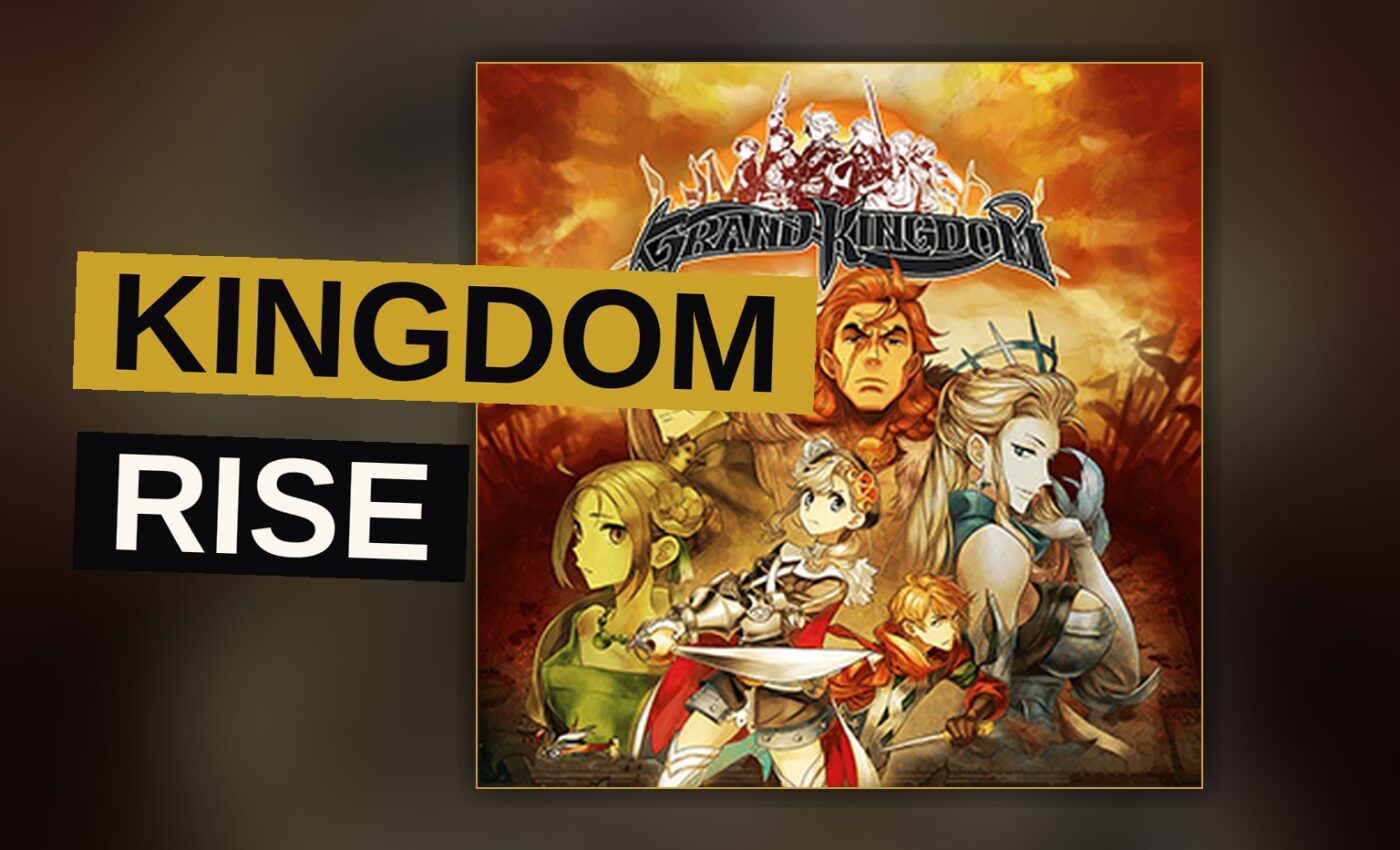
Grand Kingdom is a game about war, diplomacy, and the quiet satisfaction of building a kingdom one tile at a time. It launched in 2015 for PS4 and Vita, and it remains one of the more unusual strategy titles of its generation. The game asks players to manage armies, negotiate peace treaties, and build cities across a hex-based map. It is a game about patience, and it knows it.
The core loop is simple: you control a faction, you fight battles, you build settlements, and you try to hold onto enough territory to win. What makes Grand Kingdom stand out is how it handles those elements together. The battles are real-time, but the strategy layer is turn-based. You move armies across a map, but you resolve fights in a separate screen where units clash in real time. That split design gives the game a distinct identity, even if it borrows heavily from older grand strategy games.
Trailer, via PlayStation Europe.
The Map and Its Pieces
The map is where Grand Kingdom spends most of its time. It is a grid of hexes, each holding a resource, a settlement, or nothing at all. Players expand by capturing neutral tiles, founding cities, and sending scouts to explore new regions. The economy is simple but effective: resources feed construction, troops, and upgrades. Nothing here feels revolutionary, but everything feels well tuned.
Settlements are the heart of the game. They produce income, recruit soldiers, and serve as bases for your armies. Building them requires careful planning, since each city consumes resources from the surrounding tiles. The game rewards players who think about logistics, not just combat. A poorly placed city can starve your armies while a well-placed one can fuel endless expansion.
Diplomacy is a major feature. You can ally with other factions, trade goods, or declare war on them. Negotiations are text-based, and the game tracks your reputation with each faction over time. This means your choices matter. A player who breaks a treaty loses standing with everyone, while a player who builds alliances gains leverage. The system is complex enough to reward repeated playthroughs, though it rarely punishes betrayal outright.
Battles and Their Rules
Battles are where Grand Kingdom gets bold. Each fight takes place on a small arena, and units clash in real time. You issue commands, and the AI resolves the action. This creates a tension between planning and chaos. You can set up a perfect formation, but enemy units will break it in unexpected ways. The result is a battle system that feels alive, even when it frustrates you.
The unit types are varied. You have infantry, cavalry, archers, and siege weapons, each with strengths and weaknesses against specific foes. Terrain also matters. Hills provide cover, forests slow movement, and rivers force armies to cross at narrow points. These mechanics combine to make every fight feel distinct, even when the maps look similar on paper.
There is a problem, though. The battle system is not always consistent. Some fights resolve quickly, while others drag on for minutes. The game rarely tells you why a particular attack fails or succeeds, which makes it hard to learn from your mistakes. This is a game that rewards patience, but it rarely explains itself.
Cities and Their Costs
Building cities is where Grand Kingdom shows its depth. Each city has a production queue, and you assign workers to different tasks. You can train soldiers, craft goods, or upgrade your buildings. The game tracks your progress through a tech tree, giving you access to new units and abilities over time. This creates a sense of growth that few other games manage.
The cost of expansion is the game’s biggest weakness. As you capture more territory, you need more workers, more food, and more resources. The game does not always explain these costs clearly, which leads to moments where you wonder why your army has stopped moving or why your city is running low on supplies. It is a minor annoyance, but it can break immersion during a tense battle.
The Difficulty and Its Limits
Grand Kingdom offers multiple difficulty levels, and the harder settings demand real planning. Enemy AI adapts to your tactics, and the game tracks your performance to adjust its response. This creates a sense of challenge that keeps the game fresh over dozens of hours. However, the game does not always communicate its expectations. You might lose a battle because you forgot to reinforce a position, and the game does not always explain why you lost.
The game also limits your ability to save and load. You can save your progress, but you cannot undo decisions once made. This forces you to think carefully before committing to a strategy. It is a clever design choice, even if it frustrates players who want to experiment freely.
The Look and Its Feel
Grand Kingdom looks modest. The hex-based map is readable, and the unit sprites are detailed enough to distinguish between armies. The interface is clean, and the menus are easy to navigate. It is not a game that demands high-end hardware, and that simplicity is part of its appeal. It runs well on both PS4 and Vita, though the Vita version sacrifices some visual polish for portability.
The music is sparse but effective. It sets a tone of quiet dread during battles and peaceful calm during exploration. The sound effects are minimal, which keeps the focus on the gameplay. The game does not try to impress with spectacle, and it does not need to.
The Length and Its Replay Value
Grand Kingdom is a long game. A single campaign can take dozens of hours to complete, and the game offers multiple campaigns and scenarios beyond the main story. The replay value comes from the different factions and the changing conditions of the world. Each playthrough feels distinct, even when you use the same strategies.
The game also includes a multiplayer mode, though it is limited. Players can compete online, but the mode lacks the depth of the single-player experience. It is a nice addition, but it is not the centerpiece.
“The game rewards patience, but it rarely explains itself.”
Final Word
Grand Kingdom is a solid, if imperfect, strategy game. It succeeds at creating a world worth exploring, and it fails at explaining itself clearly. The battle system is innovative, but it can be inconsistent. The diplomacy system is deep, but it can be opaque. The city-building mechanics are rewarding, but they can be confusing.
The game’s strengths outweigh its flaws. It offers a unique blend of real-time battles and turn-based strategy, and it executes that blend well. It respects the player’s time, even when it frustrates them. It is a game that rewards curiosity and punishes carelessness.
Grand Kingdom is not a masterpiece, but it is a worthy entry in the genre. It is a game that rewards patience, and it is a game that demands it.
Key Facts
– Platform: PS4, Vita
– Release Year: 2015
– Genre: Strategy game
– Critical Score: 7.9/10
Grand Kingdom earns a 7.9 out of 10.
Get the Notebook.
The day's best stories and every fresh verdict, in plain English, in your inbox by seven. One email a day, no more.