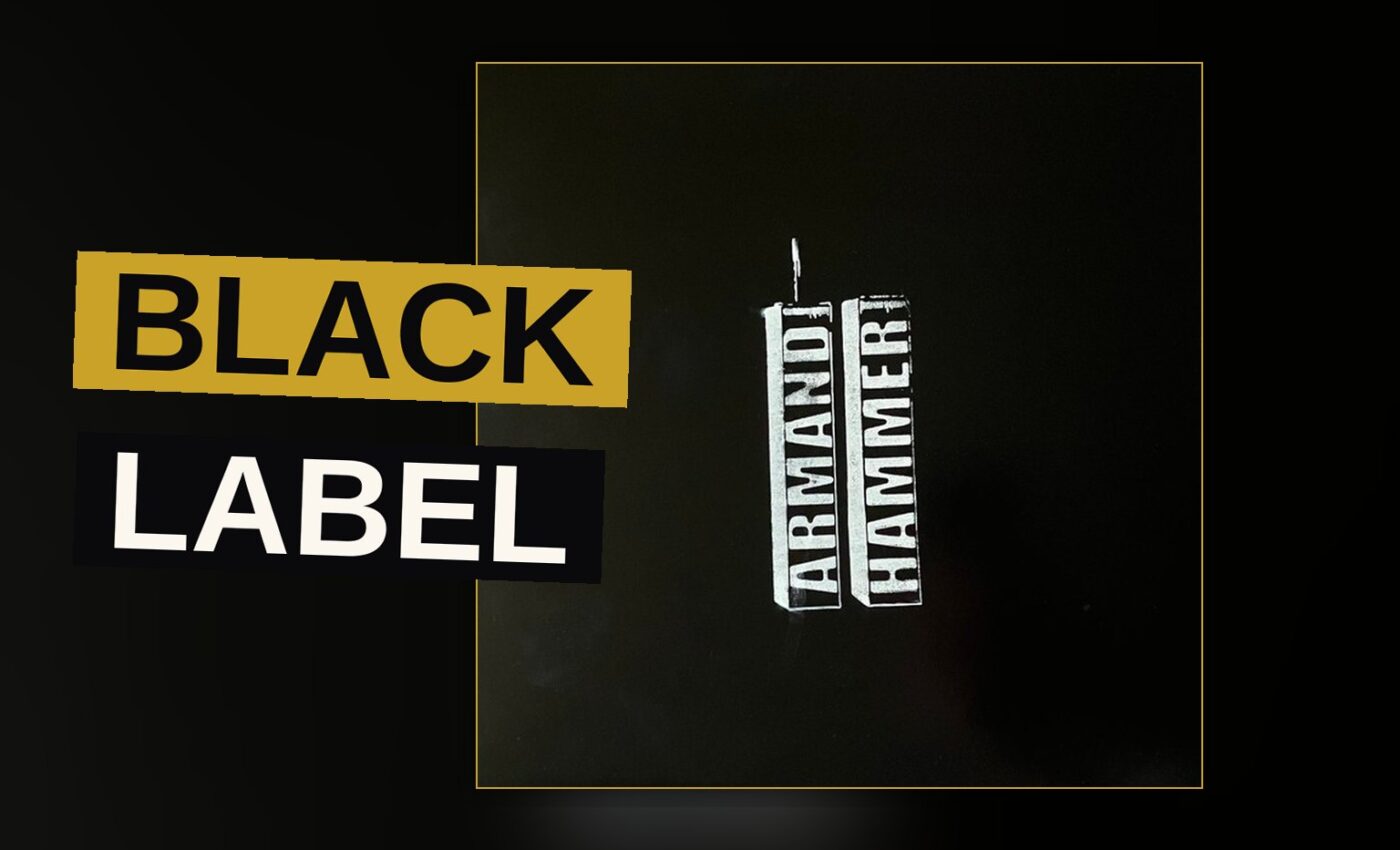
Armand Hammer’s BLK LBL is a record about the space between being and having. It wants to sound like nothing you’ve heard before, and mostly it succeeds. The album is a 39-minute exploration of experimental hip-hop, built around abstract production and a poetic, often opaque lyricism. It is also, at times, a bit too abstract for its own good.
Opening With Colony
The record opens with “Colony,” a brief instrumental that sets the tone. It is sparse, almost skeletal, and it establishes the minimalistic approach that runs through the first half of the album. The song is a statement of intent, not a destination. It tells you what to expect: quiet, atmospheric, and deliberately understated.
“Fulgurite” follows, and it is the strongest track in the opening stretch. The title refers to a naturally occurring glass formed by lightning strikes, and the song carries that sense of sudden, violent creation. The beat shifts and cracks, and the lyrics feel urgent, almost desperate. It is a highlight, and it earns its place early.
“Girl Dinner” slows things down. It is a portrait of domesticity, and the contrast between the title and the content is part of the joke. The song is warm, almost tender, and it stands apart from the cold abstraction of the tracks around it. It is one of the few moments where the album feels grounded.
“Which Way Is Up” and “Instant Transfer” are less successful. Both are brief, and both rely heavily on atmosphere over substance. They are not bad songs, exactly, but they feel like sketches rather than finished pieces. They serve the overall mood of the record, but they do not add much to it.
“Gripewater” is a slow-burning track that stretches past three minutes. It is one of the longest songs on the album, and it uses its length to build tension. The title is obscure, and the song itself is dense with imagery. It is a solid track, but it is not a standout.
The Middle Stretch
“Tar Baby” is a reference to the folkloric figure, and the song plays with that idea of being caught in a situation you cannot escape. It is a good song, but it is not a great one. It is one of the more accessible tracks on the album, and it features a guest verse that adds a layer of complexity.
“Ox Blood” is the album’s centerpiece. The title is a direct reference to the color of blood, and the song uses that image to explore violence and mortality. It is the most emotionally direct track on the record, and it is also one of the most technically ambitious. The production is layered, and the lyrics are sharp. It is a highlight, and it is the best track on the album.
“Zaire” is named after the former country, and the song uses that history to explore themes of power and corruption. It is a dense, complex track that rewards repeated listens. The lyrics are poetic, and the beat is propulsive. It is not a single you will hum, but it is a track you will remember.
“Ice Cups” is a standout. The title is a simple image, but the song uses it to explore isolation and loneliness. It is one of the most melodic tracks on the album, and it features a hook that sticks. It is a reminder that even in the most abstract territory, Armand Hammer can still write a pop song.
“Drowning Machine” is a track about addiction and control. It is one of the most direct songs on the album, and it is also one of the most effective. The beat is driving, and the lyrics are blunt. It is a strong closer to the album’s main section.
The OG Mix And The Coda
“Tupac Jackets (OG mix)” is a remix of a previous track, and it is a reminder of the duo’s roots in the underground scene. It is a solid track, but it is not essential listening. It is a footnote to the main record.
“Busta in ’97” is a brief instrumental interlude. It is a nod to the classic era of hip-hop, and it is a fun moment of nostalgia. It is not a serious track, but it is a pleasant one.
“Read Ur Bible” closes the album with a final statement. The title is a reference to the duo’s religious background, and the song uses that to explore faith and skepticism. It is a fitting end to the record, and it leaves the listener with a sense of unresolved tension.
Final Judgment
The album is consistent in tone and message, but the first half struggles with minimalistic instrumentals before the B-side picks up with more familiar producers. The record is at its best when it commits fully to its vision, and it is at its worst when it hedges its bets.
The tracks that stand out are “Fulgurite,” “Girl Dinner,” “Ox Blood,” “Zaire,” “Ice Cups,” and “Drowning Machine.” These six songs carry the weight of the record, and they justify the existence of the whole project. The other tracks are competent, but they are filler.
| Track | Length |
|---|---|
| Colony | |
| Fulgurite | |
| Girl Dinner | |
| Which Way Is Up | |
| Instant Transfer | |
| Gripewater | |
| Tar Baby | |
| Ox Blood | |
| Zaire | |
| Ice Cups | |
| Drowning Machine | |
| Tupac Jackets (OG mix) | |
| Busta in ’97 | |
| Read Ur Bible |
The album is a bold experiment, and it largely pays off. It is not a perfect record, but it is a compelling one. The highs are high, and the lows are not as low as they could have been. It is a record that rewards attention, and it is a record that deserves it.
- Colony2:02
- Fulgurite2:12
- Girl Dinner2:48
- Which Way Is Up2:59
- Instant Transfer2:49
- Gripewater3:53
- Tar Baby3:10
- Ox Blood3:21
- Zaire3:33
- Ice Cups3:10
- Drowning Machine3:04
- Tupac Jackets (OG mix)2:48
- Busta in ’971:14
- Read Ur Bible2:04