
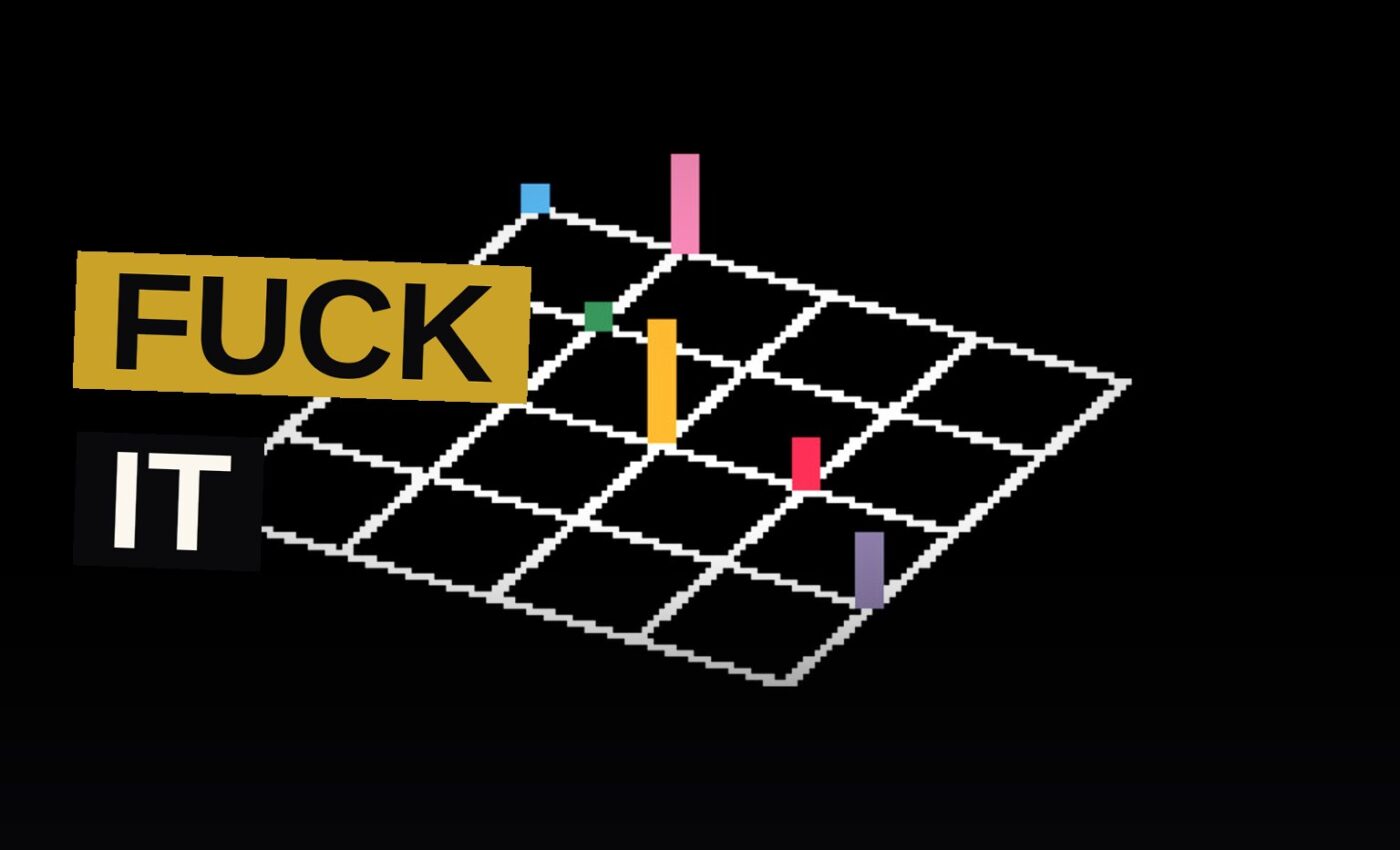
A programmer who built his own game engine in C++ has written about why he refuses to use AI code assistants, even as everyone around him adopts them. The piece, titled “Fuck it, make it anyway,” is a personal account of a collapse brought on by watching AI tools replace the small, hand-crafted projects he once felt proud of.
The writer describes the moment as “an implosion, a collapsing of the self, my resolve and motivation crumbling into the mush you get when you put tissue paper through the laundry.” He has since recovered, but the essay exists to help others who find themselves in the same state.
The Crash
The writer’s collapse came after a thread from Zach Gage, an indie developer, about how game development is moving toward a model closer to music production — quick, iterative, and heavily assisted by tools. The writer found the insight compelling, but devastating for his own sense of purpose.
“I’ve spent years learning how to make games, and it’s been hard, and now it feels like that might have been a waste of time,” he writes. “I was bereft.”
His own career is built on small, hand-crafted tools. He uses a custom interactive git branch switcher daily, and colleagues told him they appreciated it. Now anyone can order a similar tool from a prompt. The writer admits he needs those positive comments from peers to feel fulfilled, and he worries that recognition has vanished.
The Hard Way
The writer decided early in his career to build his own game engine in C++, a language he describes as difficult to work in. He explains that if his goal had been speed or ease, he would have used Unity, Godot, or Unreal. Instead, he chose to build a faux-3D renderer himself, a decision that required far more effort.
He frames the choice as one of learning and enjoyment. “I do things the way I do because I enjoy doing it that way and because I learn a lot through doing it,” he writes. The effort is not a burden; it is the point.
Shad’s Camera
The essay’s emotional center comes from a conversation with Shad, a designer and engineer whose current project is Uncamera, a camera app for iOS. Uncamera uses raw sensor output with lookup tables rather than filters applied afterward, producing photos that look like film. The writer describes it as “a beautifully made thing” and believes it is a strong contender for an Apple Design Award when finished.
Shad’s project is notable for one reason: it was built entirely without generative AI. The writer’s own anxieties mirror Shad’s, but Shad has kept updating Uncamera despite those fears. The writer, by contrast, wallowed in self-pity.
Three Paths
The writer identifies three paths available to him:
- Start using generative AI to feel like he is “keeping up” or “competing.”
- Stop making things entirely.
- Keep making things the way he enjoys, learning and working hard for no concrete reason beyond wanting to do it.
The writer rejects the first path immediately. He writes that he simply does not enjoy programming with a code assistant, that the output doesn’t feel like his own, and that he takes no pride in what it produces. He dismisses the second path as a non-option for any creative person. That leaves the third path, which he commits to.
The Moving Finish Line
The writer acknowledges that the AI tools are getting better fast. Large language models are “genuinely very capable at code generation now,” and denying that is, in his view, “a race against a moving finish line.” He can’t blame anyone who has gone along with the trend, given the peer pressure involved.
But he chooses to resist. He wants to enjoy his work, and he believes that enjoyment is worth preserving even if it means falling behind.
Why We Make Games
The essay closes with a simple argument about craft. “That’s why we make games,” he writes. “That’s why we make anything.” The pride in a handmade script or a custom tool is not a luxury; it is the reason the work exists in the first place.
The writer’s honesty is the essay’s strength. He admits to needing validation from his peers, to feeling gauche about admitting it, and to being deeply unsettled by the changes around him. He offers no grand solution and no promise of success. He simply commits to the path he loves, even as the world around him shifts.
Key Facts Box
- Essay title: “Fuck it, make it anyway”
- Writer’s tool: Custom interactive git branch switcher, used daily
- C++: Language the writer chose for his game engine
- Shad’s project: Uncamera, a camera app for iOS
What We Think
The writer’s central tension is genuine and widely shared. He has chosen to resist the tools even as they improve, and his essay is a record of that choice.
The comparison to Shad is instructive. Both men are anxious, but Shad keeps shipping. The writer’s wallowing is a real problem, but it is also a symptom of caring deeply about his work. His decision to stick with the hard way is a vote of confidence in his own abilities, even as he admits the craft he has devoted himself to may be changing beneath him.
The essay is not a manifesto. It is a confession, followed by a resolution. The writer is doing better now, and he hopes his words help someone else who is not.
The writer’s final point is worth repeating: the reason we make anything is the joy of making it. The tools change, the market shifts, the finish line moves. What does not change is the pleasure of building something with your hands, in your own voice, for no reason other than you want to do it.
Get the Notebook.
The day's best stories and every fresh verdict, in plain English, in your inbox by seven. One email a day, no more.