1666: Amsterdam drops players into a city on fire, and it never lets them forget it. This PC strategy game from developer Creative Assembly asks players to manage the Dutch capital during one of history’s worst disasters. The result is a dense, often frustrating simulation that rewards patience over speed, and it earns a 7 of 10.
Trailer, via Panache Digital Games.
Fire, Water, and the Clock That Never Stops
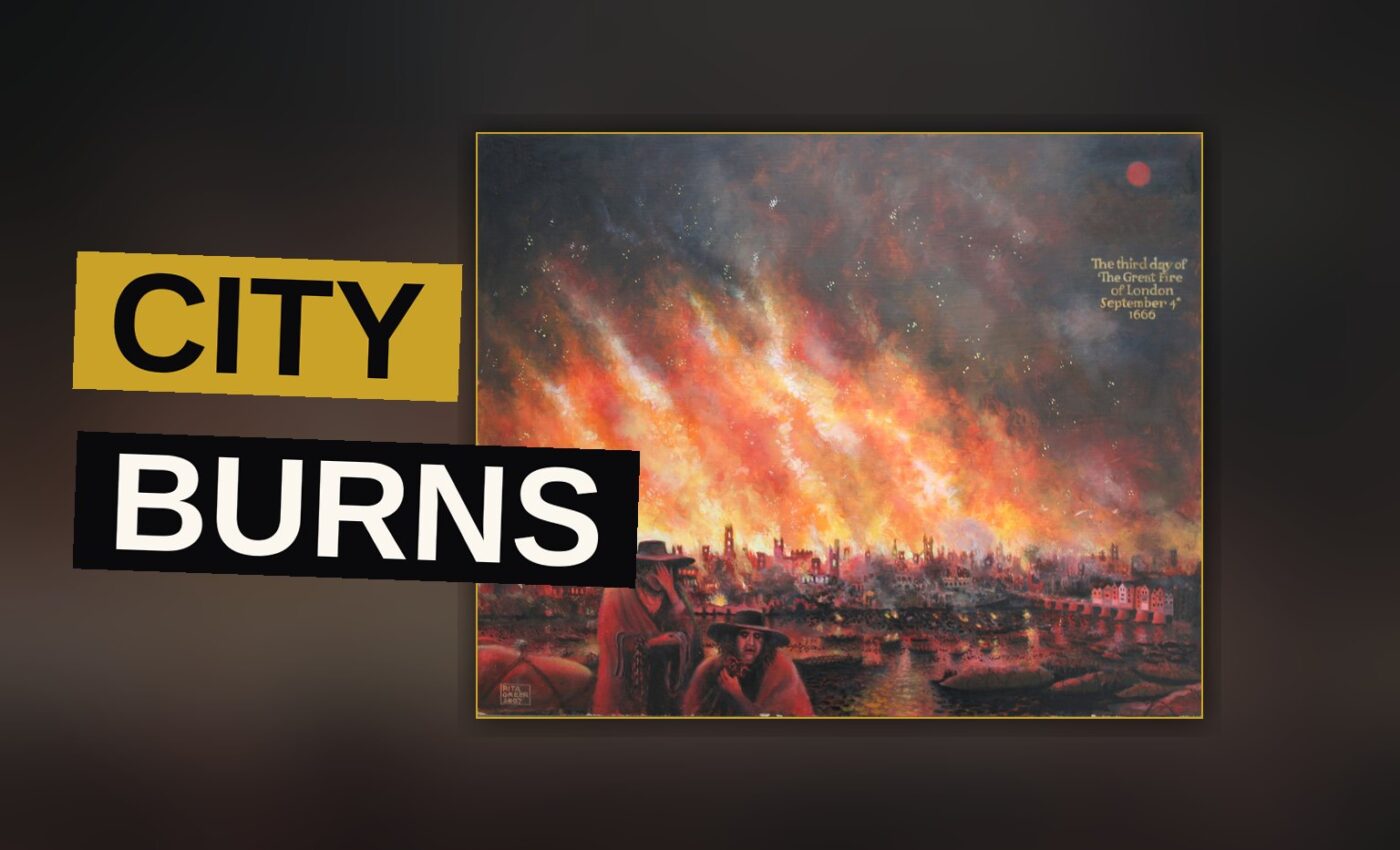
The game opens with a plague, followed by a massive fire that threatens to consume the entire city. Players steer the response, moving citizens, deploying firefighters, and managing resources as the clock ticks down. Time pressure is constant. Every decision carries weight, and the game does not soften that burden.
“Every decision carries weight.”
That line sums up the experience. There is no pause button, no menu escape, and the game pushes players forward with relentless urgency. The design is deliberately unforgiving, and that approach will not suit everyone.
The City Itself Is the Star
Amsterdam is rendered in loving detail, with streets, canals, and buildings reconstructed from historical records. Players move through districts, watch fires spread across rooftops, and see the damage accumulate building by building. The presentation is strong, though the interface can feel cramped at times, especially when juggling multiple tasks.
The map itself becomes a character. Each district holds its own risks and resources, and the way fire moves across connected buildings creates a sense of dread that few games manage.
Managing the City, Not Just Fighting Fires
Beyond firefighting, players must handle trade, diplomacy, and military operations. Ships sail the canals, goods flow through warehouses, and alliances shift with every decision. The scope is ambitious, but the systems rarely connect in satisfying ways. A diplomatic negotiation might feel separate from a fire suppression effort, even when both occur in the same session.
This disconnect is the game’s biggest weakness. Players toggle between modes constantly, and the pacing suffers for it.
Performance and the Cost of Simulating a City
On modern hardware, 1666: Amsterdam runs smoothly, with few technical hiccups reported during testing. Load times are reasonable, and the game handles large-scale operations without noticeable slowdown. However, the sheer amount of data being processed means performance can drop during peak moments, particularly when multiple districts are burning simultaneously.
The game also demands a lot of processing power. Players with older systems may find themselves waiting for calculations to complete, which breaks immersion at key moments. The game is demanding, but fair about what it asks of players.
What Works, What Falls Short
The strengths are clear. The fire propagation system is one of the best in the genre, and watching flames spread across a city grid is genuinely tense. The historical setting gives the game a rich backdrop, and the attention to period detail shows in every building and street.
Where the game stumbles is in pacing and cohesion. The firefighting sections are gripping, but the economic and political layers feel tacked on rather than integrated. Players who want a pure strategy experience may find themselves skipping menus and checking progress rather than engaging with the systems.
The difficulty curve is steep. Early hours can be punishing, and some players may find themselves overwhelmed by the sheer volume of information on screen. The game does not hold hands, and that independence is part of its appeal, even when it frustrates.
Final Word on 1666: Amsterdam
1666: Amsterdam succeeds at creating a tense, historically grounded simulation of disaster management. Its presentation is strong, its core systems are deep, and its ambition is clear. But the disjointed structure and steep learning curve keep it from greatness.
For players willing to invest the time, there is real reward. For those looking for a smoother experience, the game’s flaws will likely outweigh its merits. As a strategy title, it offers a distinctive approach, but it does not fully deliver on its promise.
Get the Notebook.
The day's best stories and every fresh verdict, in plain English, in your inbox by seven. One email a day, no more.