
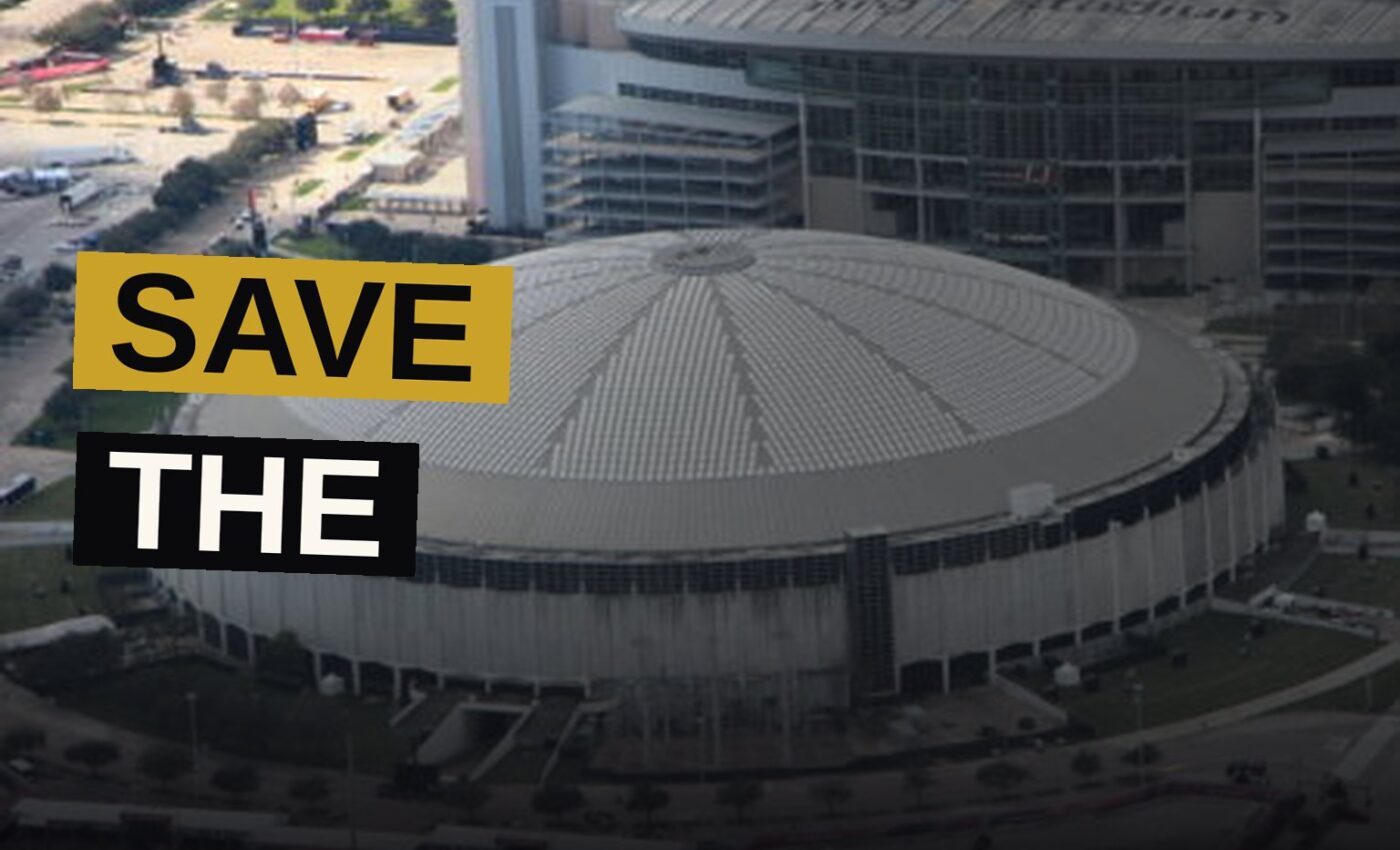
Beth Wiedower Jackson has spent over a decade fighting to save the Houston Astrodome, and now she is turning to private business for help. On Aug. 18, the Astrodome Conservancy issued a Request for Information (RFI) asking developers to propose ways to revitalize the landmark. The deadline has been extended to Sept. 25 after demand exceeded expectations.
Jackson, president of the Astrodome Conservancy, told Houston Public Media that the response has been strong. “We’ve definitely had a lot of interest,” she said. “We’re going to be less particular about what that final use and redevelopment looks like, and more concerned with the building still standing with a viable and sustainable use for the next 40, 50, 60 years.”
Jackson’s Long Road to the Dome
Jackson first got involved in preserving the Astrodome through the National Trust for Historic Preservation. She moved to Houston in 2013 specifically to campaign for saving the building. Her resume includes work to preserve Johnny Cash’s boyhood home in Arkansas and a historic natatorium in Honolulu.
But the Astrodome is her defining project. She became executive director of the Astrodome Conservation in 2018. In 2024, the organization released “Vision: Astrodome,” a privately commissioned vision for what revitalizing the site could look like. Jackson calls it a concept rather than a proposal, meant to excite potential investors and contractors.
The RFI and Its Goals
The RFI asks private developers to submit ideas for revitalizing the Astrodome. The conservancy wants proposals that demonstrate a viable long-term use for the building. Jackson said the organization is less interested in the exact nature of the use and more concerned with ensuring the structure survives.
The request comes as two major tenants are leaving. The Houston Livestock Show and Rodeo is moving a portion of its work to a new agriculture complex a few miles south. The Houston Texans will move their headquarters and training facility to Bridgeland.
Jackson acknowledged the challenges. “There are lots of opportunities and some challenges to this site,” she said. “One of them, both opportunity and challenge, being that there are two major contractual tenants at the table.”
What Jackson Has Heard So Far
Over the years, Jackson has heard every pitch imaginable. Some were serious. Some were decidedly not.
- A ski resort under the dome.
- AstroWorld relocated to live under the roof.
- Bringing the Space Shuttle Discovery to the Astrodome, as lawmakers try to relocate it from the Smithsonian to Houston.
- Submerging Battleship Texas in the lower bowl of the stadium, filling the 30-feet-below-grade area with water and floating the ship inside.
Her favorite idea is the last one. “My favorite by far is submerging Battleship Texas, filling the lower bowl — the 30-feet-below grade — with water, and floating Battleship Texas inside the Astrodome,” she said. “I’m afraid, pun intended, that ship has sailed.”
The Cost of Saving It
Renovating the Astrodome is not cheap. Late last year, an analysis found that fixing up the structure could cost $750 million. Demolition would cost around $54 million.
Jackson said the financial picture is not entirely clear. “There is still a very real threat to the Astrodome,” she said. “And it’s fun and it’s much more energizing to talk about plans moving forward. But I don’t want to forget — and I don’t.”
The cost numbers matter because they shape the political calculus. Jackson and the conservancy know that significant private investment will likely be required. Earlier this year, Harris County leaders, including Judge Lina Hidalgo, indicated that renovating the Astrodome would need substantial private backing.
Jackson framed the RFI as a way to produce a concrete product that county leaders can review. “We knew that there was interest from the private sector in a public-private partnership redevelopment of the Astrodome,” she said. “And this is an attempt to qualify that to really produce a product that the county can see and vet and carry forward based on the work that the conservancy’s done.”
The People Behind the Dome
The Astrodome has outlasted several changes in leadership. There have been three presidents of the Houston Livestock Show and Rodeo, two Harris County judges, and the succession within the McNair family in ownership of the Houston Texans since the dome was permanently closed to the public in 2009.
The RFI document notes that a successful outcome will require alignment across public and private stakeholders. That includes navigating relationships with the Harris County Commissioners Court, which owns the facility, and the two contracted tenants of Reliant Park — the Houston Texans and the Houston Livestock Show and Rodeo.
The rodeo has been a fixture at Reliant Park since 2002. In a statement, the organization said it remains committed to the complex. “As a tenant that utilizes the entire Reliant Park complex, the care and maintenance of the buildings that we currently use — Reliant Stadium, Reliant Center and Reliant Arena — will remain a top priority for the Rodeo,” the statement said. “Additionally, the organization remains focused on its expansion to its new Highway 288 Agricultural Complex.”
Representatives from the Houston Texans did not immediately return requests for comment.
Jackson invited the offices of Harris County Attorney and Harris County Administrator to participate in interviews with businesses following the RFI period. She had not heard back from either. A spokesperson for Administrator Erica Lee Carter said Carter was “appreciative” of the invite and still reviewing. Representatives from County Attorney Abbie Kamin did not immediately return requests for comment.
Why the Astrodome Matters
Jackson understands why people care about the Astrodome. “The reverence for this space is not tied necessarily to its architecture or its first-of-its-kind engineering,” she said. “It’s tied to the activities, the day-to-day that happened under that dome. The seats along the third base line that father and son shared for decades. The concert that best friends attended. The wedding proposal that happened after an Oilers game.”
She described walking down the east ramp to the floor of the Astrodome as an experience comparable to standing in the glass ledge of the Willis Tower in Chicago or climbing the elevator in the Washington Monument.
The emotional case is powerful. But the practical case is harder. The RFI is a step toward answering the question of whether the building can survive beyond its current tenants.
What Comes Next
The deadline extension to Sept. 25 suggests the conservancy expects a robust response. Jackson’s willingness to entertain unconventional ideas — a submerged Battleship Texas, anyone? — shows she is open to thinking big.
Whether any of those ideas survive the vetting process is another question. The cost of renovation looms large, and the county’s appetite for public-private partnerships remains unproven.
Jackson is not giving up. She has spent over a decade fighting for this building, and she knows the fight is not over yet.
The Astrodome has survived for decades. It has hosted the rodeo and countless concerts. It has weathered neglect, and the threat of demolition remains real. Now it is weathering a new test: the market’s appetite for a massive, iconic piece of infrastructure.
Jackson’s pitch for submerging Battleship Texas is delightful and absurd. But it is also a reminder that the people who love this building are willing to think outside the dome.
The future of the Astrodome will depend on whether anyone can find a use for it that pays the bills. The RFI is the first step in that search.