
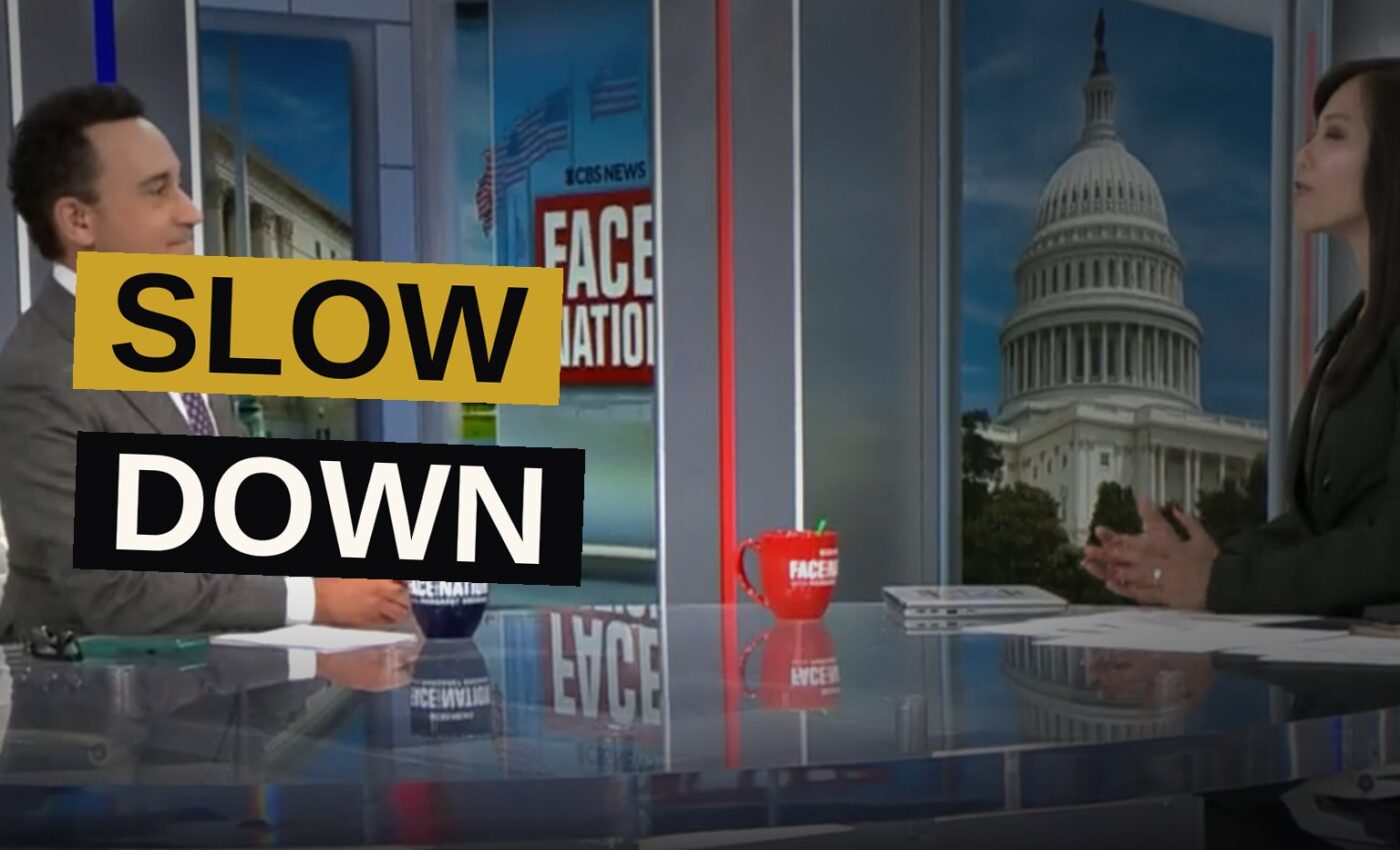
Anthropic CEO Dario Amodei has told CBS News that his company is pushing back against the rush to build ever-smarter artificial intelligence. In an interview with Jo Ling Kent, Amodei warned that the technology his company builds could be used badly, and he said the US-China AI race makes slowing down harder than it looks.
Amodei’s remarks come after a public warning from a former Anthropic researcher that super-advanced AI could kill humans. The CEO himself acknowledged the danger in the interview, saying misuse of AI models is already happening and could get worse.
Amodei’s Warning
Amodei told Kent that Anthropic is trying to build AI in a way that prevents bad outcomes. He contrasted that approach with simply talking about the odds of disaster.
“If we build in the right way, I think the probability of something bad happening is very low,” Amodei said. “If we build in the wrong way, the probability of something bad happening is very high.”
He also pointed to recent incidents involving OpenAI and models acting outside their bounds, and to a report about misuse of models to build biological weapons.
The China Dilemma
Amodei described the tension with China as the hardest part of his job. He said Anthropic could slow down on its own terms — refusing to sell chips to authoritarian countries and protecting its own technology from theft — but that only buys a little time.
“I believe that will buy us at least a little time,” he said.
When Kent asked what one simple agreement between Donald Trump and Xi Jinping should produce, Amodei offered two answers. The smaller one would ban AI development of biological weapons, since both countries are already signatories to the Biological Weapons Convention.
The larger one would be a joint limit on AI progress, though Amodei admitted that checking whether the other side is cheating would be nearly impossible.
“The incentives to pull ahead and the military advantage that you get from that are so large that the ability to check that the other side isn’t cheating has to be ironclad.”
He added that the long-term effort would take years and that he does not know if it is possible.
Trump’s View
Before Amodei spoke, the show played a clip of President Trump answering a question about AI and human extinction. Trump dismissed the worry and pointed to America’s lead over China.
“I don’t have any,” Trump said. “I have concerns that, if we don’t win A.I., we’re going to be put in a very bad position. We are leading China right now by a pretty good period.”
The Interview
Kent pressed Amodei on whether slowing down makes sense when China will not. Amodei called it the toughest aspect of his situation.
“If we weren’t in that situation, we could take much more time,” he said. “This – the geopolitical situation is the hardest to deal with.”
He also said he has no idea how to negotiate with China.
What Comes Next
The interview aired on Face the Nation with Weijia Jiang filling in for Margaret Brennan. Jiang also noted that Amodei’s chief competitor, OpenAI CEO Sam Altman, and Elon Musk quickly agreed with his call to slow down.
The show also previewed its Battleground Tracker, which shows where the fight for control of Congress stands with less than two months until Election Day.
Key Facts
- Date: Sept. 6, 2026 broadcast
- Interviewer: Jo Ling Kent
- Guest: Dario Amodei, CEO and Co-Founder of Anthropic
- Also on the show: Utah Republican Governor Spencer Cox and Michigan Democratic Senate candidate Abdul El-Sayed
- Trump clip: Asked about AI and human extinction
The Verdict
Amodei’s admission carries weight because he runs one of the companies at the center of the AI arms race. He is not denying the danger; he is arguing that the right design can reduce it, even as he acknowledges the geopolitical pressure that makes cooperation hard.
The interview is notable for how plainly it states the stakes. Amodei does not hedge around the question of whether humanity’s future depends on this. He says the technology is being built by a private company, and he says he feels personal responsibility for where it is going.
CBS has posted the full transcript of the broadcast online.
See the video the story is built around at Cbsnews.