
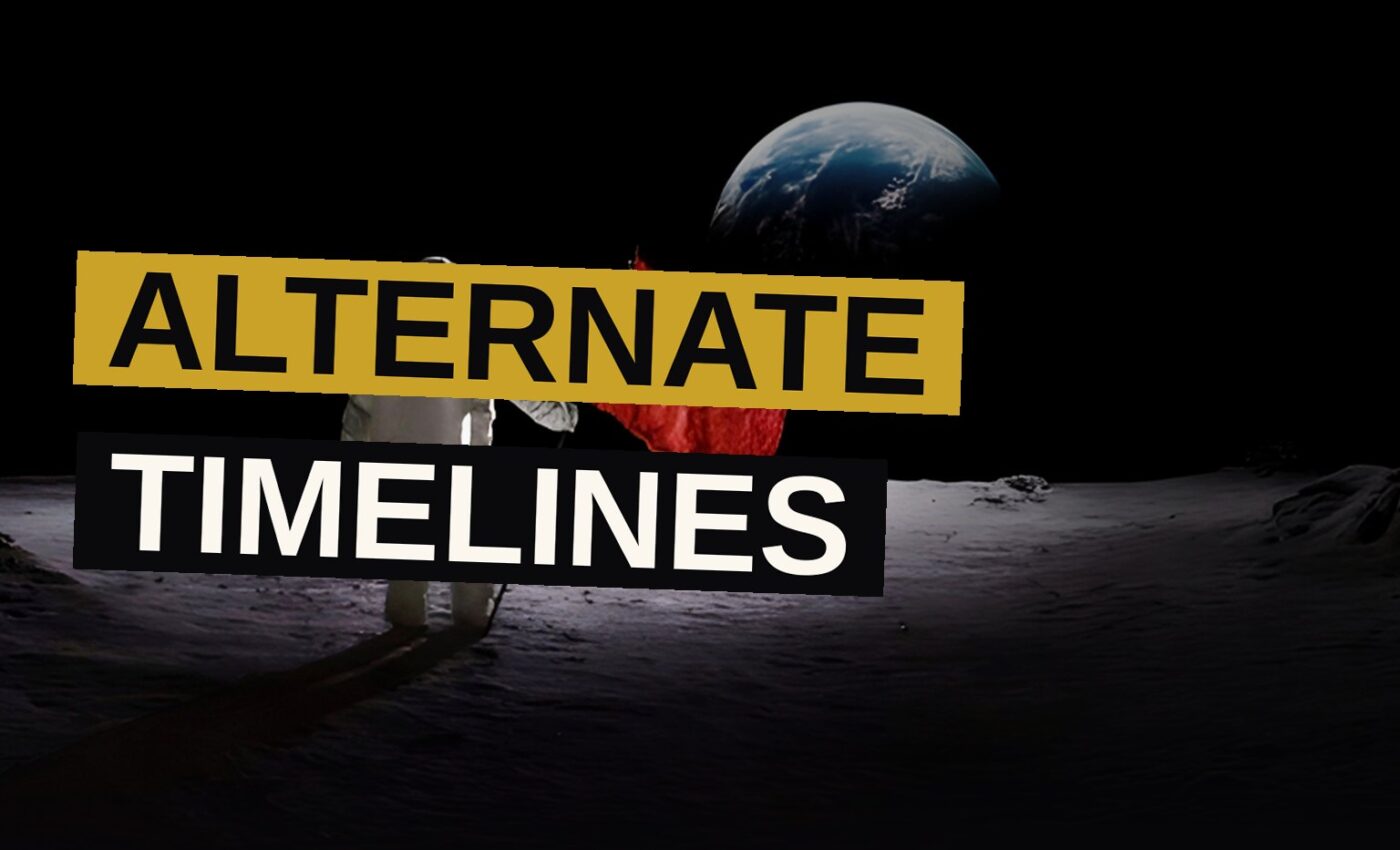
Apple TV+ has two flagship sci-fi shows built on the same question: what if history took a different turn? For All Mankind asks what happens if the Soviet Union reached the Moon first in 1969. Dark Matter season 2 now asks something stranger: what if nobody reached the Moon at all?
The new season of Dark Matter sends the Dessen family into a parallel world where the Moon landing never happened. The cause, as the show presents it, is a narrow twist in American politics: John F. Kennedy loses the 1960 election to Richard Nixon. NASA gets defunded. The space program collapses. Neil Armstrong never gets his chance to speak the line about the giant leap.
It is a different use of the same historical hinge. For All Mankind treats the space race as a global engine, driving technology, social change and national ambition forward at full speed. Dark Matter treats the same race as a quiet switch. Switch it off, and the world stalls.
Two Flagship Shows On Apple TV+
For All Mankind has five seasons on Apple TV+. It follows an escalating space race between the United States and the Soviet Union, with all the consequences that follow. Astronauts face hardship. NASA scrambles to recruit female astronauts and minorities decades earlier than in our timeline. Electric cars, advanced computing and clean fusion energy arrive sooner because the space race forces rapid development.
The show’s creators are Ronald D. Moore, Matt Wolpert and Ben Nedivi. Its cast includes Joel Kinnaman, Michael Dorman, Krys Marshall, Shantel VanSanten, Edi Gathegi, Jodi Balfour and Wrenn Schmidt, among many others. The spinoff, Star City, is also on the network.
Dark Matter comes from a different creative team. Blake Crouch created the series for Apple TV+ and wrote it, adapting his own novel of the same name. The show follows a physicist who is kidnapped and thrown into an alternate reality. An alternate version of himself puts his family in jeopardy. The series is now in its second season.
The two shows share a structural approach. Both take a real historical event and bend it. Both trace the ripple effects through decades of technological and social change. But the tone could not be more different.
Rewriting The 1960 Election In Dark Matter
In Dark Matter season 2, the Dessen family is looking for a peaceful world. They want a place where they can live out their lives without the multiversal chaos that has been chasing them. What they find is a parallel world that is technologically backwards.
The point of divergence is precise. Kennedy loses the 1960 election to Nixon. NASA loses its funding. The United States never lands on the Moon, and neither does anyone else. Without the push of the space program, analog technology never gives way to the microchip revolution. The world stays stuck in the 1970s and 1980s.
For the Dessen family, that backwardness is the point. In technologically advanced worlds, their digital footprints are easy to trace. Facial recognition makes them findable in seconds. In a world without the internet, they cannot be tracked. Their identities stay hidden. It looks almost heavenly to them.
Same Event, Two Different Genres
For All Mankind plays the alternate history as grand drama. The scope is global. The stakes are national. The show follows the space programs, the astronauts and their families across decades of accelerated change. It is a story about what humanity can build when it pushes hard enough.
Dark Matter plays the same hinge as a family story. The Dessens are not trying to win a space race. They are trying to escape. The alternate world is not a stage for geopolitical triumph. It is a safe house.
The shows both orbit the Moon landing, but they use different points of divergence around that event. For All Mankind changes what happens in 1969, when the Soviet Union lands first. Dark Matter changes what happens in 1960, when Kennedy loses the election and the American program never gets off the ground. Both are what-if stories. One treats the what-if as a launchpad. The other treats it as a hiding place.
A Safe World For The Dessen Family
The central family in Dark Matter season 2 is the Dessen family. Their goal is simple: find a world where they can live without being bothered by alternate versions of themselves. In advanced worlds, that is nearly impossible. The technology that makes life convenient also makes them visible.
The show’s second episode makes the contrast explicit. In one world, AI development and surveillance have gone too far. In the moonless world, there is no surveillance because there is no network. The family can disappear.
The show frames the low-tech world as a refuge rather than a punishment. There is no internet, so there is no tracking. There are no microchips, so there is no facial recognition. The Dessens can live quietly. The trade-off is that they also live without the conveniences of modern life.
It is a clever inversion of the usual sci-fi premise. Most stories treat technological regression as a catastrophe. Dark Matter treats it as a relief.
The Microchip Chain
The show connects the Moon landing directly to the microchip boom. The compact hardware needed for spacecraft drove the development of smaller, faster computing. Microchips were developed specifically to fit light hardware into spacecraft. Without that demand, the show suggests, the boom never happens. No internet. No cellphones. No digital tracking.
The show also ties the space race to social change, but only in For All Mankind‘s timeline. In that show, NASA scrambles to recruit female astronauts and minorities decades earlier than in our timeline. Dark Matter season 2 does not make the same claim about its moonless world. The show does not specify what happens to social progress there.
That is the ripple effect the show wants to capture. Change one election, and you change the course of technology and culture for half a century.
Comparing The Two Shows’ Approaches
For All Mankind is a global epic. It spans decades and continents. It follows multiple characters across the space programs of two superpowers. The show’s directors include Andrew Stanton, Sergio Mimica-Gezzan and Meera Menon. Its writers include Ronald D. Moore, Matt Wolpert, Ben Nedivi, Bradley Thompson and David Weddle.
Dark Matter is a multiversal thriller. It jumps between parallel worlds. It follows one family trying to survive. The show’s directors include Jakob Verbruggen, Alik Sakharov, Roxann Dawson and Logan George. Blake Crouch is the creator and writer. Joel Edgerton is both a star and a producer, alongside Don Kurt, Matt Tolmach, David Manpearl and Megan McDonnell.
The two shows share a network and a genre label. Both are listed as sci-fi. But the comparison stops there. One is about the fate of nations. The other is about the fate of a family.
Why The Same Premise Works Twice
The reason both shows work is that they use history as a tool, not a destination. The alternate timeline is not the point. The point is what the timeline reveals about the characters.
For All Mankind uses the accelerated space race to ask what people can do when they are pushed. The answer is a lot. The show is optimistic about human capability, even when it is grim about human conflict.
Dark Matter uses the stalled timeline to ask what people need to feel safe. The answer is obscurity. Our reading of the show is that it is wary of advanced technology, even when it is gentle about the people who live with it.
The two shows offer opposite readings of the same historical moment. One suggests the Moon landing made us better. The other suggests the Moon landing made us faster, and faster is not always better.
The Ripple Effect In Dark Matter Season 2
The specific ripple in Dark Matter season 2 runs through the 1960 election. Kennedy loses to Nixon. NASA loses funding. The space program dies. The microchip never gets its push. The digital age never arrives.
The show presents this as a chain of cause and effect. Each link follows the last. The election determines the funding. The funding determines the program. The program determines the technology. The technology determines the society.
The Dessen family benefits from the chain. In a world without digital tracking, they can hide. The show makes that world look appealing, not frightening. The absence of technology is presented as freedom.
- The 1960 election goes to Nixon instead of Kennedy.
- NASA loses its funding and the space program collapses.
- The Moon landing never happens.
- The microchip boom never happens.
- The world stays stuck in the 1970s and 1980s.
- The Dessen family finds a world where they cannot be tracked.
Release Timelines For Both Shows
| Show | Seasons | Network |
|---|---|---|
| For All Mankind | 5 | Apple TV+ |
| Star City | Spinoff | Apple TV+ |
| Dark Matter | 2 | Apple TV+ |
Dark Matter season 2 has released its second episode. The show has already established its multiversal premise. The second season is expanding it into new worlds, including the moonless one.
The two shows take the same raw material and bend it in opposite directions. For All Mankind builds worlds. Dark Matter escapes them. The same question, two different answers.
Source: screenrant.com
Get the Notebook.
The day's best stories and every fresh verdict, in plain English, in your inbox by seven. One email a day, no more.