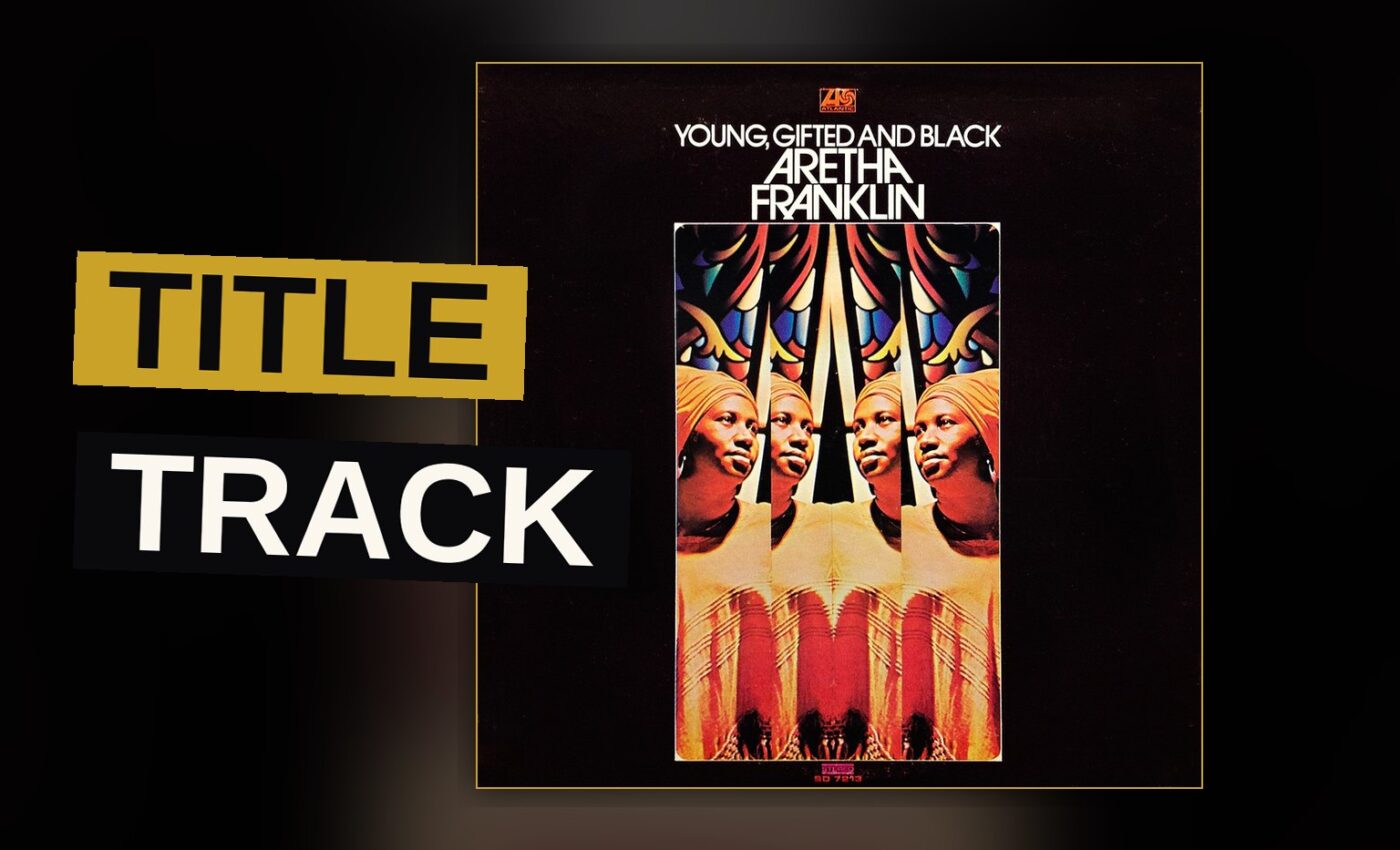
Aretha Franklin’s Young, Gifted and Black is a record built on borrowed songs, and it treats those songs like they were written just for her. Released in 1972, the album pairs her gospel-trained voice with a set list that leans heavily on covers, and the result is one of the strongest statements she ever made. It is not a collection of originals; it is a statement of identity, both personal and political, dressed in familiar melodies.
The Opener
The record starts with “Oh Me Oh My (I’m a Fool for You Baby),” a slow-burning ballad that lets Franklin stretch out over a simple, steady groove. It sets the tone immediately: this is a singer who can make a standard feel like a confession.
“Day Dreaming” follows, a mid-tempo track that shows off her control. It is not a highlight, but it holds the album together as a bridge between the opener and the title track.
Rock Steady Through the Title Track
“Rock Steady” is where the album starts to breathe. A driving, percussive number, it gives Franklin room to move, and the rhythm section pushes the song forward without ever losing its footing. It is a small victory, one that earns its place in the running order.
Then comes “Young, Gifted and Black,” the title track and the heart of the record. Franklin takes the Staple Singers’ anthem and turns it into a solo statement of pride, her voice carrying the weight of generations of struggle in a single performance. It is the song that gives the album its name, and it is the moment where the album’s ambition becomes clearest.
Covers That Outshine the Originals
“All the King’s Horses” is a cover, and it is one of the best examples of Franklin’s approach to other people’s songs. She takes a pop standard and turns it into something heavier, something closer to blues. It is not essential, but it shows her range.
“A Brand New Me” is the album’s most ambitious cover. Franklin takes a song that was already a hit for others and makes it her own, layering her voice over a dense arrangement that rewards repeated listens. It is a bold choice, and it pays off.
“April Fools” is a light, playful track that gives the middle of the album some air. It is pleasant, but it is not the kind of song that demands attention.
The Back Half
“I’ve Been Loving You Too Long” is a soul classic, and Franklin delivers it with the kind of command that made her a star. It is a steady, patient reading, one that lets the song’s drama unfold naturally.
“First Snow in Kokomo” is the standout of the back half. It is a slow, moody track that allows Franklin to explore texture and space, and it is the kind of song that could only exist on an album this focused. It is the album’s quiet masterpiece.
“The Long and Winding Road” is a cover, and it is a strange choice. Franklin treats it almost as a gospel hymn, stripping away the original’s melancholy and replacing it with something closer to a prayer. It works, but it is a risk that barely pays off.
“Didn’t I (Blow Your Mind This Time)” is a cover that feels like a filler track, a solid performance without much distinction. It is competent, but it is the weakest link in the back half.
“Border Song (Holy Moses)” closes the album with a burst of energy, a gospel-tinged closer that ends the record on a high note. It is not a great song, but it is a strong finish.
What the Reviews Said
The critical consensus is clear: this is one of Franklin’s finest works. Many critics argue that it may be her greatest studio effort. Jason Birchmeier, writing for AllMusic, called it “quite honestly an album that merits play from beginning to end.” Rob Sheffield wrote that the Beatles cover “is the greatest of all Beatle covers — the one that improves most on the original and defines everything the song is about.”
The Verdict
Young, Gifted and Black is not a perfect album, but it is a very good one. Franklin’s control over the material is the whole story: she takes songs that belong to other artists and makes them sound like they were always hers. The title track is a statement of identity, and the rest of the record backs it up.
The album earns its reputation as one of her best works. It is an album that rewards close listening, one that reveals new details with each pass. The covers are not just copies; they are improvements, and that is rare.
| Track | Length | Role |
|---|---|---|
| “Oh Me Oh My (I’m a Fool for You Baby)” | 3:39 | Opener |
| “Rock Steady” | 3:12 | Mid-album win |
| “Young, Gifted and Black” | 3:32 | Title track |
| “A Brand New Me” | 4:23 | Ambitious cover |
| “First Snow in Kokomo” | 4:04 | Quiet masterpiece |
The lesser tracks — “April Fools,” “The Long and Winding Road,” “Didn’t I (Blow Your Mind This Time)” — are not failures. They are simply less essential. But the highlights — “Rock Steady,” “Young, Gifted and Black,” “A Brand New Me,” “First Snow in Kokomo” — are among the best recordings she ever put to tape.
This is an album that knows exactly what it wants to be, and it delivers on that promise from start to finish. It is a record about identity, about pride, and about the power of a great voice to transform a song into something greater than itself.
9 of 10.
- Oh Me Oh My (I’m a Fool for You Baby)3:39
- Day Dreaming3:58
- Rock Steady3:12
- Young, Gifted and Black3:32
- All the King’s Horses3:53
- A Brand New Me4:23
- April Fools3:27
- I’ve Been Loving You Too Long3:32
- First Snow in Kokomo4:04
- The Long and Winding Road3:36
- Didn’t I (Blow Your Mind This Time)3:40
- Border Song (Holy Moses)3:19