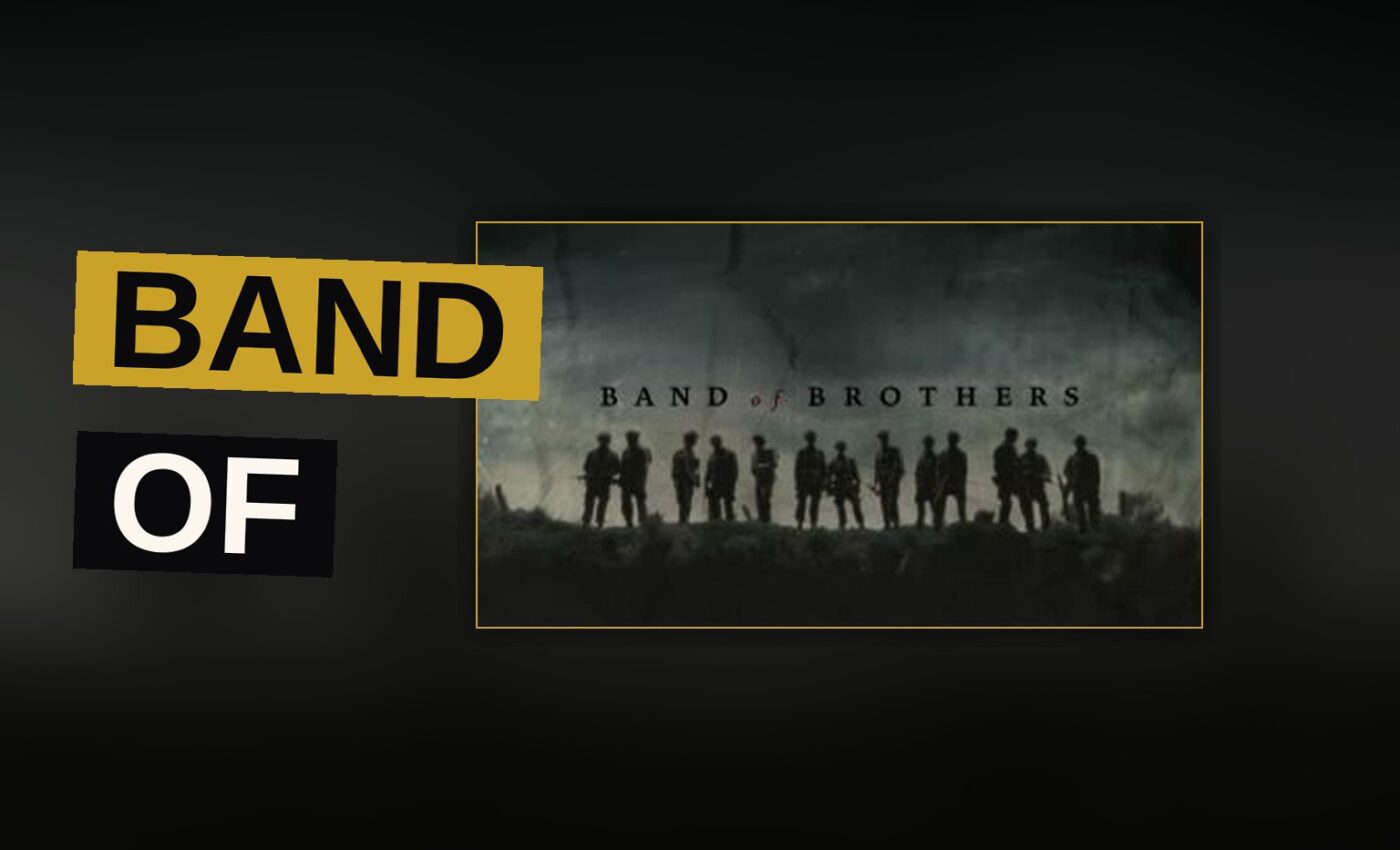
Band of Brothers premiered on HBO in 2001 and remains one of the most acclaimed war dramas ever made. Based on the book by historian Stephen E. Ambrose, it follows Easy Company of the 101st Airborne Division from D-Day through the end of World War II. The miniseries ran for ten episodes, each hour-long installment covering a major campaign or turning point.
The show’s strength lies in its ensemble cast and its willingness to treat combat as both chaotic and intimate. It does not glamorize war. Instead, it shows the exhaustion, fear, and camaraderie that kept men fighting.
Trailer, via HBO UK.
Cast Carries the Weight
The performances are uniformly excellent. Damian Lewis plays Dick Winters, the company commander whose steady leadership anchors the series. Ron Livingston stars as Lt. Herbert Sobel, the ambitious officer who loses control under pressure. Donnie Wahlberg portrays Carwood Lipton, a young medic who grows into his role over the course of the war.
The supporting cast fills out the platoon with characters who become easy to care about. Each man’s fate is tracked across multiple battles, and the show builds real stakes around their survival.
The Historical Record
Band of Brothers draws heavily on Ambrose’s interviews with veterans. The series recreates key moments, including D-Day, the Battle of the Bulge, and the liberation of concentration camps. While it takes creative liberties, the overall arc stays faithful to the unit’s experiences.
The production team worked closely with surviving members of Easy Company during filming. That attention to detail shows in the uniforms, the weapons, and the tactical sequences.
The Long Campaign
The ten-part structure allows the series to slow down and breathe. Episodes often focus on a single mission, giving viewers time to understand the planning, execution, and aftermath. This pacing is a deliberate choice, and it pays off.
| Episode | Focus |
|---|---|
| 1 | D-Day landings |
| 2 | Operation Market Garden |
| 3 | Market Garden aftermath |
| 4 | The Bulge |
| 5 | The Bulge aftermath |
| 6 | The Ardennes |
| 7 | The Ardennes aftermath |
| 8 | Crossing the Rhine |
| 9 | Liberation of camps |
| 10 | Return to England |
The final episodes shift away from combat and toward the psychological toll of war. This pivot is handled with restraint and honesty, making the ending feel earned rather than rushed.
Cinematography
The visual style is documentary-like, using handheld cameras and muted color grading. This approach creates a sense of immediacy that larger-budget films often sacrifice for spectacle. The landscapes of Normandy, Belgium, and Germany are rendered with a grim, realistic eye.
The sound design is just as effective. Gunfire, explosions, and distant artillery create a constant low hum that makes each scene feel dangerous.
What Works Best
- The character development across the entire ten hours.
- The authenticity of the historical setting.
- The pacing that lets individual missions breathe.
- The performances, especially Damian Lewis as Dick Winters.
- The ending, which refuses a triumphant note.
Where It Falls Short
Some critics argue that the middle stretch drags slightly, particularly the Market Garden episodes. The series also faces accusations of sanitizing the worst aspects of the war, though this is debated within the veteran community consulted during production.
These are minor complaints against a work of this scale.
The Legacy
Band of Brothers set a standard for military dramas that few have matched since. Its influence can be seen in later HBO productions and in the broader trend of historical mini-series.
The show remains essential viewing for anyone interested in the Second World War or in how television handles difficult subjects with dignity.
Final Score
Band of Brothers earns its reputation. It is a deeply human look at a brutal conflict, told with craft, respect, and a refusal to soften its uglier truths.
Get the Notebook.
The day's best stories and every fresh verdict, in plain English, in your inbox by seven. One email a day, no more.