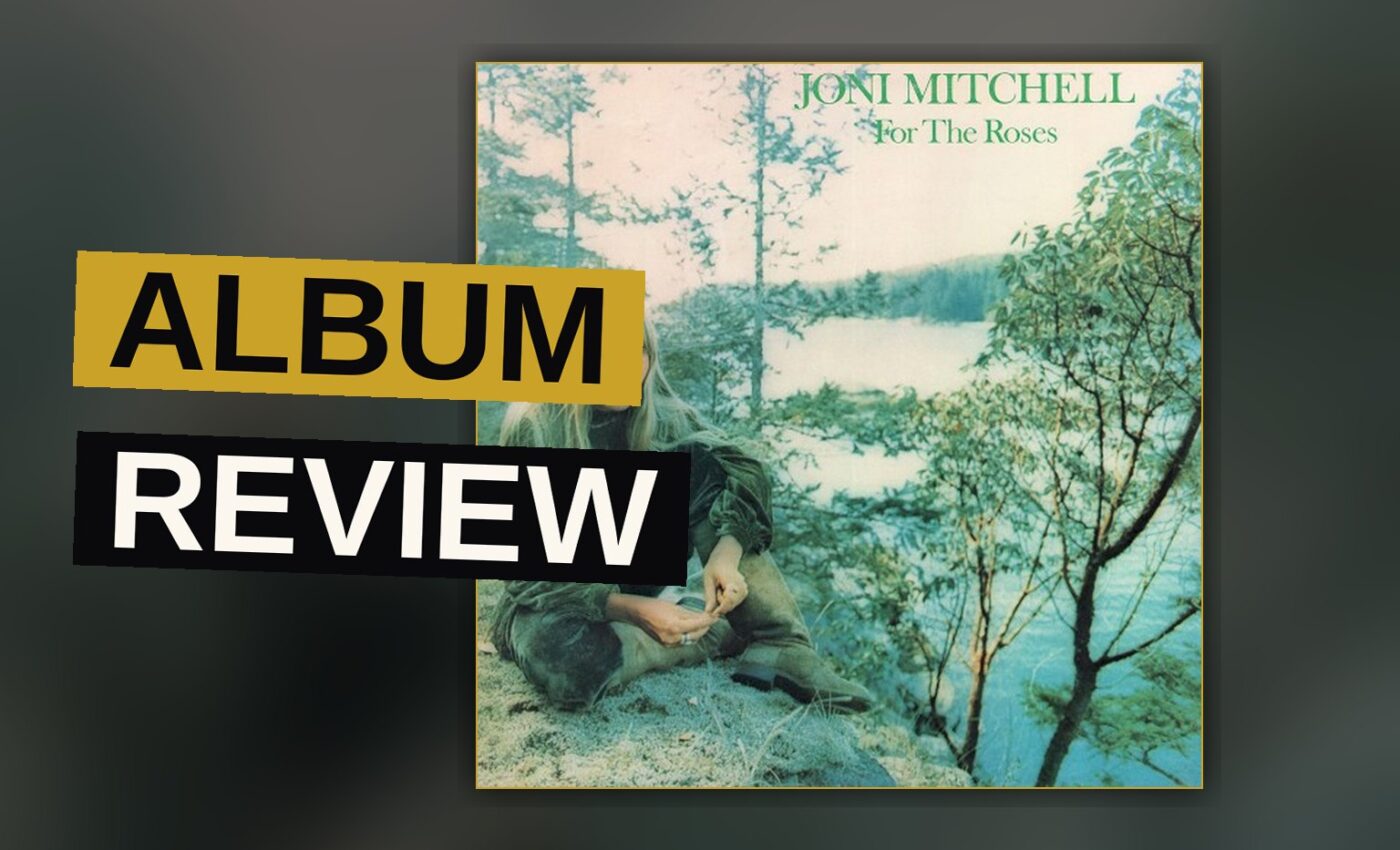
Joni Mitchell’s For the Roses is the sound of an artist stepping off the pedestal. Released in 1972, it is her fifth studio album, and it trades the wide-open folk-rock horizons of Blue for something smaller, stranger, and more private. The record is trying to do something difficult: to turn personal turbulence — a crumbling romance with James Taylor, the grind of fame, the seduction of addiction — into songs that feel universal without losing their specific ache. It succeeds, mostly, by trusting that Mitchell’s voice and her ear for melody can carry the weight of confession.
The album runs across 12 tracks, and it opens with a deliberate shake of the listener’s expectations.
Banquet and the Long Way Down
“Banquet” starts things off with a wry, almost cynical look at the music business. Mitchell sings about the crumbs of fame falling from a table where she’s not sure she wants a seat. It is not a bitter song, exactly — more a cool appraisal, the sound of someone who has seen the feast and decided the menu is not to her taste. The piano line is bright, but the lyric carries a shadow.
“Cold Blue Steel and Sweet Fire” follows, and it is the album’s darkest moment. The song is widely read as a portrait of addiction, with Mitchell’s imagery of needles and the “sweet fire” of a high rendered in precise, unflinching language. Her voice stays low and steady, which makes the subject matter land harder. This is not melodrama; it is reportage from the inside.
“Barangrill” is a lighter piece, a roadside café scene that lets Mitchell play with character and setting. It is charming but slight, a palette cleanser before the album’s emotional core. “Lesson in Survival” returns to the personal, a song about the effort it takes to keep loving someone when the ground keeps shifting. The title is the thesis: survival is a skill, and Mitchell is documenting her own training.
The Title Track and the Radio Hit
“Let the Wind Carry Me” is a longing, almost prayerful song about escape, with Mitchell’s piano doing the work of a full band. It builds slowly, and the release never quite comes — which is the point. The desire to be lifted away is real, but the wind, in this telling, is not always listening.
The title track, “For the Roses,” is the hinge of the record. It is a song about giving someone the space to grow, even when that means watching them move away from you. Mitchell’s imagery is floral but not precious; the roses are real, and so is the cost of tending them. This is the album’s quiet masterpiece, a song that earns its place in the running order through sheer restraint.
“See You Sometime” is a brief, almost throwaway goodbye, a shrug of a song that works because Mitchell refuses to overplay it. It is followed by “Electricity,” which is the weakest track here — a vague, meandering piece that never quite finds a hook or a point. It is not bad, just forgettable, and it sits in the track list like a held breath that goes on too long.
You Turn Me On, I’m a Radio
Then comes the single. “You Turn Me On, I’m a Radio” is the most immediately catchy thing Mitchell had written to that point, and it is also a joke with a sharp edge. Written as a deliberate attempt at a radio-friendly hit, it mocks the very machinery it was designed to feed. The song’s narrator is a radio, begging to be tuned in, but the metaphor cuts both ways: she is also a woman asking to be heard, not just played.
It is the smartest song on the album, and it is also the most fun. The pedal steel gives it a country lilt, and Mitchell’s delivery is playful, almost teasing. The joke stands on its own.
“Blonde in the Bleachers” is the album’s other great character study. It is a song about a groupie, a woman who watches her rock-star lover from the stands, knowing the affair is doomed. Mitchell never condescends to the subject; she gives the blonde her own voice, her own wants, her own resignation. It is a small tragedy, told in under three minutes.
“Woman of Heart and Mind” is a more abstract meditation on love and independence, with Mitchell weighing what she owes a partner against what she owes herself. It is good, but it feels like a sketch for the deeper songs that bracket it.
Judgement of the Moon and Stars
The album closes with “Judgement of the Moon and Stars (Ludwig’s Tune),” an expansive tribute to a composer who refused to bend to public taste. The parallel to Mitchell’s own career is unspoken but unmistakable. The song is grand, almost orchestral in its arrangement, and it ends the record on a note of defiance rather than resolution.
It is the right ending. For the Roses is not a happy album, but it is not a defeated one either. It is the work of an artist who has decided to keep going, to keep writing, to keep turning her own life into songs that other people can carry.
The Verdict
The album’s lesser tracks — “Barangrill,” “Electricity,” “See You Sometime” — are not failures; they are just lighter. They give the record room to breathe, and they let the stronger songs stand taller by contrast. Mitchell’s songwriting here is as sharp as anything she had done, and the production, credited to her, keeps the focus on her voice and her piano.
| Track | Role on the Album |
|---|---|
| Banquet | The business, viewed with suspicion |
| Cold Blue Steel and Sweet Fire | The addiction portrait, dark and precise |
| Barangrill | A roadside scene, light relief |
| Lesson in Survival | The thesis statement on love |
| Let the Wind Carry Me | The escape that never arrives |
| For the Roses | The title track, the emotional hinge |
| Track | Role on the Album |
|---|---|
| See You Sometime | A brief goodbye |
| Electricity | The weakest moment, a held breath |
| You Turn Me On, I’m a Radio | The hit, and the joke about hits |
| Blonde in the Bleachers | The groupie’s tragedy, told with care |
| Woman of Heart and Mind | A meditation on independence |
| Judgement of the Moon and Stars | The defiant closer |
| Running Order | Track |
|---|---|
| 1 | Banquet |
| 2 | Cold Blue Steel and Sweet Fire |
| 3 | Barangrill |
| 4 | Lesson in Survival |
| 5 | Let the Wind Carry Me |
| 6 | For the Roses |
| 7 | See You Sometime |
| 8 | Electricity |
| 9 | You Turn Me On, I’m a Radio |
| 10 | Blonde in the Bleachers |
| 11 | Woman of Heart and Mind |
| 12 | Judgement of the Moon and Stars |
For the Roses is a record about the cost of being seen, and it pays that cost in full.
Mitchell does not flinch from her own biography, and she does not ask for sympathy. She asks for attention, and she earns it. The album is intimate without being indulgent, personal without being private, and it holds up as one of the strongest records of her career.
It is a 9.1 out of 10.
Get the Notebook.
The day's best stories and every fresh verdict, in plain English, in your inbox by seven. One email a day, no more.
- Banquet3:01
- Cold Blue Steel and Sweet Fire4:17
- Barangrill2:52
- Lesson in Survival3:11
- Let the Wind Carry Me3:57
- For the Roses3:48
- See You Sometime2:57
- Electricity3:02
- You Turn Me On I’m a Radio2:39
- Blonde in the Bleachers2:42
- Woman of Heart and Mind2:39
- Judgement of the Moon and Stars (Ludwig’s Tune)5:20