
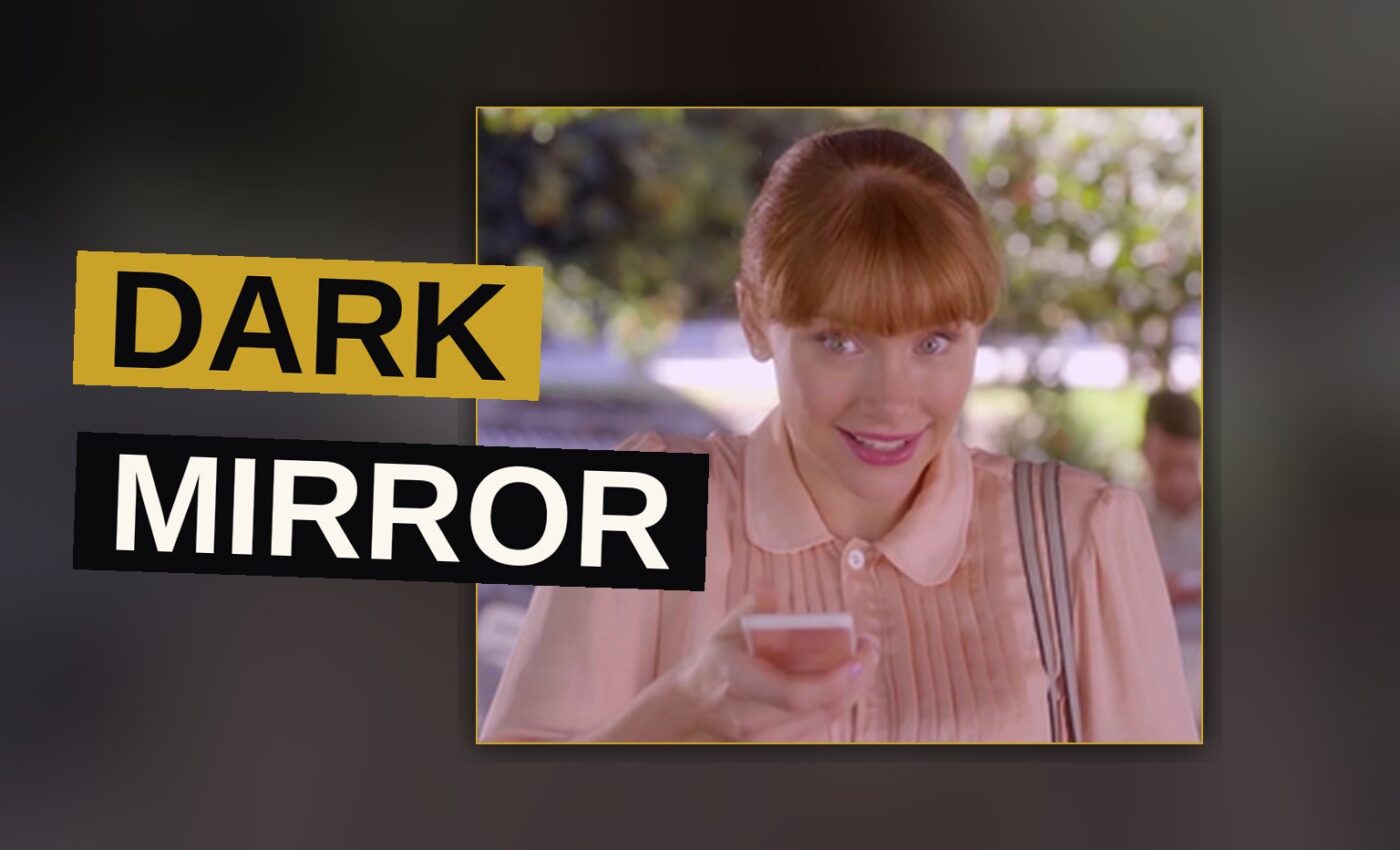
Black Mirror arrived on Channel 4 on 4 December 2011 with a premise that sounds like a warning label and plays like a trap. Charlie Brooker created an anthology series of speculative fiction, set in near-future dystopias loaded with sci-fi technology, and used it to pick at the way we live now. The title says it plainly: the black mirror is the screen, and the reflection is not flattering.
Seven series and 33 episodes later, with an eighth in development, the show has outlasted most of the technology it once treated as frightening. That is not a knock. It is the reason the first run still holds up.
Trailer, via Netflix.
Charlie Brooker and the Twilight Zone Inheritance
Brooker’s stated debt is to The Twilight Zone, and the comparison is fair without being limiting. Both shows use a single-story format to make an argument, then clear the table. Black Mirror adds media and technology as its fixed subjects, which gives each episode a target and a deadline.
Annabel Jones, the executive producer, is central to how the series holds together. Brooker writes most episodes, and the partnership keeps the tone from tipping into pure lecture. The show wants to unsettle you, not just inform you.
That balance is the whole trick. An anthology lives or dies on whether each episode justifies starting over. Black Mirror earns the reset because its ideas are the continuity, not its characters.
Channel 4, Netflix and the Move That Changed the Scale
The first two series aired on Channel 4 in 2011 and 2013, along with the 2014 special “White Christmas”. Then the programme moved to Netflix, where five further series landed in 2016, 2017, 2019, 2023 and 2025.
That migration matters more than a network credit usually would. Channel 4 gave the show a British, spiky, low-budget menace. Netflix gave it reach and, eventually, a bigger canvas. The 2018 interactive film Black Mirror: Bandersnatch is the clearest product of that second phase, a branching story that turned the format itself into the subject.
Most episodes are speculative fiction, set in near-future dystopias containing sci-fi technology.
Two related webisode series followed on Netflix, and a companion book to the first four series, Inside Black Mirror, was published in 2018. Soundtracks to many episodes have been released as albums. The show became a small industry, which is either a sign of health or a warning of its own.
San Junipero, USS Callister and the Emmy Run
The awards record is the hard evidence that the anthology format still works at the highest level. Black Mirror won the Primetime Emmy Award for Outstanding Television Movie three times consecutively, for “San Junipero”, “USS Callister” and Bandersnatch.
Three in a row, across different stories, different casts and different tones. That is the strongest argument for the series as a form: no single episode has to carry the whole thing, and no single failure sinks it.
Black Mirror, along with American Horror Story and Inside No. 9, has been credited with reviving the anthology television format. That revival is now the norm across streaming, and this show is the reason the format stopped looking like a relic.
The Case Against the Formula
The criticism is not invented. Some reviewers have found the morality themes formulaic and obvious, and others have cited declining quality across the later series. When a show builds its reputation on the twist, the twist becomes the expectation, and expectation is where dread goes to die.
The complaint has teeth. A series that always ends with a lesson risks becoming a sermon with better production design. The later Netflix runs carry more of that weight than the Channel 4 originals, which trusted the audience to sit in discomfort without a final nudge.
Still, “formulaic” is a strange charge against a show whose format is the point. The Twilight Zone was formulaic. So was the pulp that fed it. Consistency is what lets an anthology build an argument across years instead of episodes.
What Black Mirror Actually Got Right
Black Mirror is considered by some reviewers to be one of the best television series of the 2010s, and the published critical score backs that up: 9.8 out of 10, with a 98 per cent rating on Rotten Tomatoes.
The score is not the interesting part. What matters is that the show arrived in 2011, before the smartphone had finished rearranging daily life, and treated the screen as a moral problem rather than a gadget. It was early, and being early is a form of accuracy.
The series also proved that television could tell complete stories again. No cliffhangers, no will-they-won’t-they, no third season spent undoing the second. Just an idea, a cast, and an ending that lands.
The Verdict on Black Mirror
Black Mirror is the rare anthology where the format is not a gimmick but the engine. The Channel 4 years are leaner and meaner; the Netflix years are bigger and occasionally softer. Both are recognisably the same show, and the Emmy run for “San Junipero”, “USS Callister” and Bandersnatch shows the ceiling is high in either era.
The formulaic charge is fair as description and weak as criticism. A show about patterns in human behaviour is allowed to have patterns of its own. What would sink Black Mirror is not repetition but timidity, and 33 episodes across seven series have not been timid.
The eighth series is in development. That is the part worth watching, because the technology the show once feared is now the water we swim in, and the black mirror has never been harder to look away from.
By the Numbers
- Created by: Charlie Brooker
- Networks: Channel 4, Netflix
- First aired: 4 December 2011
- Last aired: 10 April 2025
- Episodes: 33 across 7 series, plus one special
- Interactive film: Black Mirror: Bandersnatch (2018)
- Emmy wins: Outstanding Television Movie, three consecutive years
- Critical score: 9.8/10 (Rotten Tomatoes 98%)
Get the Notebook.
The day's best stories and every fresh verdict, in plain English, in your inbox by seven. One email a day, no more.