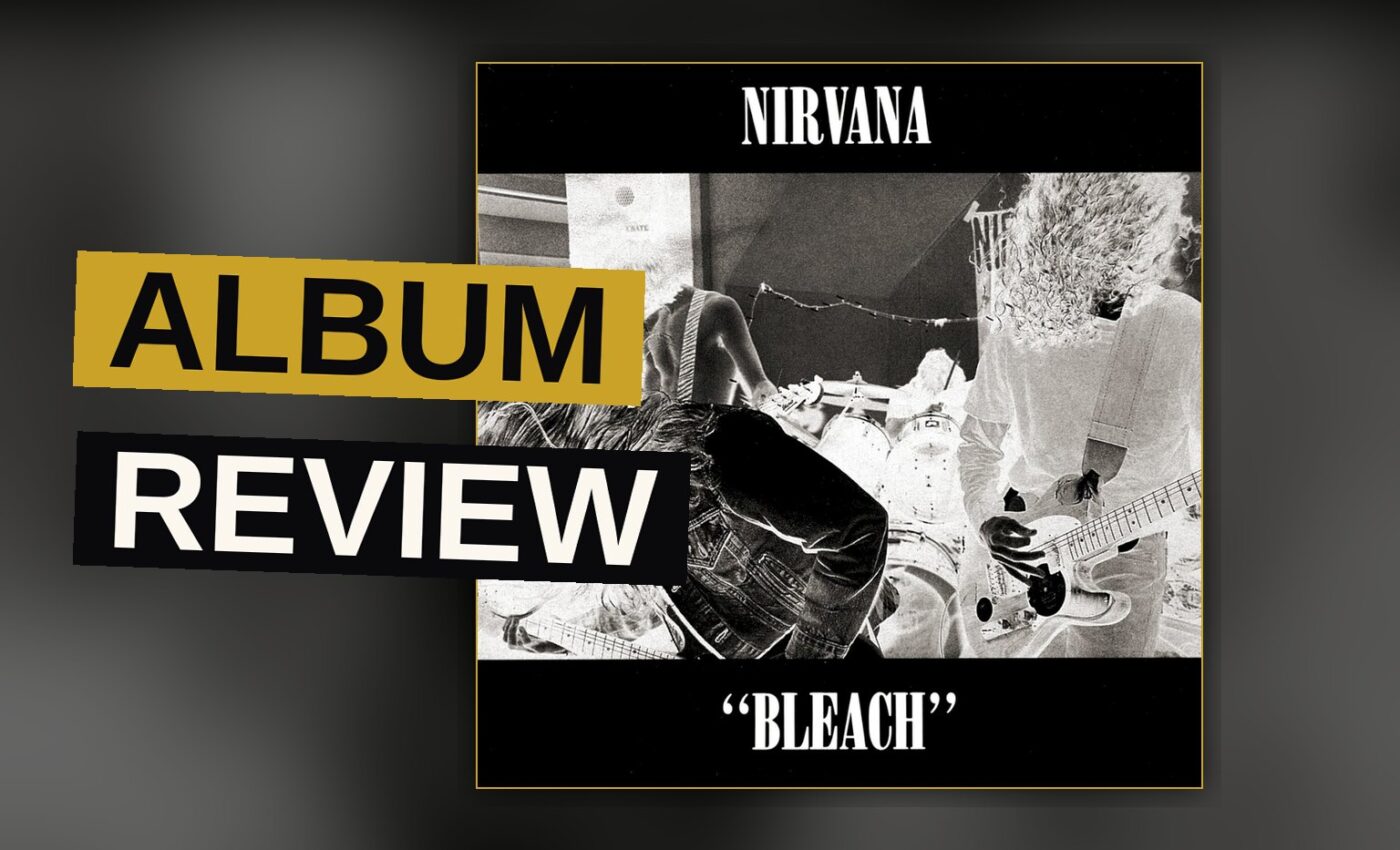
Bleach is the sound of a band figuring out what it is, in real time, and it is loud, ugly, and thrilling. Nirvana’s 1989 debut is not the polished, conflicted pop machine of what came later. It is the raw, caustic document of a trio that had yet to decide whether it wanted to be a punk band, a metal band, or a pop band.
The answer, across 42 minutes and 13 tracks, is that it wanted to be all three at once, often in the same song. The album is trying to do something simple: make a noise that feels like the inside of a frustrated head. It succeeds, and in doing so, it accidentally sketches the blueprint for the biggest rock band of the next decade.
Opening with “Blew”
The record opens with “Blew,” a track that doesn’t introduce the band so much as it dares you to keep listening. The bassline is monolithic, a slow, descending crawl that feels like a door closing. The vocal is a half-snarled complaint, and the song builds to a release that never quite comes. It is a statement of intent: this is not going to be easy, and it is not going to be friendly. The song is less a hook than a gauntlet thrown down.
“Floyd the Barber” follows, and it is a different kind of menace. The song is short, 2:18, and it moves with a jittery, almost nervous energy. The lyrics are a dark, surreal take on small-town life, played straight. The band locks into a groove that is both clumsy and precise. It is the first hint that Nirvana could write a hook, even if the hook is wrapped in barbed wire.
The Pop Heart
Then comes “About a Girl,” and everything changes. The track is the most melodic thing on the album, a clean, jangly pop song that stands in stark contrast to the sludge around it. The guitar is bright, the vocal is almost tender, and the chorus is a genuine earworm. It is the track that most critics point to as the sign of things to come, and they are right. In the middle of all this noise, the band proves it can write a song that could exist outside the underground. It is the sound of a songwriter who was always bigger than the scene he was in.
“School” is the opposite. It is a two-chord stomp, built on a single riff that repeats like a headache. The song is about claustrophobia, about the feeling of being watched and judged by the same people you are trying to impress. It is brief, brutish, and effective, a perfect short burst of frustration.
Cover and Crawl
“Love Buzz” is a cover, originally by another band entirely. The version here is slower, heavier, and more menacing than the original. The bass is front and center, and the vocal is a weary, almost drugged-sounding drawl. The song’s psychedelic roots are still there, but they have been dragged through the mud. It is a cover that feels like a possession, the band taking a foreign object and making it their own.
“Paper Cuts” is one of the most difficult tracks on the album, at 4:06. It is slow, dirge-like, and built on a disturbing story. The lyrics are dark, and the music matches them: a lurching, almost funereal crawl. It is not an easy listen, and it is not meant to be. It is the sound of a young man working through something heavy, and it is the track that most clearly shows the band’s debt to the sludge-metal pioneers who were their early heroes.
| Track | Length | Role on the Album |
|---|---|---|
| “About a Girl” | 2:48 | The pop breakthrough |
| “Negative Creep” | 2:56 | The rawest burst |
| “School” | 2:42 | The two-chord stomp |
| “Love Buzz” | 3:35 | The menacing cover |
Rage and Release
“Negative Creep” is the album’s most aggressive track, a raging, chaotic burst of noise that runs just under three minutes. The riff is a single, hammering note, and the vocal is a full-throated scream. The lyrics are cryptic, but the feeling is clear. This is a song about being a mess and not caring who knows it. It is the track that most critics single out as the album’s rawest moment, and it earns that reputation. It seethes with a confidence that is almost scary.
“Scoff” follows, and it is a slight comedown. The song is a mid-tempo grinder, with a chorus that reaches for connection and falls short. It is not a bad track, but it is the first one on the album that feels like filler. The riff is serviceable, and the vocal is passionate, but there is nothing here that the band hasn’t already done better on the previous five tracks. It is the sound of a band treading water, waiting for the next idea to hit.
Second Half
“Swap Meet” is a step up. The song has a swing to it that is almost funky. The bassline is the star, and the vocal is more melodic than on the surrounding tracks. It is a welcome change of pace, and it shows that the band could write about something other than their own misery. It is not a classic, but it is a solid, memorable track that earns its place.
“Mr. Moustache” is a sneering attack on machismo. The track is heavy and chugging, with a chorus that is more shouted than sung. It is a good idea, but the execution is a little flat. The song never quite takes off, settling for a mid-tempo stomp instead of the full-throttle rage it seems to be aiming for. It is fine, but it is the kind of track that gets skipped on repeat listens.
“Sifting” is the longest track on the album, at 5:22, and it is a slog. The song is built on a single, slow riff that does not change much over its runtime. The vocal is buried in the mix, and the lyrics are hard to make out. It feels less like a song and more like an endurance test. It is the clear low point of the record, the track where the band’s limited palette starts to wear thin. It is not bad, exactly, but it is boring, which is worse.
Closer and Coda
“Big Cheese” is a comeback. The song has a righteous anger that the previous track lacked. The riff is a fast, churning thing, and the vocal is at its most venomous. This is a song about petty authority, about the people who think they run your life. It is the sound of a band pushing back, and it is one of the best tracks on the album.
“Downer” closes the record, and it is a strange choice. The song is a fast, hardcore punk burst that runs just 1:43. It sounds like it was recorded in a different session, with a different vocal take and a rawer mix. The lyrics are a nihilistic rant, and the music is a blur of speed and noise. It is a fitting end to the album, a final burst of energy before the lights go out. It is not a summary of what came before, but it is a promise of what could come next.
| Position | Track | Length |
|---|---|---|
| 1 | “Blew” | 2:54 |
| 2 | “Floyd the Barber” | 2:18 |
| 3 | “About a Girl” | 2:48 |
| 4 | “School” | 2:42 |
| 5 | “Love Buzz” | 3:35 |
| 6 | “Paper Cuts” | 4:06 |
| 7 | “Negative Creep” | 2:56 |
| 8 | “Scoff” | 4:10 |
| 9 | “Swap Meet” | 3:03 |
| 10 | “Mr. Moustache” | 3:24 |
| 11 | “Sifting” | 5:22 |
| 12 | “Big Cheese” | 3:42 |
| 13 | “Downer” | 1:43 |
Final Verdict
Bleach is not a perfect album. It is uneven, with a clear drop-off in quality in the middle stretch. “Sifting” is a drag, and “Scoff” is forgettable. The production is thin, and the band’s influences are often too visible. But the album’s strengths are undeniable. “About a Girl” is a classic, “Negative Creep” is a blast of pure rage, and “School” is a perfect two-minute punk song.
The record is a document of a band on the verge, a group that had the talent and the vision but had not yet figured out how to harness it. That is the effect the record had on a generation of musicians who heard it as a call to raise their own game.
With hindsight, it is easy to see Bleach as merely Nirvana’s caustic baby steps. But the signs of stardom to come were already there. The album is a time capsule of a band that was about to change everything, and it is worth listening to on its own terms, not just as a prelude to what came next. It is a raw, hungry, and often brilliant record, and it deserves to be heard.
Get the Notebook.
The day's best stories and every fresh verdict, in plain English, in your inbox by seven. One email a day, no more.
- Blew2:54
- Floyd the Barber2:18
- About a Girl2:48
- School2:42
- Love Buzz3:35
- Paper Cuts4:06
- Negative Creep2:56
- Scoff4:10
- Swap Meet3:03
- Mr. Moustache3:24
- Sifting5:22
- Big Cheese3:42
- Downer1:43